
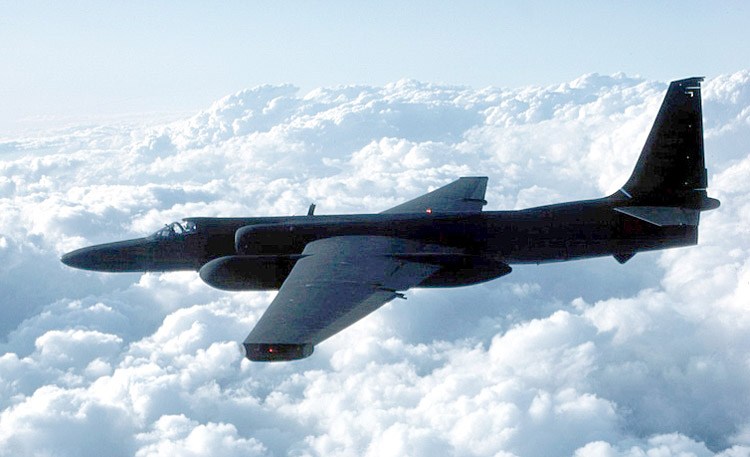
The constant, insatiable demand for intelligence, surveillance and reconnaissance has driven the Air Force to reduce funds for some missions in order adjust its budgetto keep more spy aircraft flying ,and to increase the amount ofcombat air patrols, while taking funds away from other missions,Air Force leaders told lawmakers Friday.
The Air Force’s fiscal 2016 budget request looks to keep flying the U-2, previously planned for early retirement, flying at least until 2019 to address the demand for surveillance., The budget also would fund while moving toward 60 combat air patrols per day, up from 55. But that funding has to come from elsewhere in the budget, Air Force Chief of Staff Gen. Mark Welsh told the House Appropriations defense subcommitteea House panel today.
“We build to combatant command requirements, not to Air Force requirements,” Welsh said told the House Appropriations Defense subcommittee today. “So when the combatant commanders tell us that their No. 1 number one priority is ISR … , as we build our budgets each year, we go back to them and we will sit with them, as I did again this year, and ask each of the regional combatant commanders; Would you prefer for us to invest in more ISR, or would you prefer to invest in maintaining things like close air support capacity for you?”
The demand for ISR is increasing in each command across the world, because it provides “precious information,” Air Force Secretary Deborah Lee James said.
“It can avoid loss of life, innocent life, if you really are persistent in knowing who’s who and what’s what,” she said. “You can actually do, in some cases, attack missions. It provides a lot of information, and that information is power.”
In addition to the U-2s, the Air Force’s budget request seeks to continue procurement of RQ-4 Global Hawk high-altitude surveillance drones and continued buys of the MQ-9 Reaper drone to replace the MQ-1B Predator.
The constant need for surveillance in the Middle East has meant the Air Force’s slice of the overseas contingency operation budget has been steady, and will remain so in the coming years, James said.
“What we are doing in the Middle East and the kinds of refueling, and mobility, this kind of day-to-day-work, ISR, so we project that this is going to be continuing for the foreseeable future,” James said. “So I don’t think you’re going to see a dramatic fall off in OCO.”
The intense demand for surveillance means some regions do not get near the attention that others do. Most U.S. military The vast majority of surveillance for the entire U.S. military is focused on terrorism and targets such as the Islamic State group in the Middle East, said Gen. Philip Breedlove, head of U.S. European Command and NATO supreme allied commander. As a result, EUCOM gets just 2 two percent of the military’s surveillance flights, and of that, 80 percent goes to missions in Africa, Breedlove told reporters on Thursday.
“So ISR is always short,” Breedlove said. “Yes, I could use more ISR. But I understand the calculus by which it has been apportioned at the way it’s been apportioned right now.”
The constant demand has also meant personnel issues within the community. The service is increasing flight pay and using other incentives to try to keep drone pilots in their current jobs. It also is and trying to address the a constant workload that has contributed to burnout in the ranks. And it is , as well as trying to beef up training programs to bring new pilots in.
“We’ve been chasing this training problem for the last eight years,” Welsh said. “And we just can’t get ahead of it because the operational demand won’t slow down. And we’ll continue to do the best we can, but we’re just about at a breaking point in the pilot force if we don’t stabilize the demand for a period of time to let us get ahead of the training problem.“


