
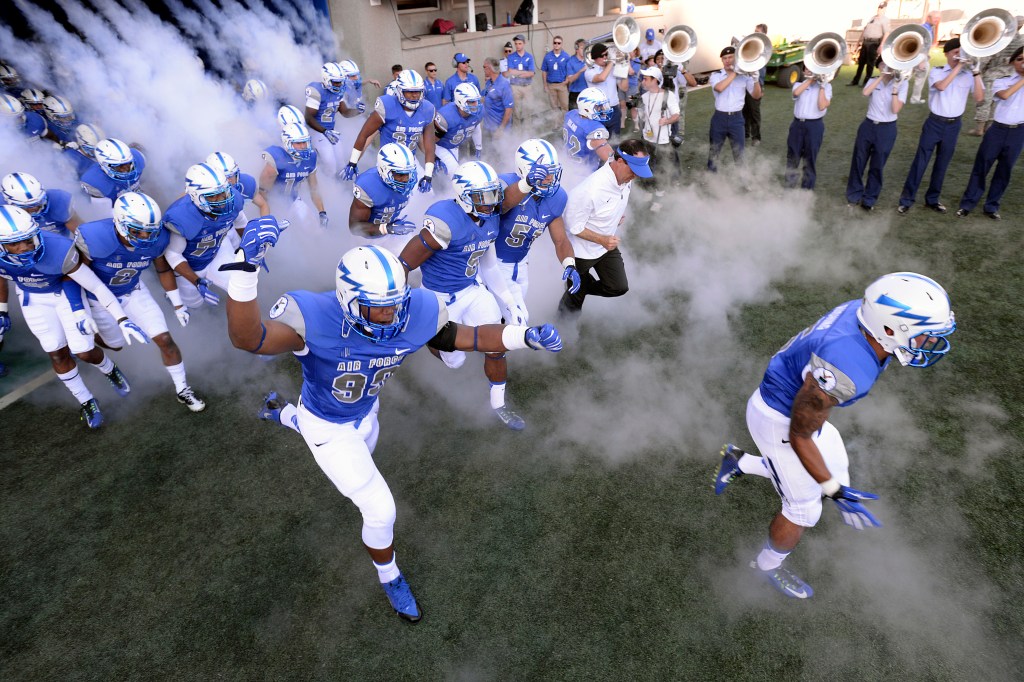
The Air Force Academy’s athletic department failed to properly investigate and punish allegations of employee misconduct in at least two situations, according to newly released passages from an inspector general’s inspection report obtained by Air Force Times.
The report said that inspectors found many athletic department officials they interviewed “have the perception there is a lack of accountability for misconduct.” Some interviewees said employees have resigned “rather than be part of an environment which is perceived to not hold people accountable.” This was one of three significant deficiencies that were redacted from the originally released report.
The academy announced the inspection in August 2014, after the Colorado Springs Gazette published its investigation into drug use, sexual assault and other misconduct in the athletic department in 2010 and 2011. At that point, the academy said, the inspection was already underway. explain why inspection was launched or what misconduct preceded it/mh,//sl fixed and The academy issued a news release Oct. 14 that said the IG gave the athletic department an overall grade of effective. The release said that while the inspection found some areas need to improve, it found nothing requiring a follow-up investigation.
The academy said last fall it would not release the report to Air Force Times, which filed a Freedom of Information Act request for the report. The Air Force released a heavily redacted version of the report to Air Force Times in March when?mh via a Freedom of Information Act request requested when?mh//sl fixed. The report said that inspectors uncovered five significant deficiencies, but only two were left unredacted. Air Force Times appealed the redactions, and the Air Force released a new version of the report in August when?mh with some redactions removed regarding the remaining three significant deficiencies, including the passages on alleged misconduct.
The newly revealed passages highlighted two situations where the athletic department “failed to thoroughly investigate the facts or did not follow through with administrative or disciplinary action.” Inspectors found no records of a formal investigation in either case.
One employee was allowed to retire and depart after allegedly stealing Nike apparel for personal use. And another employee allegedly threatened another employee, but not all witnesses in that case were interviewed.
The report also highlights a third case, dating from May 2013, in which an investigating officer substantiated allegations of sexual discrimination and harassment on the part of a civilian employee. However, no record of counseling, administrative action or discipline were in that employee’s personnel folder.
The inspector’s recommendations on how to improve on this subject remain redacted.
In a Sept. 14 interview at the Air Force Association’s Air and Space Conference, newly appointed academy athletic director Jim Knowlton said that a review from about a month ago shows the academy is improving on accountability and other areas.
“Good organizations have accountability,” Knowlton said. “For five months now [since Knowlton took over the athletic department] we have worked very hard on looking at where we were and where we’re going. Our people internal have said ‘I feel more comfortable, I feel more aware, I feel that the leadership is taking responsibility,’ and so we feel pretty good. We’re not there yet, but every indicator from that look says that we are moving in the right direction.”
The latest version of the IG?mh//sl yes report also revealed passages alleging possible nepotistic hiring practices within the athletic department, although this was not identified as a significant deficiency.
“Some interviewees expressed displeasure when employees were hired with apparent lower coaching qualifications than other applicants,” the revealed passages said. “However, other interviewees explained that the ability to develop cadet-athletes within the constraints of the Academy environment were more important than a traditional NCAA Division I coaching resume.”
Another second newly revealed significant deficiency found that some General Schedule employees worked more than 40 hours per week, and felt that came with the job. Some employees expressed concern that manpower cuts at the academy had forced them to either work longer hours or not get necessary work done.
The third significant deficiency isn’t this about fourth?mh//sl no, just the third to be newly revealed found that department morale was “extremely low” due to budget cuts, threats to cut sports and manpower, favoritism in hiring referred to as the “good ole boy network,” a lack of accountability for wrongdoings, and past academy leadership making personnel decisions in the athletic department and, some believed, placing their favorites in top positions. The report also said morale was low due to the “negative perception of athletes caused by media focusing on misbehavior of only a few cadets.”
The original version of the report also had two other significant deficiencies unredacted. In one, the IG dinged the athletic department’s publications manager for not reviewing all of its publications every four years, as required by Air Force rules. In the other, the IG criticized the athletic department’s human resources program adviser for not effectively overseeing and administering HR programs. do we know how many significant deficiencies the IG found?mh//sl clarified above


