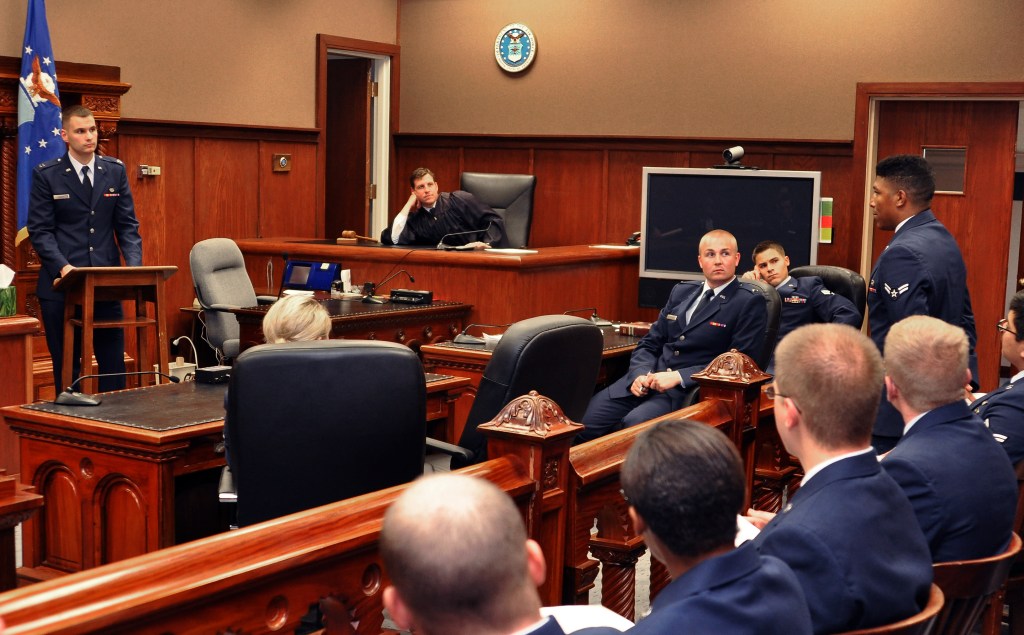
When they are accused of crimes, the names of service members are made public — but kept secret when they are acquitted.
It’s another form of military logic — the thought here being that for those cleared of wrongdoing, it would be a disservice to restate the illegal acts of which they were accused. However, the policy directly contradicts those of public courts, which correctly put most trial proceedings and outcomes on the record because legal transparency is essential in a democratic society.
For the same reason, citizens are named when accused of crimes — it’s a check against government forces being able to secretly prosecute enemies on trumped-up charges. There is a key public accountability element to transparency, one that augers against overcharging and prosecutorial overreach. Certainly, not naming the acquitted softens the sting of prosecutorial failure.
Col. Chuck Killion, the director of Air Force Judiciary, said withholding names of those who are acquitted conforms to U.S. law and Pentagon direction, a policy adopted with input from senior JAGs in the community.
But the misguided attempt to protect those proven not guilty in fact not only embraces anti-democratic practices, it is a harmful disservice to the acquitted. Often the charges against them, typically felonies, are reported on the Internet, and that is the only reference to their alleged activities should an employer, lending agency or other party search their names. That could have a devastating effect on their personal lives — an ironic punishment for being cleared of wrongdoing.
Air Force Times and other Military Times publications are hearing from a number of service members acquitted on allegations that were reported when they were charged and now want follow-up stories to clear their good names. We are complying with those requests. Meanwhile, we will continue to push to have this policy reversed, a policy that would never be considered in any other segment of American society.