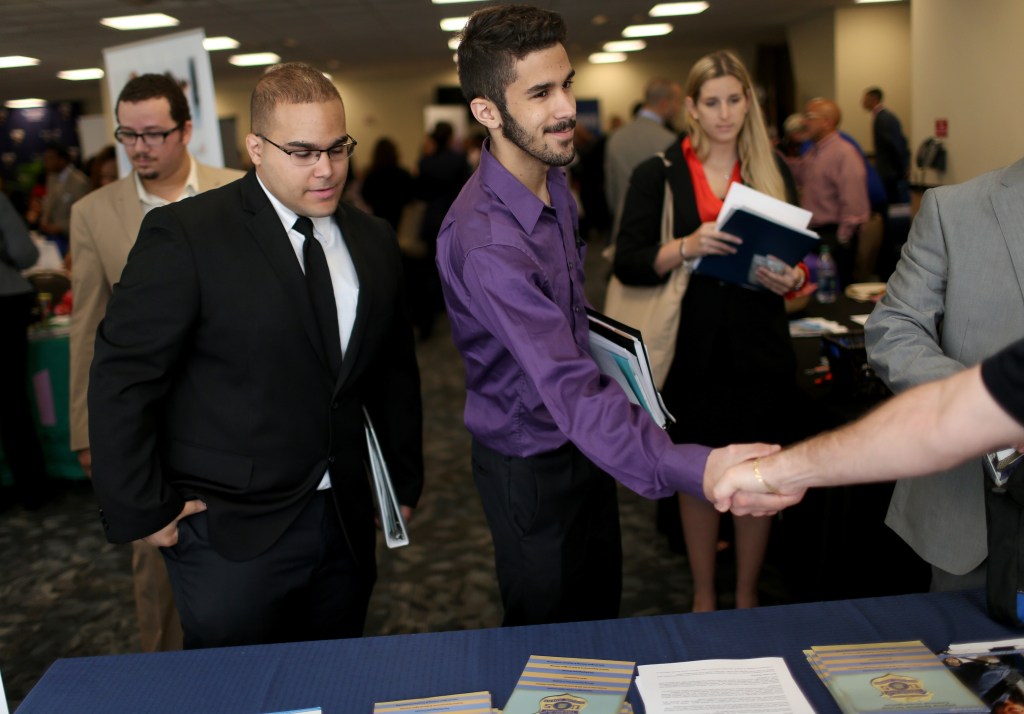
Veterans’ post-service employment problems may have as much to do with their own unrealistic civilian job expectations as their new employers’ unfamiliarity with the military, according to new research released Tuesday.
“Faced with having to start from the bottom or entry-level positions, (veterans) often became very frustrated,” the report states. “In some cases, these clients are willing to risk homelessness before taking one of these lower-paying jobs.”
The study, conducted by Volunteers of America and the University of Southern California’s School of Social Work, also found veterans’ “continuation of military identity” as a major barrier to integration into civilian workplaces, creating an unspoken barrier between themselves and nonveterans with a different work ethic and habits.
Researchers paired those findings with a host of well-publicized post-military struggles — mental health issues, stigmas surrounding military service, skills translation and credentialing problems — to recommend better transition resources, especially for individuals with service injuries or less-than-honorable discharges.
“You have a lot of veterans who are doing well getting jobs, but some aren’t doing so well. And some are going to go back and forth for a bit,” said Anthony Hassan, director of USC’s Center for Innovation and Research on Veterans and Military Families.
“We need to make sure we’re helping all of them.”
Like similar recent studies, the new research advocates for a holistic, public/private support system for veterans, to prevent small frustrations from becoming insurmountable obstacles.
But officials involved with the work also pushed for better transition services from the military, including ones that set realistic expectations and long-term career goals for troops leaving the service.
The report noted that many veterans in rural areas in particular struggle to find appropriate jobs, and veterans in all areas forced to take undesirable or underpaid work find their own motivation quickly stripped away.
The full study is available on the Volunteers of America website.