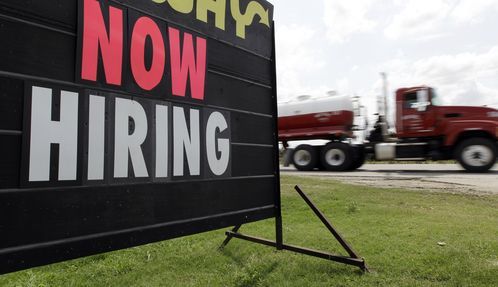
The Army in fiscal 2016 saw its lowest amount of unemployment compensation for former soldiers in 13 years, according to an Army release.
The Unemployment Compensation for Ex-Service Members, or UCX, paid out in fiscal 2016 was $172.8 million. This is the first time it has dropped below $200 million since 2003, when it was $152 million,
the release said.
The UCX payouts hit a high in 2011 at $515 million but have been decreasing since.
So far this year, the average veteran unemployment rate is 5 percent, according to Military Times calculations of Bureau of Labor Statistics information. It’s the lowest annually recorded level of unemployment for post-9/11 veterans.
Economic factors, as well as the Army’s effort to better prepare soldiers for employment in the civilian sector, contributed to the decrease in unemployment payouts, according to the release.
Transitioning soldiers are required to complete the Soldier for Life-Transition Assistance Program before they leave the Army. The program helps troops develop civilian career skills, including resume writing, job application preparation, military skills translation and financial planning.
The Army also partners with organizations and employers across the country to connect soldiers with civilian jobs upon separating.
There have been concerns, however, regarding veterans who receive unemployment checks while attending college on the Post-9/11 GI Bill, but federal officials aren’t sure how many vets are receiving both benefits. The GI Bill pays out tuition and a living stipend for student veterans.
If veterans are collecting unemployment while going to school and not searching for a job, then the unemployment rate could look higher than it really is.
For example, if 100 people transition out of the military one year, and 20 of those file for unemployment, that would show a 20 percent unemployment rate. If 10 of them were actually in school and not looking for work but still collecting unemployment, the unemployment rate would appear to be double what it actually was.
If another 100 people transitioned out of the military the following year and 10 were employed and 10 were in school but did not collect unemployment, it would look like employment had fallen by 50 percent, when it reality it stayed the same.
If another 100 people transitioned out of the military the following year and 10 were employed and 10 were in school but did not collect unemployment, it would look like employment had fallen by 50 percent, when it reality it stayed the same.
In 2015, Congress approved a law that would end unemployment pay for GI Bill users, but the details of when and how it will go into effect are being worked out.
The Department of Labor is working with state and federal agencies to figure out how to identify which vets are receiving which checks, since no current system exists.
States are required to verify if an individual is using the GI Bill when they apply for unemployment, and if the answer is yes, the veteran is disqualified for unemployment benefits, according to a spokeswoman with Army Human Resources Command. ((So this system isn’t working then?
((Saw this on statesidelegal.org:
If the State where you are applying for benefits allows students to get unemployment compensation, you may be able to get UCX if you are getting help from the Montgomery GI bill. However, most States do not allow any students to get unemployment compensation.))
Charlsy Panzino covers the Guard and Reserve, training, technology, operations and features for Army Times and Air Force Times. Email her at cpanzino@militarytimes.com.