After admittedly having stepped away from information operations after the Cold War, the joint force is looking to reinvest in capabilities, training and experimentation to figure out where they should reside within the current force structure.
The Army has been working on a pilot program to do just that.
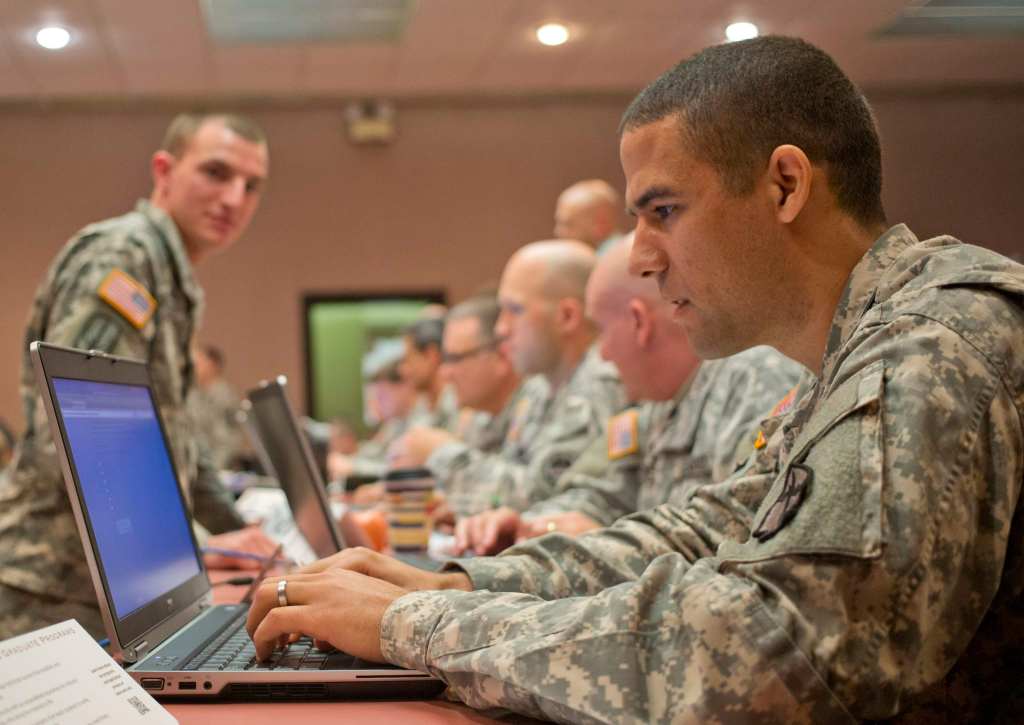
On page 107 of budget documents released Feb. 12, the Army outlines $14.7 million for home station training in information operations.
The operations and maintenance budget document states the Army increases funding in both IO and cyber training costs, adding mission ready IO teams, IO reach back support and World Class Cyber Opposing Force to provide enhanced training capability.
This all goes toward operationally prepared IO teams, target support folders on high value insurgents or insurgent groups and emulate a composite of adversary cyber and information related capabilities.
The Army also provides research and development funding within the IO space, according to documents released this week. In FY2019, documents indicate $5.3 million for offensive information operations technologies that “designs, codes and evaluates cyber architectures, software, tools and techniques that identify and capture data traversing targeted networks for the purpose of Cyber Electro Magnetic Activity (CEMA) or otherwise countering adversary communications. Cyber capabilities include detection, identification, exploitation, direction finding, geolocation, and denial of service.”
FY2019 plans for this effort will examine:
- Machine learning for threat assessment, decision aid, mission choreography;
- Determine algorithm design needs for recognition and battle damage assessment for the purposes of survey, network topology understanding and effect assessment; and
- Refine CEMA interface definitions to include a mechanism for service/capability discovery to address solidifying mission management across unified land operations platforms.