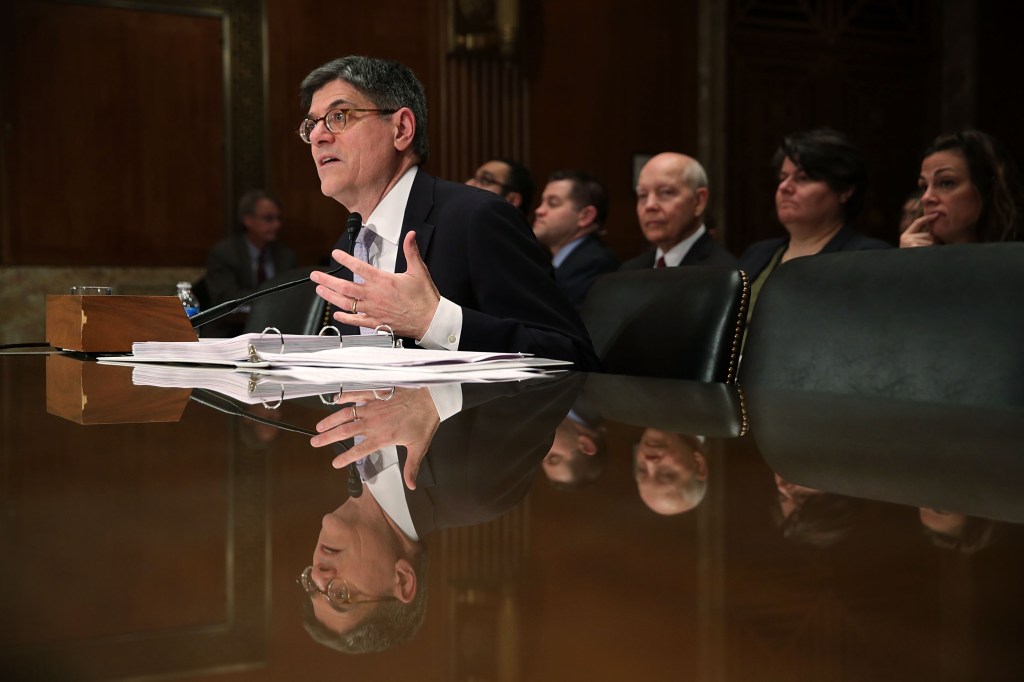
The agency tasked with overseeing the nation’s financial stability in the wake of the Great Recession might not have the authority to do so, according to a March 28 Government Accountability Office report.
The report, which looks at untangling the complex Web of the federal government’s financial regulatory system, claims that the Financial Stability Oversight Council — a 10-member panel created by Dodd-Frank and charged with managing systemic financial risk — has unclear and limited authority.
“Although FSOC’s mission is to respond to systemic risks, which may involve multiple entities, its recommendations are not binding and do not guarantee regulatory response,” the report said.
Related: Read the report.
The FSOC includes the Secretary of the Treasury, chairman of the Federal Reserve, chairman of the Securities and Exchange Commission and other agency chiefs in the financial sphere who are tasked with promoting market discipline and identifying financial threats.
But because of the complexity of the system and how the enforcement responsibilities are divided, the committee may be unable to address wide-ranging financial threats, similar to those that occurred during the 2008 financial crisis.
The report said that Dodd-Frank made regulatory agencies responsible for policing financial entities and activities. FSOC has powers to address specific entity risk, but those powers are limited when it comes to risk spread across many entities.
“As a result, FSOC may lack the tools needed to comprehensively respond to systemic risks that may emerge.”
The report said that while FSOC has improved interagency cooperation, there was not “reasonable assurance” that the committee received all of the information needed to identify potential risk due to data-sharing restrictions between agencies like the Office of Financial Research and the Federal Reserve.
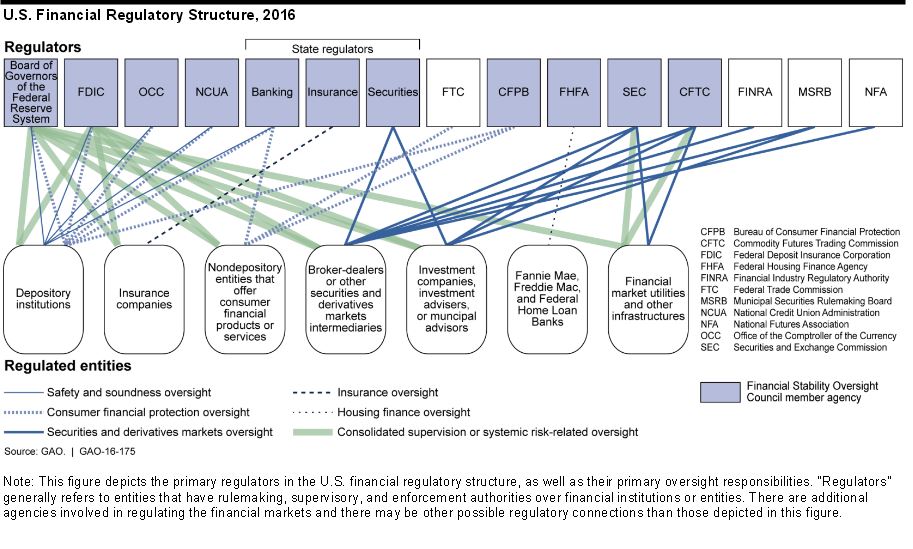
The GAO also found that the overall financial framework is so interconnected that fragmentation and overlap have occurred between agencies, resulting in regulatory inefficiencies and inconsistencies.
The report recommended congressional action to reduce overlap and fragmentation, including reducing the number of agencies tasked with depository oversight, applying more consistency in financial and consumer regulations and align FSOC’s authority with its mission.
GAO also offered three executive recommendations including having OFR work with FSOC on developing its risk monitoring tools, having the Federal Reserve collaborate with FSOC on disclosing more information of its systemic risk monitoring in committee deliberations and that OFR and the Federal Reserve identify individual and common goals, while developing progress plans and strategies to tackle those goals.
Federal Reserve and OFR officials agreed with the recommendations and noted that other agencies, like the National Credit Union Administration, expressed concerns of the intent of some recommendations, which GAO later clarified.