
The White House Office of Science and Technology Policy is in the midst of creating an Open Innovation Toolkit to lead federal agencies through the process of creating avenues to leverage the work and interests of active, engaged citizens to solve government problems.
Several agencies have already begun utilizing “citizen science” and crowdsourcing to bolster their data collection efforts, including the Federal Communication Commission’s “Measuring Broadband America,” in which citizens volunteered information on their Internet broadband speed, and the Environmental Protection Agency’s “Air Sensor Toolbox,” a means for tracking local air pollution.
A governmentwide toolkit will codify the lessons learned from these existing efforts and guide other agencies in following suit.
RELATED
FCC releases crowdsourcing app
How agencies are crowdsourcing their way out of problems
Agencies finding it hard to follow through on open government order
“Citizen science is a form of open collaboration in which members of the public participate in the scientific process, including identifying research questions, collecting and analyzing data, interpreting results, and solving problems. Crowdsourcing is a process in which individuals or organizations submit an open call for voluntary contributions from a large group of unknown individuals (‘the crowd’) or, in some cases, a bounded group of trusted individuals or experts,” OSTP explained in a Dec. 2 blog post. “The Toolkit will help further the culture of innovation, learning, sharing and doing in the federal citizen science and crowdsourcing community.”
The toolkit will also help agencies meet the goals outlined in the “Second Open Government National Action Plan,” established by President Barack Obama in December 2013.
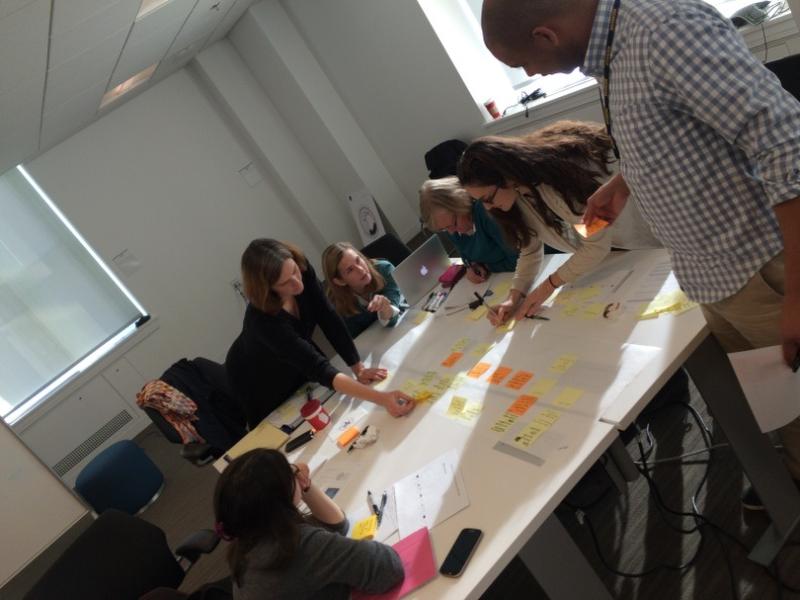
The effort began with a Nov. 21 design workshop featuring members of the Federal Community of Practice on Crowdsourcing and Citizen Science (FCPCCS), who chimed in on the “types of tools, resources and networks needed to plan and implement citizen science and crowdsourcing projects,” according to OSTP.
(Reaching out to more than 100 federal employees from some 20 agencies, OSTP pointed out the workshop itself was a crowdsourcing effort.)
The OSTP plans to add challenges and prizes to the guidance, as well, and will bring together several federal stakeholders in early 2015 to work out the details as the full toolkit comes together.


