Customs and Border Protection is pushing a two-pronged approach for its agency over the next two years: modernize its systems and strengthen its partnerships with outside groups, according to its top official.
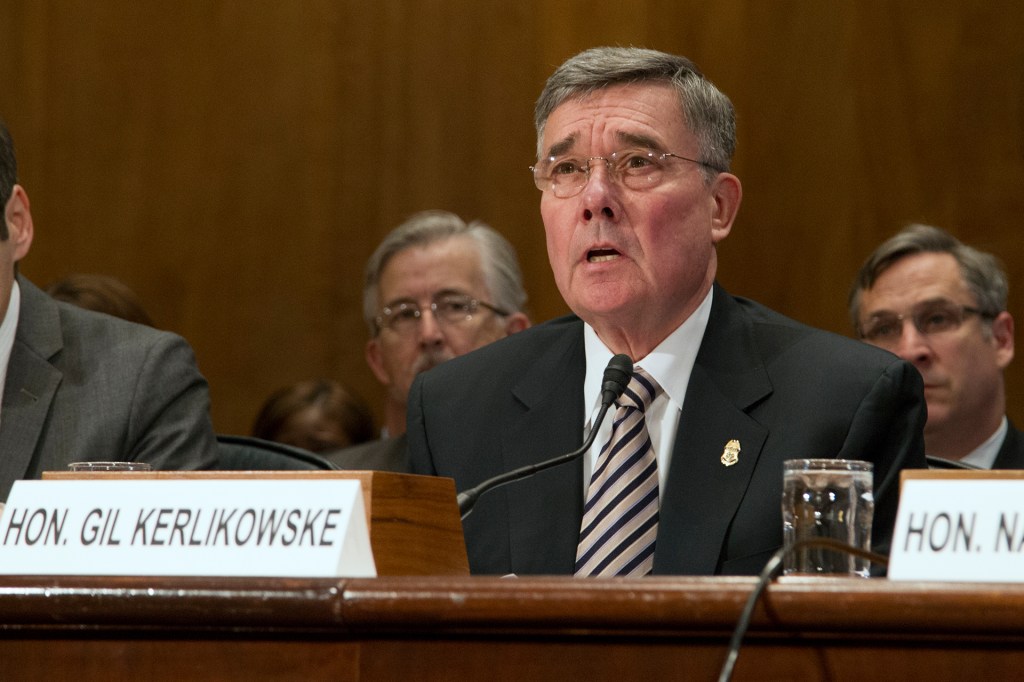
Gil Kerlikowske, commissioner of CBP, spoke to the U.S. Chamber of Commerce about the efforts the agency is undertaking and how it is focusing on modernizing its systems to provide better customer service while increasing its cooperation with outside groups to enhance its mission effectiveness.
The linchpin in its strategy is falling into place as the agency works to finish and implement its Automated Commercial Environment (ACE), which will allow the private sector to report imports and exports to CBP and for the agency to determine their eligibility. ACE will streamline the process, cut down on manual, paper-intensive processes and eliminate paperwork, while making it easier for companies to efficiently comply with laws and regulations, according to CBP.
The ACE will be implemented across all of CBP’s import and export systems by Oct. 1, 2016. But the agency has set earlier deadlines to begin rolling the system out for smaller aspects of its systems, according to Kerlikowske. CBP will be using ACE by May 1, 2015, for companies filing cargo lists and by Nov. 1, 2015, for all cargo import and export paperwork, he said.
“You clearly recognize what a huge shift this is moving from this paper-based, fax and original-signatures system. We have moved to a faster, modernized and more cost-effective electronic submission process,” he said.
The agency is also working on upgrading its bond system — which is when a company or organization applies for paperwork to help secure a transaction across international lines — in order to make the process easier to use and more efficient.
In the old bond processing system it could take up to five days to get a response from the agency, he said. Now, customers can expect a response in 10 to 15 seconds, and more and more of the private sector is using it.
The CBP fiscal 2016 budget also calls for increased investments in other programs, including:
- An increase of $85.3 million to upgrade its noninvasive scanning technology. CBP conducted 7.2 million exams using the scanning technology, and by cutting the time it takes the scanners to inspect cargo, the agency would save millions of staff hours, according to the agency.
- An increase of $12.6 million to help CBP revamp its business processes around revenue collection and financial reporting.
- A $29.4 million boost to a program that will allow foreign visitors to put visa information into a website in order to determine their eligibility to enter the country and allow the CBP to gauge risk.
CBP is also reorganizing its expert advice and technical assistant offices into 10 “centers of excellence” based around the country to answer specific questions about a variety of trade, import/export and other border issues.
The agency has already set up three centers: questions about electronics imports and exports in Los Angeles, pharmaceuticals in New York City, and petroleum and natural gas in Houston, according to Kerlikowske.
CBP will be setting up seven more across the country in the next few years. The centers will be available in a variety of formats, as well as by phone and online, and will work with the private sector to provide advice and solve problems, he said.
CBP is also working to strengthen its interagency partnerships, such as the CBP and Transportation Security Administration joint efforts to target and mitigate potentially dangerous air cargo, he said.
The agency also works with the FDA and the Consumer Product Safety Commission to help identify dangerous imports or exports, Kerlikowske said.
“We need to continue to collaborate and work together,” he said. “We can be a huge benefit to these other agencies. The more they trust us the more we can work with them.”
He said that while the agency is working as quickly as it can to modernize its systems, there are still more areas that need to be revamped.
“I recognize that while we have some major efforts already underway there are some areas that need additional focus and they need more work,” Kerlikowske said.
CBP will also be looking at boosting its trade enforcement operations by providing increased training and identifying areas where the agency can do better, he said.
The agency also has too many regulations and CBP will be devoting time and energy into working to reduce or streamline the regulatory burden on businesses, Kerlikowske said.
“We have tons and tons of regulations. We can improve and streamline the process,” he said. “It’s a complex discussion — it’s time consuming and takes incredible amounts of time — but it’s invaluable.”
But CBP will also keep working to improve on its services, enhance its operations and find ways to fulfill its mission more efficiently and effectively, he said. It is just a matter of being willing to try new ways of operating, Kerlikowske added.
“Change is a lot like heaven: everyone wants to get there, but no one wants to die,” he said.