Thousands of Marines have now rotated through Australia on one of the Corps’ newest and most sought after deployments — and they have some advice for other leathernecks on tap for a six-month adventure Down Under.
In October, about 1,200 Marines with 1st Battalion, 5th Marines; and Marine Heavy Helicopter Squadron 463; and Marine Aviation Logistics Squadron 24 returned to the U.S. following half a year came home after spending over six months in Australia. They were just the third group of Marines to form Marine Rotational Force-Darwin, which deploys to the Northern Territory. the latest group to return from one of the premier deployments in the Corps, and they have some advice for those who will follow in their footsteps.
Corps officials haven’t announced what units will deploy to Australia next spring, but the number of Marines is only going to increase with plans to rotate a full Marine air-ground task force — about 2,500 Marines — through the country starting in 2016.
“I don’t know if any of your have been up there on a rotational assignment, but you’ll probably get there at some point,” Defense Secretary Chuck Hagel told Marines during a stop a speech at Camp Pendleton, California, this summer.
Shortly after they wrapped up their post-deployment leave, Marines from 1/5 gave their definitive account of what other units can expect if as they too head to Darwin.
Marines from 1/5 dThey said the deployment was a to said Darwin was an unique experience, according to the Marines with 1/5. They’ve fought alongside the Aussies Australians in Iraq and Afghanistan, but training with alongside one of their closest allies, and one of the most capable fighting forces in the world, was a different experience. Besides the raw capabilities, there’s no language barrier separating the two forces, making it easy for Americans and Australians to not only work together but to hang-out together off-duty as well.
There’s a lot to love about the deployment, they said, including The short version: enjoy the chow lamb, bar crawls, rugged terrain, and bonding training with Aussie soldiers. the training, and your new Aussie friends.
But Marines should be mindful of the Aussie wildlife, they warn, because — as one Marine put it — careful, everything there in Australia, from the birds to the crocodiles and to the snakes could be deadly, is trying to kill you. There’s even a form of dirt that can leave a Marine with a nasty rash. And since the cost of living is high, there are some items you won’t want to leave home without. high prices on everything might damage your wallet in the process.
Their advice could get out to good use. The Defense Department is ramping-up rotations through Darwin, Australia and plans to send 2,500 Marines per year by 2016.
From Marines who’ve been there, here’s your guide to surviving a deployment Down Under.
Strengthening bonds
The obvious goal of the deployment was to become better war fighters alongside the Australian Aarmy. Besides that, Marines were charged with becoming better friends with their ally and to build on their partnership that friendship whenever possible.
Lt. Col. Keven Matthews, 1/5’s commanding officer, said they paired Marines in certain communities with their companies with their Australian counterparts, so Marine American logisticians trained went with Aussie logisticians, and engineers with engineers and so on.
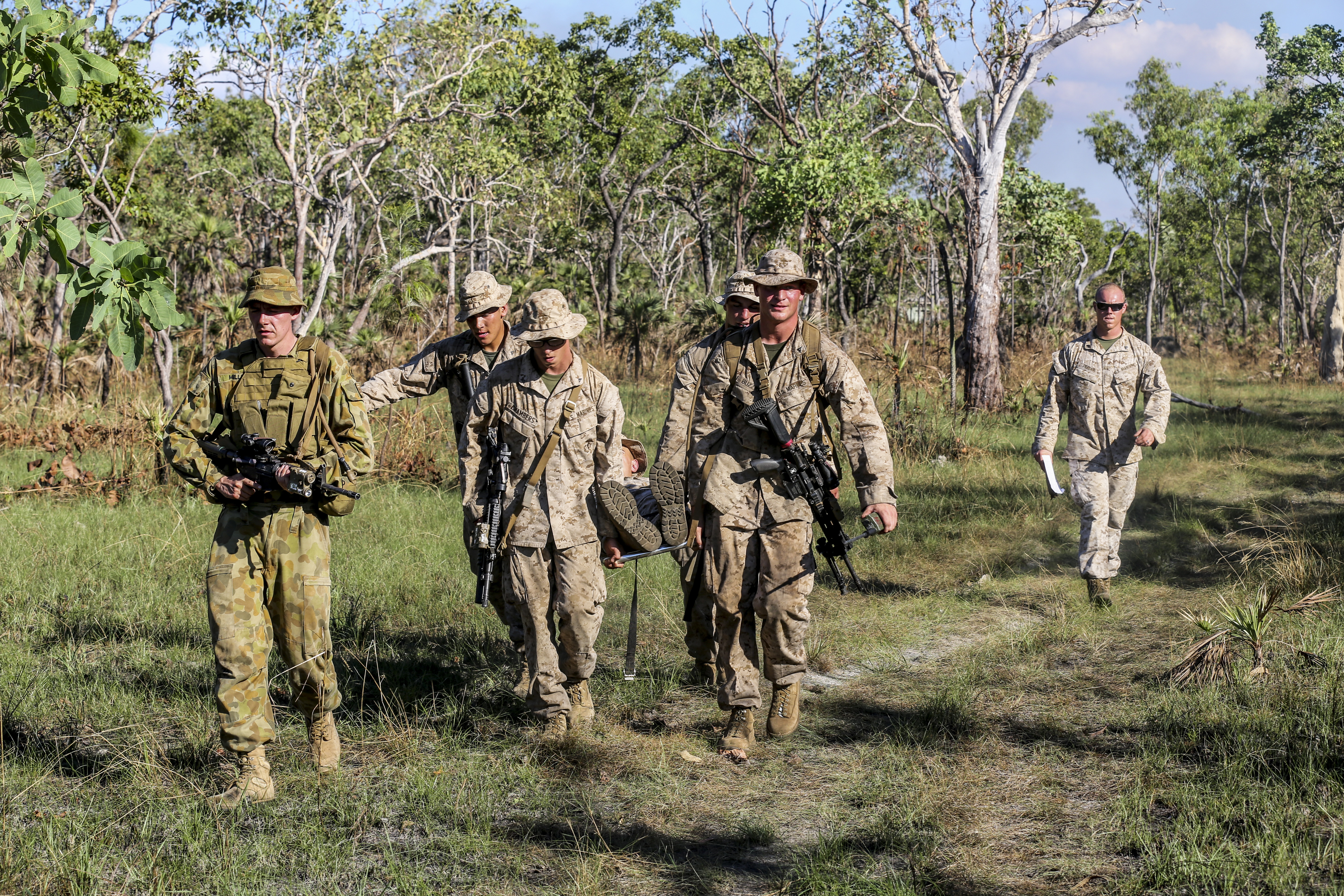
Marines and Australian Army soldiers complete an exercise on May 26 aboard Kangaroo Flats Training Area.
Photo Credit: Cpl. Scott Reel/Marine Corps
He told his Marines to adjust their training so they could work with Australians whenever possible, to include physical training PT with them, and socializing. to socialize with them as well.
“Build that relationship and make them like us, and make them like you,” he said. “And wWhatever they want to do with you, do it with them, whether it’s training, or social or sports.” he said.
Cpl. Clp. Erik Sherman, a machine gunner and a squad commander, was one of five Marines who took a junior leadership course with 95 Australian soldiers, an experience that let him study, train and go on liberty with his hosts. Australians are so easy to get along with that he has since even invited some become friends with, and now some are going coming to his wedding, he said.
“They pride themselves on having a laid-back attitude and using humor and a positive attitude in pretty much everything you do,” Sherman said. “The Marine Corps preaches a positive mental attitude, but, if anything, they helped me install a positive attitude in the unfavorable circumstances of work, the more menial tasks…to smile during those.”
Building friendships in Australia extended beyond the military, too. Darwin, which is a Winning over the Australian military, a force mostly made of young, hard-charging men, is one challenge, but winning over the locals in Darwin is another. By all accounts, the city of 130,000, has a small town feel, which meant there were local concerns about . And with that atmosphere comes small-town concerns, particularly when 1,200 members of a foreign military are moving in.
The Marines had to be good guests, Matthews said.
“Before we got out, there was a lot of trepidation about 1,200 Marines and helicopters,” he said. “There was a lot of fear about what this growth was going to look like and how the Marines would conduct themselves in town, and helicopter noise and all that. We kind of assuaged a lot of fears and concerns and we’re quite pleased with our conduct.” Matthews said.
The Marines did more than just behave themselves during It was more than just good behavior on weekend liberty, he said. They had to be role models and good to be around, he said. Some of the Marines worked with disadvantaged youth, and others played sports with the locals in order to build a rapport.
“The Marines really embraced the fact that they’re ambassadors,” said Sgt. Maj. or R. DeLeon, 1/5’s sergeant major. said.“They’ve made a lot of friends.”
Matthews said the deployment made it easier for more Marines to go to Darwin. that more than anything else,1/5’s deployment will ultimately make it easier for bigger rotations to move through Darwin.
“I think we set the conditions for future growth,” he said. “I think we left everybody in Australia with a really favorable impression of the Marine Corps.” he said.
Be adaptable
Whenever possible, Marines tried to include Australians in their training, said Maj. Nathan Fleischaker, 1/5’s operations officer, said. They didn’t integrate at a staff level, but Australians worked under Marine U.S. commanders and vice versa. This helped develop command and control procedures, he said.
When Marines train with any foreign military, there are tactical and cultural challenges they have to overcome, and working with the Aussies was no different.
During training exercises, In drills, the Australian Aarmy doesn’t emphasize live fire training as much as Marines do, Matthews said. But Fleischaker said that they do include live fire as a portion of extended exercises in a way that the Corps does not. That is type of training event required Marines to do more tactical planning on the spot, but it took longer for Marines to get through the drill, he said.
Australians also tend to nd they operate in smaller groups, Sherman said. Instead of squads of 12 or 13 men, they’ll use about around eight. They they don’t fill positions on the team with specialists, like a dedicated marksman, bur rather fill them with infantrymen who can do several jobs.instead of filling spots on these teams with someone in a certain military occupational specialty, dedicated positions, like a marksman, Australians will filled them with generalists who can do several jobs.
They also use different hand signals and different formations, Sherman said. This caused a hiccup during one exercise when he tried to instruct Australianshow
to maneuver but they couldn’t immediately interpret his signals.
“It’s almost like they’re written in a different language,” he said.
Australians don’t plan as far in advance as Marines, said Master Gunnery Sgt. Antonio Rivera, the operations chief, said. If there’s a big exercise on the horizon, Marines will start setting up the pieces while Australians haven’t begun to work on it. But when they get started on making preparations, they’re reliable, know their stuff and consistently show up at meetings. They’re easy to depend on, he said.
But tThe Australian workweek is also lighter than what Marines are used to, he said. There‘s are plenty of holidays and there were several four-day weekends. Also, on Thursdays, tThe Australian army stops work on Thursdays to play teams sports, and Fridays are typically half days or spent on light duty. , or people have light duty — especially civilians working on the base.
Still, the challenges were easy to overcome since they were working with such a strong partner and advanced military, Matthews said. Matthews said this type of bilateral training is different in Darwin than elsewhere. Australia has an advanced military, they’re well-trained, and they know how to operate. They carried their weight and Americans didn’t have to hold their hands like they sometimes have to when training with other partners, he said.
“The Brigade was a really engaged partner. I felt like in my first time in all the years I’ve been in the Marine Corps, I was with a partner who felt that they had as much at stake in the success of the rotation as we felt,” Matthews said. “Everywhere that Marines go, we feel like we’re doing 90 percent of the work and the other partner is along for the ride. But there it was a 50-50 relationship and they want it to work as badly as we do.” he said.
High price tags
When it came to shopping, the Marines agreed about one thing — Australia isn’t cheap. Here’s a look at the costs of some common items or services Marines might want to consider:
- A haircut on base costs about around $25 — far from the not the $6 that Marines typically pay.
- A soda is about around $5 and a 16-ounce Gatorade costs approximately around $3.50.
- A can of Pringles chips will set you back about round $5.
- A small package of laundry detergent runs about $8.
- A case of beer costs about round $65.
- A container of protein powder that goes for $25 in the U.S. goes for $80 in Australia, something Marines might find for about a third of that in the U.S.
“It’s not cheap over there by no means,” Rivera said.
The list of wallet-crushing price tags spans groceries, restaurants and services. There’s no commissary or exchange offering reprieve from the high cost of living; Marines have to live off the Darwin economy.
The price of haircuts alone left some Marines getting their high-and-tights a little higher and tighter than normal, they said. [[OK, Josh? ok -J. stew]]
Fleischaker said that the high costs made Amazon Prime memberships popular. With an annual subscription to the massive online retailer, Marines could buy goods at U.S. prices and then have them shipped to their Army Post Office address.
While it certainly won’t make up for the price difference, tipping is very uncommon in Australia.
Exotic imports
Some items can’t be bought in Australia, no matter things, no matter how much Marines are you’re willing to pay, just can’t be bought in Australia.
For better or for worse, one staple in the Corps — smokeless tobacco — is tough to find or practically non-existent. Stores don’t carry it and Amazon doesn’t sell it.
“You just can’t buy dip there,” Fleischaker said.
If you smoke, Australia might make quitting an economic necessity. Due to a series of anti-smoking taxes, cigarettes cost more than over $1 each apiece, making them some of the most expensive smokes in the world. Australians typically put 25 cigarettes in a pack, five more than Americans, so they run about round $25 apiece.
Besides tobacco, uniform items are also hard to come by. Matthews recommends that Marines bring extra blouses and trousers, and Rivera said to pack insignia for your current and next rank since these accessories aren’t common.
American football is on TV television, but might be better enjoyed with a pot of coffee than a few beers. Darwin is 17 hours ahead of Camp Pendleton, which means that a Sunday NFL game kicks off at about round 2 a.m. on Monday, local time.
Barracks and chow
Lamb. Get used to it because it’s always on the menu.
“It was like ‘What are we having today? Oh, we’ve got lamb, stir-fried lamb and fried lamb. We’ve got lamb, lamb, lamb today,’” Rivera said.
Other Marines said they ate more lamb over the deployment than they had in their entire life. It was well-prepared, but different from their beef and chicken-filled diet back home.
Most meals included a meat, potato and a vegetable, Matthews said. Chicken was common, as was barramundi, a type of fish. There was beef, but it tasted different from what’s available in the states. Mexican food, a staple in Southern California, was rare, he said.
Dishes were typically prepared the same way as they are back home, but there were more recipes with Southeast Asian flavors, including curries, Fleischaker said.
Staff Sgt. Matthew Kohler, a machine gunner and squad leader, said the food was well-prepared and the cooks were considerate of people’s requests and allergies. If you had a dietary need they would make sure to help you and give you a good meal.
“It’s different but it was good,” he said. “Staff there was very accommodating to all of our needs”
Vegemite, a brown spread with the consistency like peanut butter and a flavor like bullion, is always available, and is included in Australian Meals Ready to Eat MREs, Sherman said. Aussies love the stuff and it’s a national icon there, but it is so strong that even they use it sparingly.
“The first time I had it was an assault of my senses,” Sherman said. “I had too much of it, mind you, and it was interesting at best.” Sherman said.
Later a soldier showed him the proper amount to spread on bread or a cracker, and it the spread wasn’t nearly as overwhelming, he said.
“If anything comes out of this, it’s please, do not glop on the Vegemite,” Sherman said with a laugh. “Keep it to a bare minimum.”
The Australian military gets a lot of its culture from the British armed forces. In that tradition, officers, staff non-commissioned officers, and junior enlisted troops Marines and Australian soldiers had their own chow halls and lounges and they didn’t cross paths when eating.
“You could let your hair down,” Fleischaker said.
They also had separate lounges, Marines said.
Most of the Marines stayed in facilities at the Australian army’s Robertson Barracks, which in barracks at the DeLeon said the barracks were like condos. The typical room had a common area with a kitchenette and a living area with some couches anmaybe television. There was also a shared shower and head. Four bedrooms branched out from there, with two Marines per room. Staff NCOs and officers typically got their own room, he said.
Barracks didn’t have wireless Internet so Marines spent the first part of the deployment outside playing sports. Once they Then they figured out that could buy mobile Wi-Fi hot spots or international SIM cards for their phones, they out in town. After that were online regularly or on on their phone or computer, Matthews said.
Libo and libations
Darwin might be a drinking Marine’s haven. There are bars on post and Australian units often sell beer from their cantinas.
“There’s a pretty tremendous drinking culture in Darwin,” Sherman said.
The goal wasn’t to get drunk, but to unwind after work while making friends. Kohler said the Aussies have tight-knit unit cohesion, even after hours. “They have a very tight-knit unit after hours. It’s more of a social hour,” Kohler said.
Darwin has a nightlife with bars and restaurants, and Marines E-5s regularly went out with Aussie young soldiers, DeLeon said.
“Their leisures and liberties are very similar to ours” he said.The drinking age in Australia is 18, but Marines weren’t allowed to imbibe unless they were 21. They had shore patrols and stationed Marines at the entrance to the base. There weren’t any major liberty incidents, the Marines said.
The Marines went out would go out in groups of two or three, and at least one Marine in the pack had to be sober. Oftentimes older Marines would buddy-up with those underage for the night. In exchange for being the sober chaperon, their liberty buddy would pay for their meals and movie ticket, Sherman said.
Leaders with 1/5 also organized outings to a national park, a rodeo, a crocodile tour, and got free tickets to ball games. Inland, Marines could go there’s wild boar hunting or hiking, and other outdoorsy activities, Sherman said.
They didn’t get weekday liberty off base, and they didn’t give overnight passes during the weekend, but there were four weeks during the deployment when re Marines could take leave and travel on the condition that they remained in Australia, DeLeon said.
During the first half of the deployment the Marines contracted buses to get into town, but then they authorized taxis. It typically cost $50 to $60 one way for a 20-minute trip, Matthews said.
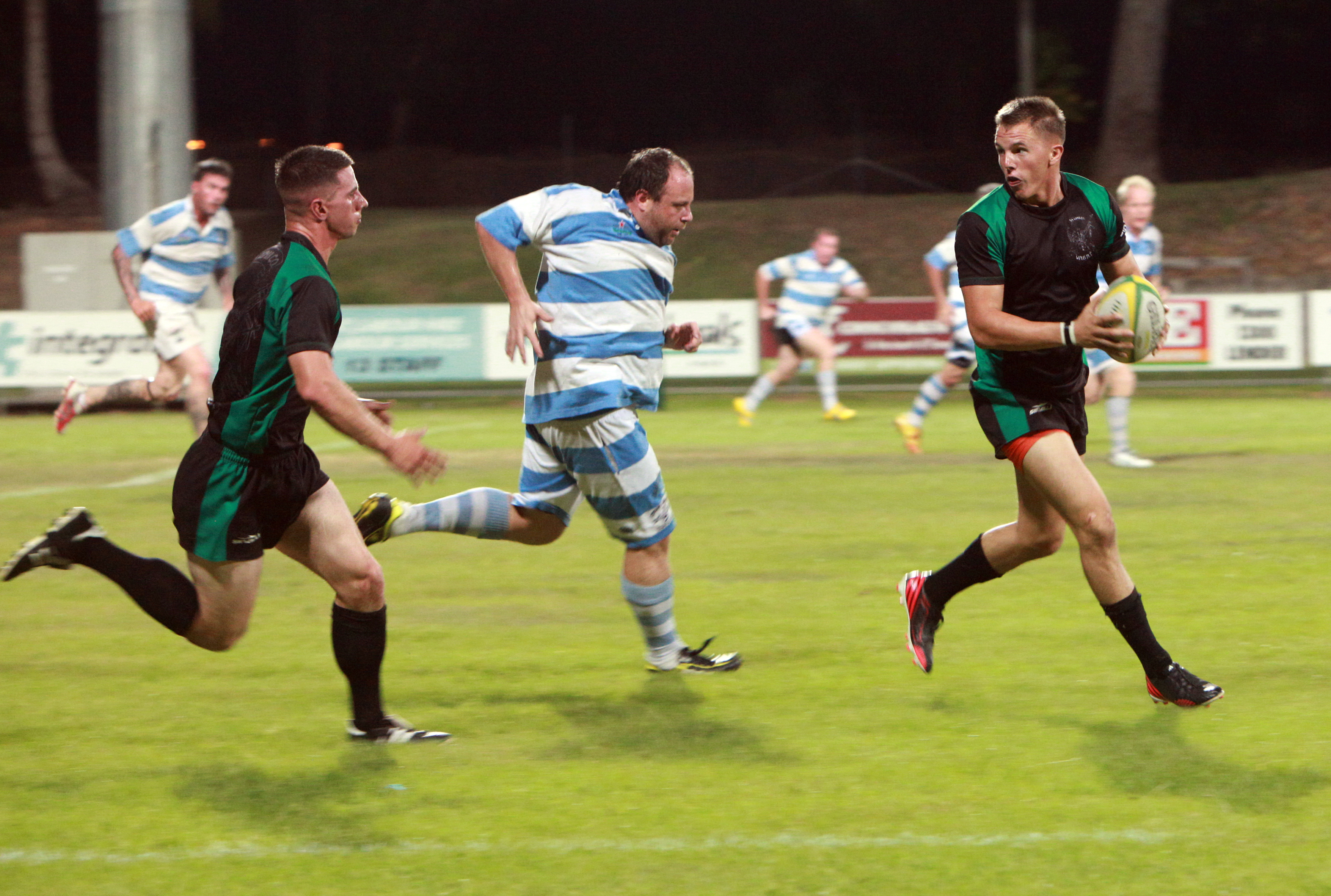
A Marine rugby team player prepares to throw the ball Sept. 21 during the first official 9/11-tribute game. The game was pre-determined a draw, so both teams walked away as victors.
Photo Credit: Sgt. Sarah Fiocco/Marine Corps
Aussie-style PT
In the Corps, a solid PT PT program is a sign of a good solid leader. But in Australia, they have soldiers with a military occupational specialties devoted to their own MOS who running a unit’s fitness program and operating their gyms.
Marines used two well-equipped gyms that opened early and closed late. There were lap pools, CrossFit gear, and just about any type of weight machine you would need, Kohler said. The gyms were big enough that there wasn’t a major crowd, and you might have to wait for one person to finish up a few sets before you got your turn on a piece of equipment.
Besides structured workouts, Australian soldiers do team sports every week, including . On Thursdays, Australians will work the first half of the day and then break to play rugby, Australian rules football or soccer. When the games are over they reconvene at the camp’s bars for beers and to hang out, Sherman said.
There a big advantage to this habit, Sherman said.
“Their unit cohesion, I thought, was off the charts,” he said.
Marines would play sports with Australian soldiers on Thursdays, but some also did athletics with local teams and colleges, Matthews said.

Wildlife warnings
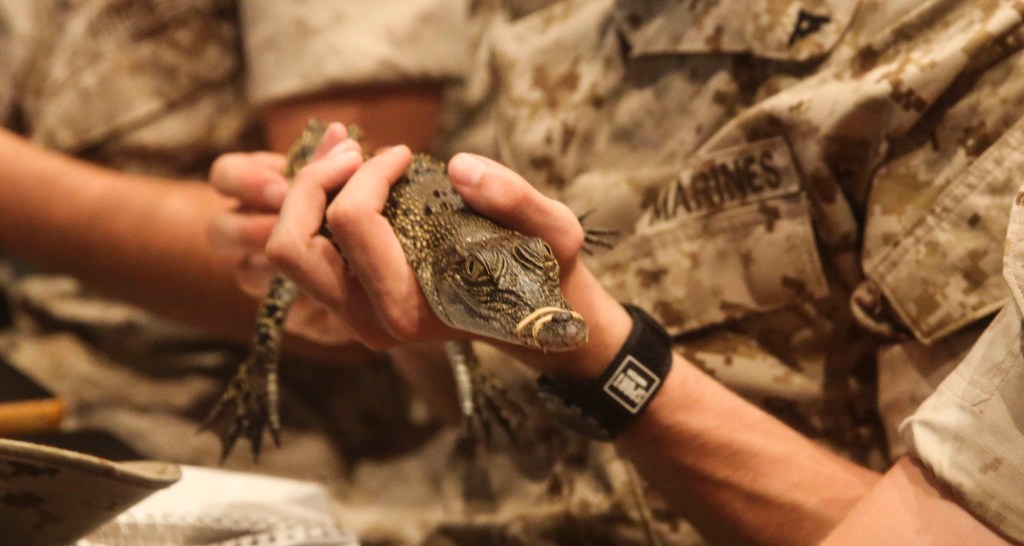
There are crocodiles. There are snakes. There are spiders. There are menacing birds.
“One thing that they boast is that every animal in Darwin is trying to kill you, actively,” Sherman said.
They even have dangerous dirt.
“They told us that in the transition between the dry and wet seasons, diseases come to the topsoil,” Sherman said. “It will give you a full body rash if you expose yourself to it.”
As for the animals, Matthews said the problem with Australiananimals is not just that they’re venomous, but they’re mean.
“The animals are aggressive there, that’s for sure. They’re not passive things,” Matthews said. “Well, Maybe the koalas.”
The numerous ways Marines can you could die by animal attacks at the hands of an animal were the subject of a handful of safety briefings.
“A couple of training areas we went to definitely had live crocodiles in the training area, so you stay away from them” Fleischaker said. “We heard stories about the various snakes, and birds and spiders that would kill you.”
Rivera said he had a close encounter with a snake during a training exercise. He was sitting down and one slithered between his boots. He said he wasn’t frightened, but it was another reminder of a Darwin truism.
“Everything there can kill you,” he said. “Everything.”