
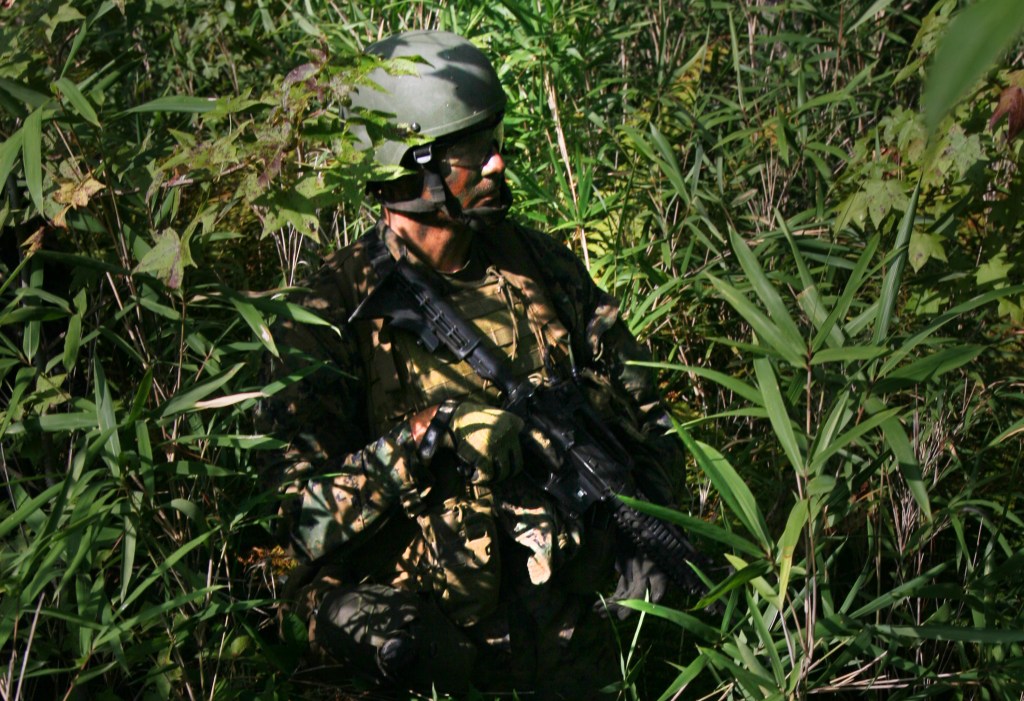
CAMP LEJEUNE, N.C. — A years-long study designed to prevent injury and improve training for MARSOC’s elite critical skills operators is preparing to kick off in North Carolina. at Camp Lejeune.
Led by rResearchers at the University of Pittsburgh’s School of Health and Rehabilitation Sciences are leading the study, which has the potential to inform MARSOC’s training regimen or the individual training course. It and may also help officials develop a more comprehensive profile of the ideal MARSOC operator.
The study is the last of seven conducted begun by UPitt starting in 2005 focused on injury prevention and performance optimizations for special operations and special forces troops from all the U.S. services. But researchers at MARSOC, which was created in 2006, may have the chance to broaden their scope and depart from the parameters set in the other studies.
“MARSOC is so young and willing to adapt that we can do some things different,” said Shawn Eagle, a research associate at UPitt and part of the three-man team assigned to study MARSOC. “…We’re kind of trying to break the mold a little bit with this study and be more free-flowing and adaptable.”
Early in the new year, researchers will move into a new laboratory at MARSOC’s headquarters at Stone Bay, North Carolina N.C., near the gym that supports the command’s Performance and Resiliency Program, Eagle said. The first pillar of their research study will be an injury and epidemiology study that will involve roughly 100 critical skills operators filling out an injury history survey. The goal here, Eagle said, is to determine which injuries might be more common at MARSOC than at other units, given the kind of training and physical demands placed on operators.
Then UPitt staff will conduct a variety of field studies with MARSOC Marines in the grueling nine-month individual training course that is a prerequisite for critical skills operators, as well as training with MARSOC troops in support capacities.
“We go into the field and try to understand the physical demand of what it takes to be an operator or an enabler,” Eagle said. “And that’s something that the leadership is pretty interested in, just to understand what the physical demand is, being able to quantify it.”
Task-and-demand analysis and findings from the field — whether, for example, greater upper body strength makes a Marine a more proficient operator — will be processed alongside data from an initial clinical trial. During In the trial, a small sample size of operators will commit to an eight- to 12-week training regimen devised by the UPitt faculty that targets any training weaknesses or deficiencies found in initial lab testing and through the first injury history survey. The results of Marines in the sample population with the prescribed training will be compared against a control group undergoing an ordinary training regimen.
“Let’s say that MARSOC [operators] tend to have weak hamstrings,” Eagle said. “We can put a clinical trial together where we emphasize hamstring work and maybe raise their threshold a little and decrease the injury as a result. That’s the primary goal. From there we could really go anywhere, so it’s kind of an exciting period.”
Among other research in the planning stages are a laser marksmanship and heart rate variability study which will involve a selection of MARSOC Marines with lasers attached to their weapons and heart rate monitors to study the effects of fatigue and other factors on accuracy.
Ultimately, it will be up to MARSOC leadership to decide how to use the resulting data from the slate of tests and trials, Eagle said. The study is planned to run for a minimum of three to four years, with the possibility of extending it further. At this point, he said, there are no plans to examine the implications of gender integration as part of the research. While female Marines are able to serve in MARSOC as enablers, only male Marines are allowed to become critical skills operators.
A spokesman for MARSOC did not immediately respond to inquiries about the upcoming study.


