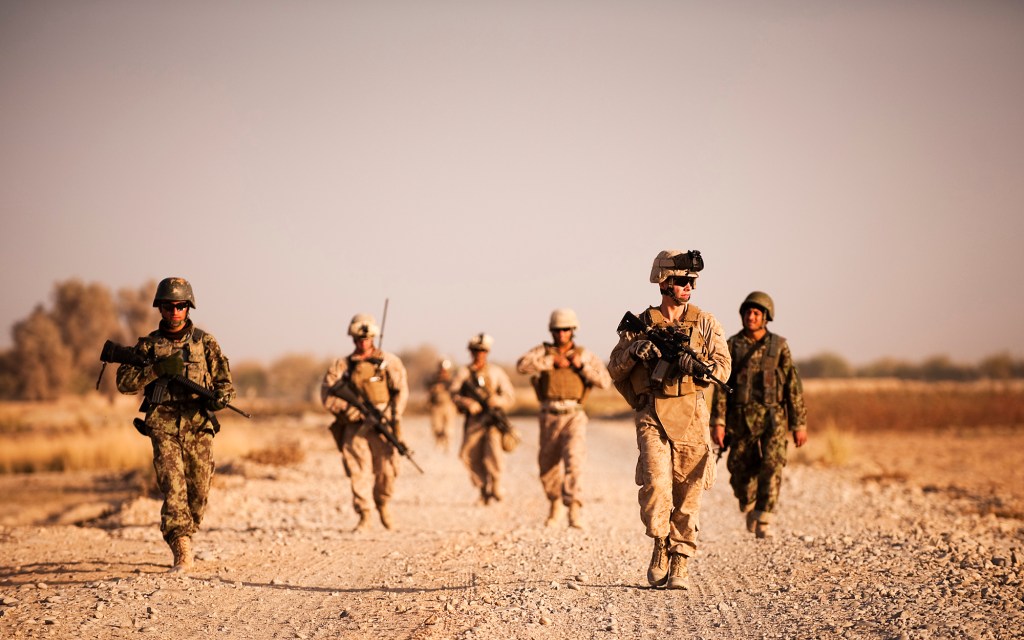
The Marine Corps’ new plan for developing infantry squad leaders offers Iinstant promotion, a handsome bonus, and a chance to deploy — and some grunts are wondering if there’s a catch. What’s the catch?
The roll-out of the Marine Corps’ new Squad Leader Development Program will offer 100 Marines all those incentives and a full complement of advanced training in exchange for a commitment to serve as an infantry squad leader or combat instructor for a full contract term.
Qualifying Marine noncommissioned officers will submit applications for the program to their division commanding general through their chain of command. But details about how the nomination process will work and when applications are due have yet to be released.
Marine Corps Times We spoke with Master Gunnery Sgt. Justin Aiken, infantry advocate and occupational field sponsor with Plans, Policies and Operations, to answer Marines’ all your questions about the new program and learn what the future holds. Excerpts of that interview edited for clarity:
Q. Why did the Marine Corps want to focus specifically on squad leaders?
A. Based on off of what we perceive to be future operations with Expeditionary Force– 21 and the company landing teams, we’re going to require more of our squad leaders than we have in the past. We want to be sure that we’ve prepared them as best as possible prior to that.
Q. This program is designed to fill gaps in experienced squad leader positions. How significant are those gaps?
A. I can tell you that we have more than over 1,400 squad leader billets. As of right now, the amount of Marines that have been through all the schooling that we provide for squad leaders is less than 100. Sergeants are in high demand at many positions, especially B-billets. Career progression pushes them to leave because they feel that that’s the only way they’re going to get promoted.
Q. How long have those gaps existed?
A. I can’t tell you that exactly. As far as I’ve been told, [Marine Corps Commandant Gen. Joseph] Dunford actually started this program about eight years ago, — that was when he began started putting this thing together. So he saw that as an issue that long ago.
Q.Is this program tied to retention or reenlistment at all?
A. This is not a retention ploy; this is not to get mMarines to re-enlist. This is to identify and give those Marines the bonuses and recognition that they’ve already shown that they’ve earned. If I have to use this program to get a Marine to stay in, that is not the Marine I want.
Q. Operationally, how do units without the right number of seasoned squad leaders perform in theater?
A. What I can tell you based on ff of the past is that Marines who that have been through school and have gotten their education prior to deploying have done very well. Marines who that have not gotten their education because they didn’t have the rank have done very well, too as well.
This program is not saying that you can’t be effective unless you go to school. This program is meant to accelerate our young leaders and give them something that they don’t have right now because of their rank. So we want to promote them and we want to show them that what they’re their doing is good and we want to keep them going down that path.
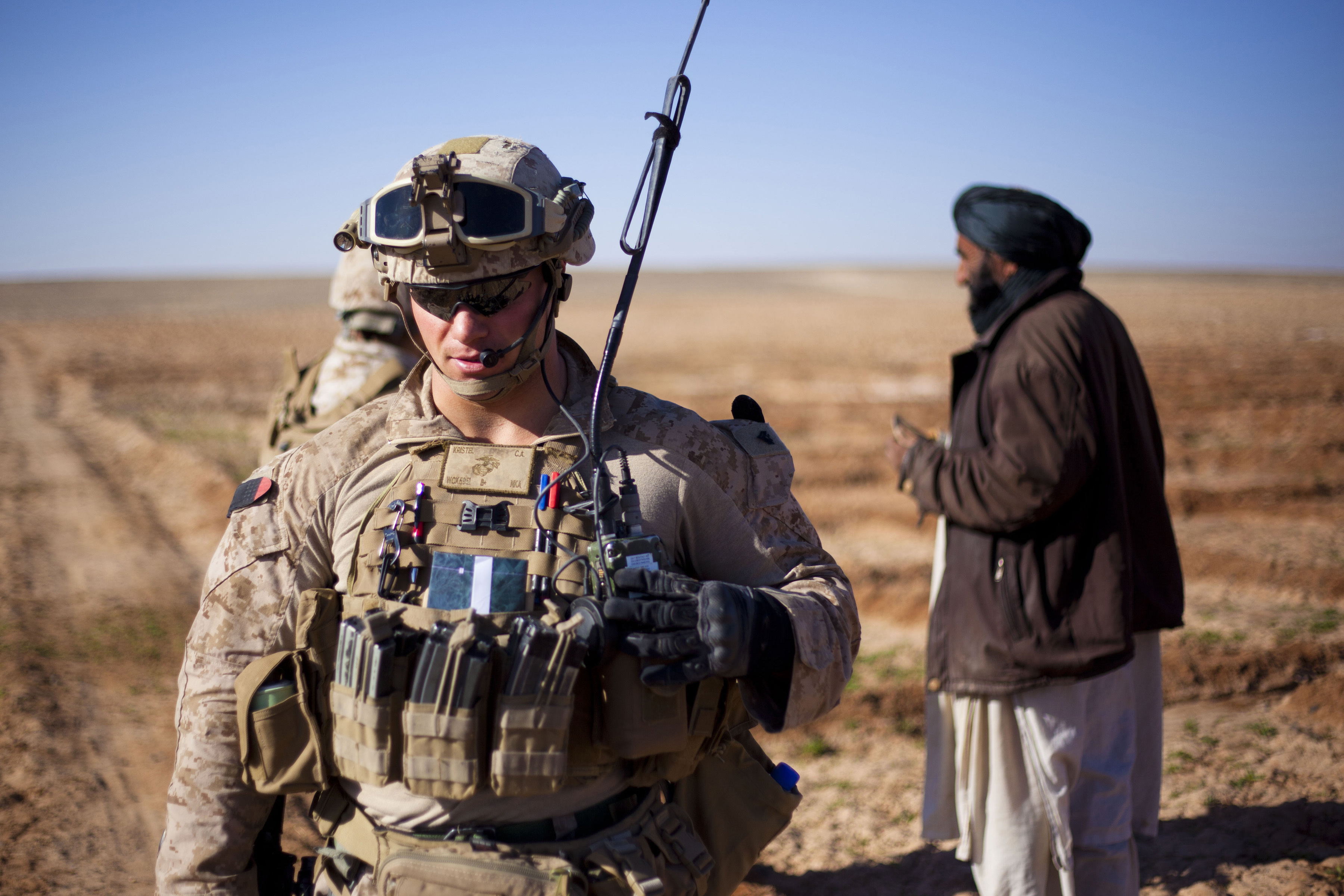
Cpl. Charles Kristel, a team leader with 1st Battalion, 9th Marines, leads a section of infantry Marines during a clearing operation in Afghanistan. Combat is one way for Marines to prove leadership capabilities when applying for the Squad Leader Development Program.
Photo Credit: Cpl. Paul Peterson/Marines
Q. Will combat experience be part of the criteria for NCOs selected for to the programSLDP?
A. It’s will be those commanders looking at those mMarines and determining who they believe is a future leader. It can be through combat, but there are lots of Marines deploying who that have not been to combat. They still demonstrate leadership every day.
Q. Why is a year to six months prior to the next deployment the ideal time to drop these really talented squad leaders into a new unit?
A. When a unit gets back from a deployment, they have a lot of disorder because of people leaving and people coming in — new people coming in and a lot of seasoned Marines leaving. It’s a very trying time for commanders and for young Marines, because Tthey don’t know who their leadership is. So we want to get a guy in there who’s that’s going to stabilize that leadership and be there for them to rely on.
Q. Is the program SLDP going to become the only way to become a combat instructor? How much priority will Marines CIs going through this program be given over other Marines vying to get that special duty assignment?
A. You don’t have to be on the SLDP program to go be a combat instructor. If [Marines] get assigned to thise SLDP program and they volunteer for combat instructor, we will get them into the first available class, which is part of the priority process, and they’re only required to do 30 months versus 36 months SDA time.
Q.How long will it take to wrap all infantry squad leaders into this program? How will that happen?
A. As far as the timeline, we don’t really know right now because we don’t know what the feedback will be is from the Marines, if they’re going to jump on this program or not.
Q.Why was it important to include bonus incentives in this program?
A. Actually, the commandant wanted incentives in this program. He wanted to make sure young Marines knew how important this program is and how important it is to be an infantry squad leader. The only way to incentivize this program is through promotions and bonus money.
Q.Will the bonus structure and bonus amounts change as the program gets bigger?
A. The bonuses are based off of fiscal constraints, so that’s something that we will have to adjust every year based on off of what our money is as far as the Marine Corps’ budget goes.
Q. We’ve heard a lot of criticism from Marines that leadership is proven at the unit, not based on selection to a program. How do you respond to that?
A. This is for Marines who have already demonstrated leadership ability. And they have been tagged by their command as future squad leaders. For all the Marines who that say, that doesn’t make a squad leader, they’re absolutely right — it doesn’t make a squad leader. It makes a better squad leader, because you’re talking about a guy who has been already been recommended.
Now we’re going to put him through a school, we’re going to give him some time to mature, we’re going to promote him and we’re going to say, “There you go, now you’re ready to rock and roll.”
Q.Could this initiative expand beyond the five infantry MOSs that are now eligible to participate?
A. As far as future expansion, there’s been discussion, but we’re waiting to see how this first year works out.
Q. Any sense of how much the program will expand year-to-year?
A. We have some ideas, but we’re not ready to let that out of the bag just yet.