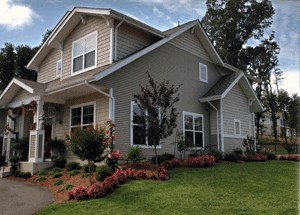
Troops living in privatized military housing might be paying extra as the result of increases in out-of-pocket housing expenses.
Under a policy expected to be signed soon, privatized housing tenants would be subject to those increases just like their counterparts living on the local economy.
Until now, rents in privatized housing — owned and operated by private companies — generally have been capped at the amount of Basic Allowance for Housing, designed to cover average costs of rent and utilities. Under the policy expected to be approved, troops could be writing checks to their privatization company for the difference between their BAH and the market rent.
In part, the change is designed to provide more equitable treatment of troops who live in privatized housing and those who live on the local economy. BAH doesn’t always cover rent on the local economy, where landlords charge what the market will bear. About 70 percent of troops live in off-base civilian housing.
Another concern is the future viability of the housing privatization program, which relies on BAH as the only revenue stream for the operation, maintenance, future repairs and replacements of troops’ privatized housing. Troops would be required to pay more out of pocket to make up the difference and ensure the continued viability of these projects.
As part of this year’s defense budget, Congress approved a Pentagon request to reduce BAH rats by 1 percent. In the short-term, the impact to service members is expected to be minimal because BAH rent protection applies as long as service members remain in their current housing at their current assignments, their BAH will not go down.
Privatization companies may not have to charge the extra rent unless the BAH decreases more than 1 percent or 2 percent.
Marine Corps and Army officials who responded to questions about the effects of the possible decrease in BAH on troops living in privatized housing — and the future viability of those projects — said they expect troops may be required to pay extra out of pocket.
“Accordingly, a 5 percent reduction in BAH would likely result in increased out-of-pocket expenses similar to military families on the local economy,” said Marine Corps spokesman Rex Runyon.
DoD has not yet issued a policy or direction to the military services, spokeswoman Maureen Schumann said.
These changes will complicate things for troops as well as privatized companies, said Joyce Raezer, executive director of the National Military Family Association. “Which begs the question. What’s wrong with setting BAH at 100 percent of the costs of rent and utilities? Why are we nickle-and-diming our service members?
“The BAH rates have put our people in better housing, partly because of privatized housing. But it also encourages people in the civilian community to provide better housing.”
The scaling back of the BAH “is a concern for the housing privatization program,” said Ivan Bolden, chief of the Army Privatization and Partnerships Office of the Assistant Chief of Staff for Installation Management.
“While previously rents were capped at BAH, the private partners are being given the authority to charge more than BAH. Soldiers could be required to pay the difference between their BAH and a market rate rent, or at a minimum, the out-of-pocket expense budgeted.”
For now, Bolden said, all the Army’s privatization partner companies are working to absorb the already-imposed 1 percent reduction in BAH by looking at more efficient ways of operating.
In addition to that 1 percent reduction, the BAH no longer covers renters insurance. New residents will have to purchase their own renters insurance, generally around $15 to $30 a month. Current residents will continue to receive renters insurance from their privatization company until their initial lease term is renewed.
Marine Corps spokesman Rex Runyon said the 1 percent decrease in BAH will have “minimal impact to the overall health of [housing privatization], which is based on a 50-year income stream, not a one-time decrease in revenue.”
As for the further possible decreases in BAH, he said, “the Marine Corps would continue to work with [defense officials] and our PPV partners to monitor the impact of future BAH reductions. We will issue necessary guidance to ensure that there is sufficient cash flow to sustain/recapitalize housing over the long term.”
Under the military family housing privatization initiative, most family housing on installations in the U.S. has been transferred to private companies.Troops receive their BAH, then pay rent to the privatization partner, generally through allotment.