UPDATE: It turns out that while Sphinx didn’t technically develop the system, GearScout has learned there are strong ties between Kriss Arms Group (Sphinx Arms’ parent company) and Nano-ID Security, essentially making them sister companies. The companies share the same office building in Nyon, Switzerland and are part of the same Gamma Applied Visions Group Holding company chaired by Andreas Jebsen.
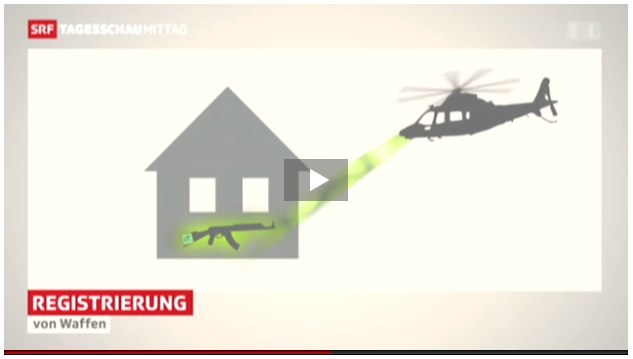
A German language news site reported yesterday on a new identification system called Nano-ID they say assigns DNA-like identification to products and can be used to track individual firearms. The technology reportedly endows the firearm with a tamper-proof, printed QR code that can be used to store other information.
The report said the technology was developed by Sphinx Arms, part of the Kriss Arms Group. Sphinx just issued a statement denying involvement in the technology’s development.
“This technology has been developed by Nano-ID Security Systems,” according to a Sphinx Arms statement.
The Sphinx statement explains Nano-ID is “a Swiss based company, which has requested Sphinx Arms to test and evaluate this technology only in conjunction with a project for sensitive material tracing and authentication in Switzerland.”
Aside from misidentifying up Sphinx Arms as the originator of the technology, the report seems to confuse key points in describing the system and its use.
Sphinx Arms denies that the system can be used to track Nano-ID endowed firearms from helicopters up to a kilometer away as was reported. The system, they say, uses an optical bar code reader that needs to be within 10 inches to access the data found in the Nano-ID tag.
Use of an optical reader seems to indicated the system is QR-code based, and not based on an embedded microchip or RF tracking technology. Without a chip there’s no way to store anything but a serial number and origination information.
This contradicts another part of the original story that claims the tag is invisible and contains information about the buyer and seller of the firearm. The system cannot be both optical and invisible. And, if the system does provide post-manufacture information, it would come from a separate, related database entry referenced by the Nano-ID serial number, not the firearm’s Nano-ID tag itself.
The Swiss are investigating the use of the system, ostensibly along with a national firearms registry, to keep an eye on all guns within the country’s borders.
Read the press release from Sphinx below.
SPHINX Denies Information Stating Development and Deployment of New Firearms Tracing Technology
Sphinx Arms denies information stating that it has developed and deployed a new tracing technology powered by Nano-Particles and confirms that this system is not deployed in any of its firearms.
Interlaken – 25.03.2013 – Sphinx Arms denies the information provided during a segment of the Swiss National Television’s news, wrongly stating that it had developed a ground-breaking technology to be used for firearms and ammunition tracing. This technology has been developed by Nano-ID Security Systems, a Swiss based company, which has requested Sphinx Arms to test and evaluate this technology only in conjunction with a project for sensitive material tracing and authentication in Switzerland. One of the key features of this technology is to prevent alterations or defacing of serial numbers.
Sphinx Arms confirms that no identification solution has been deployed and will not be deployed in any of its firearms produced and exported to countries out of Switzerland, unless mandated by law from a sovereign country or state. A project, exclusive to Switzerland, is currently being evaluated as a potential marking solution for special categories of firearms. The adoption of such a marking solution, based on Switzerland’s political system, would first require to be submitted to Swiss citizens for voting and adoption, prior to its deployment by Swiss authorities. As a Swiss based manufacturer, Sphinx emphasizes that it will comply with any Swiss state and federal laws, as well as foreign government policies that would be required for firearms importation, exportation and distribution.
The Nano based identification system, applied on firearms, does not allow any form of remote identification, real-time tracking or energy output, making it impossible to transmit or compromise sensitive data. Data can only be accessed through specific readers, similar to a bar code system, that are only made available to Law Enforcement and Governmental entities which would require a maximum of 10 inches of distance, with an unobstructed line of sight, between the reader and the tag to be effective.