
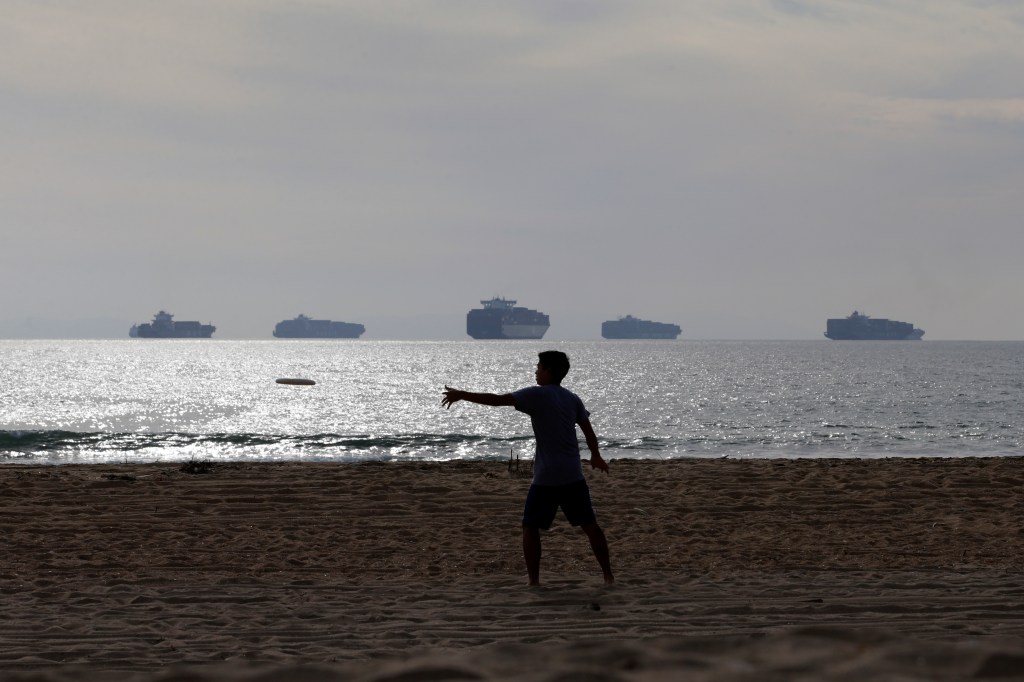
Commissary officials will continue to airlift critical products such as produce, milk, cheese, yogurt and lunch meat to stores in the Pacific until the backlog related to the labor slowdown at West Coast ports is cleared.
Although a tentative agreement has been reached between the Pacific Maritime Association and the International Longshore and Warehouse Union, Defense Commissary Agency officials say it will likely take a few months for Pacific store shelves to return to normal.
Indications are that the backlog at the ports could take as much as three to four months to clear. It will also take some time for the commissary agency to stabilize stock levels at its stores in South Korea, mainland Japan, Okinawa, Guam and Hawaii.
“We are relieved to learn that the principal parties involved with operating the West Coast ports have reached an agreement,” DeCA Director Joseph Jeu said in a statement. “We expect it will take several months for our supply chain to our Pacific stores to return to normal. Until then, we will continue our airlifts of critical products.”
Those airlifts will gradually decrease as the deliveries from the West Coast ports return to normal.
If customers don’t see a product on the shelf, they should ask their store management when it will be available, officials said.
On Feb. 20, the Pacific Maritime Association and the International Longshore and Warehouse Union announced a tentative agreement on a new five-year contract covering workers at all 29 West Coast ports, noting that the ports can resume full operations. That followed nine months of negotiations and slowdowns.
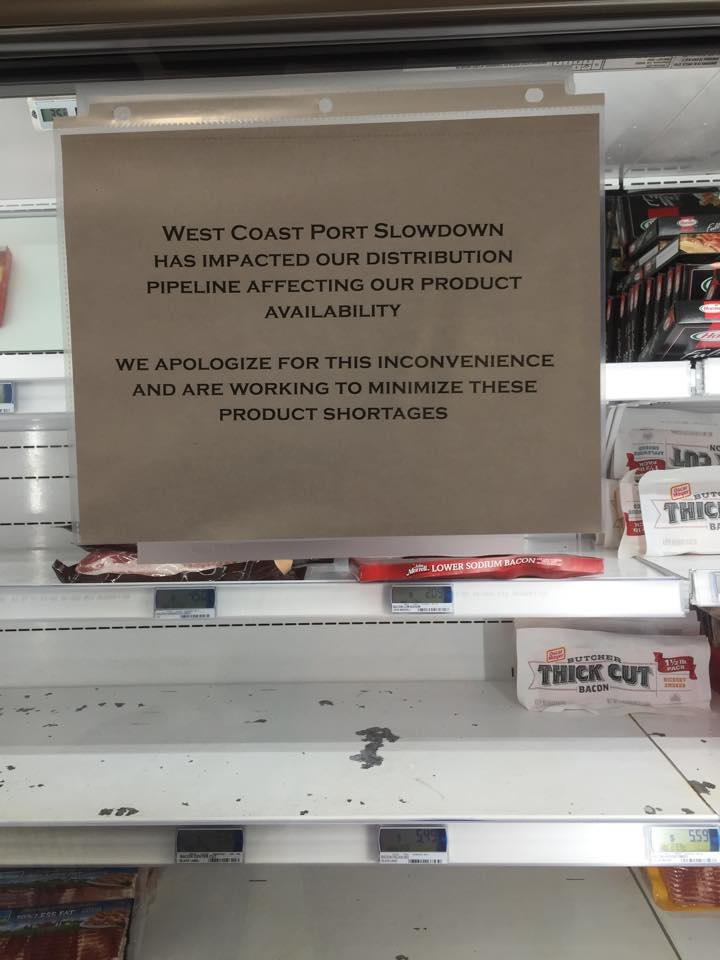
Empyt shelves at the Joint Base Hickam , Hawaii, commissary earlier this year, before airlifts of products started.
Photo Credit: Military spouse
For commissary customers, the slowdowns meant shipment delays of up to 10 days, officials said at the time. DeCA began using U.S. Transportation Command airlift contracts in January to transport essential items.
In January, commissary officials said frozen and dry grocery products weren’t affected by the West Coast port delays because a 30-day supply is kept in DeCA’s central distribution centers. Information was not immediately available about current impacts on those products.
Last year, the Army and Air Force Exchange Service and Navy Exchange officials increased their ordering of popular and critical items to ensure there is more inventory in the pipeline. AAFES also has been using air shipments.


