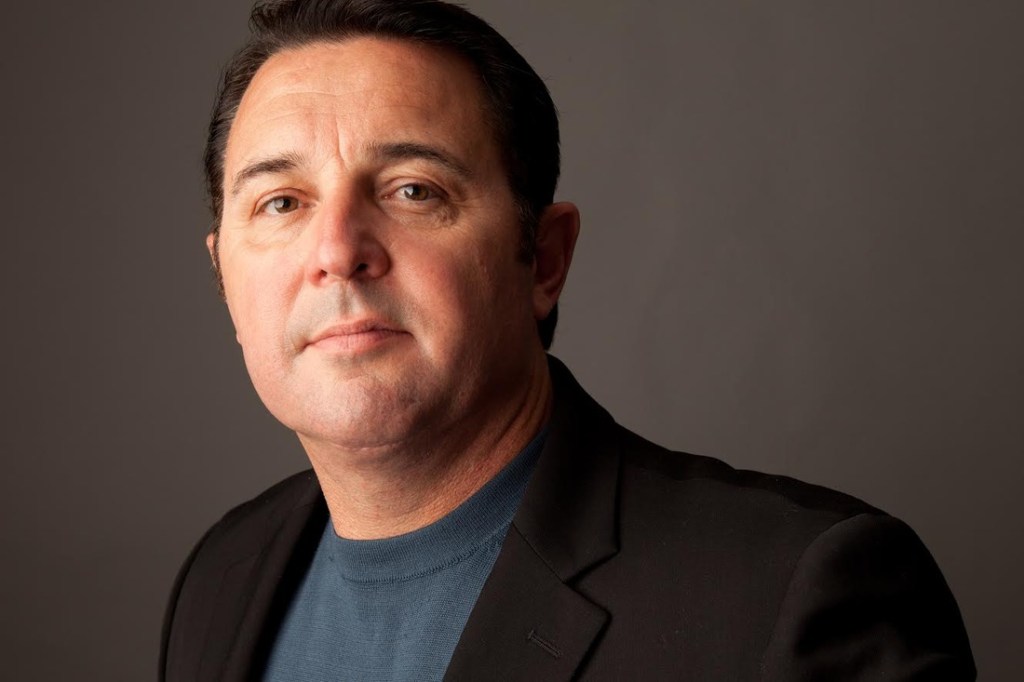
Howard E. Wasdin came home from the war and set up shop as a chiropractor.
But that wasn’t quite enough, so he went on to become a New York Times best-selling author, chronicling the intensity of his time with the Navy SEALs.
The former petty officer first class and elite SEAL Team Six member, he fixes backs and writes memoirs. He flies a private plane to his island getaway and tries his best to live a spiritual life.
It takes faith to get you through, he says.
“If you find yourself in a dark place, the light didn’t move away, you moved away from the light.”
Finding the light
Wasdin has been in enough dark places. He survived the “Black Hawk Down” battle of Mogadishu and lived with survivor’s guilt. “I would ask myself: Why was I still living when these guys, most of them better guys than I am, were dead?”
He sought answers selling used cars and diving into a two-and-a-half-year romance with a guy named Jack Daniels. Things got a lot better after the blind date with Debbie, now his wife. He cleaned up and fulfilled his dream of opening up a chiropractic practice as a small note of thanks to the practitioners who had helped get him back on his feet after he was injured.
“I had to pinch myself to make sure it wasn’t all a dream,” he said.
But there was more to come.
Since 2001 Wasdin had thought about writing it all down: What it meant to go to war as a SEAL, how it felt at the time, and how it changed his life.
“I never did it. It was a great idea, but I never got my thoughts together,” he said. “Then Debbie told me if I would write that book, I could inspire a lot of people.”
Ever write a book?
“People have no idea how hard it is,” Wasdin said. He had help from Steve Templin, a former classmate who had left the service earlier to go on a Mormon mission to Okinawa. Together they Skyped for two hours every Sunday for over a year, hashing out an outline and writing together.
The result was 2011’s “SEAL Team Six: Memoirs of an Elite Navy SEAL Sniper,” which spent 22 weeks on the New York Times Best Sellers list. There’s a great story behind its publication, which almost didn’t happen.
“We sent it to this one agent, and he sends it backs and says, ‘You guys have some good stuff here and I’d be willing to work with you if you blow it up, start again and work with my writer,’ ” Wasdin recalled.
Wasdin and Templin Skyped their shared misery.
Two days later another agent said he had three publishing houses in a bidding war, and St. Martin’s Press eventually made a six-figure offer. The book hit the streets the same week SEAL Team Six killed Osama bin Laden. “Everyone thought I had timed it on purpose,” he said. “I wish I was that good. Everything just fell into place.”
The message
Publication of that first book gave Wasdin some of the release he had long been seeking. “I wanted to get it all off my chest. I needed to tell the story from the insider’s perspective, and I also wanted to talk about my childhood,” said Wasdin, who experienced physical abuse as a kid.
When the book came out, “I felt like a weight had been lifted that had been there since the Black Hawk went down.”
He’s penned five books in all, and while the internal landscape is calmer now, nothing ever goes away completely.
“There are days when I will cry, there are days when I will still be pissed off at the military, at the government, at the VA,” he said. “I will wake up at three in the morning, and I will get up to write them down, and when I look up, the sun is coming up and four hours will have passed.”
Still, the good times are very good. Wasdin likes to fly his 235 Charger out to Amelia Island, Florida, which he shares with writers Stephen King and John Grisham.
“Their houses are a lot nicer than mine.”
He flies for others, too, as part of Angel Flights, a network of private pilots who shuttle patients with chronic illnesses. “This is a way of giving back. I get blessed more than they do,” he said.
In the big picture, he’s glad the books have given civilians a glimpse into the life of a SEAL, the commitment and sacrifice.
More important, though, is the possibility of having shared some of his own optimism and hope with his comrades-in-arms.
“I want them to know that whatever it is, you don’t have to succumb to it. You don’t have to give into it. As long as there is life, there is hope.”