
source GAIA package: Sx_MilitaryTimes_M6201210208210314_5675.zip Origin key: Sx_MilitaryTimes_M6201210208210314 imported at Fri Jan 8 18:18:06 2016
Related reading
USMC: Morocco Osprey crash due to pilot error (Aug. 16) Corps IDs Morocco Osprey crash victims (April 13)
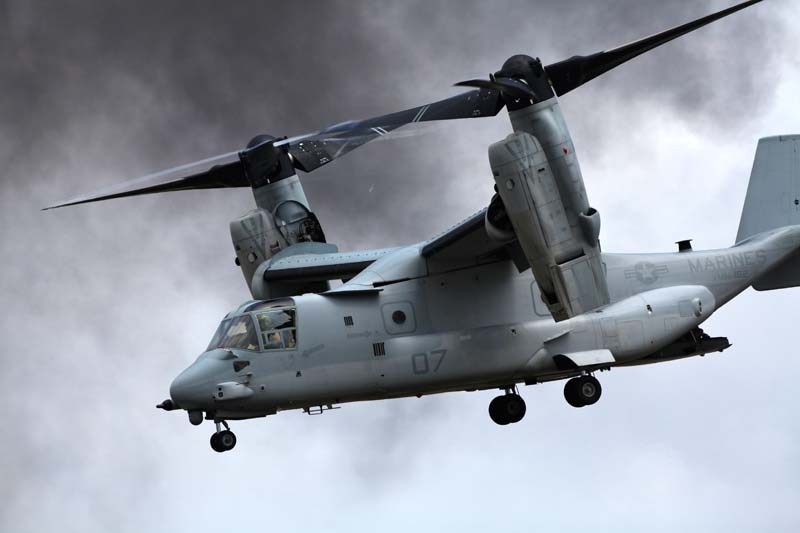
Newly released documents paint a picture of heroism in the immediate aftermath of an Osprey crash that left two Marines dead and two more seriously wounded.
“Several members of the 24the Marine Expeditionary Unit were highlighted as repeatedly going above and beyond to render immediate assistance in a known hazardous environment,” according to the final investigation into the catastrophic April 11 crash in Morocco that occurred during a joint exercise with that country’s armed forces. “Rapid response by a multi-lateral force, highlighted by heroic individual Marines’ actions and top-quality emergency care by U.S. Naval medical personnel undoubtedly saved lives.”
Supporting documents, including eyewitness statements, detail actions by Marines — including an infantry commander and a motor transport Marine — that should “be recognized for their selfless efforts,” according to the investigating officer.
The tragedy occurred seconds after takeoff.
The Osprey, assigned to Marine Medium Tiltrotor Squadron 261 out of Marine Corps Air Station New River, N.C., had just offloaded a stick of Marines on the second of three planned landings. It rose into a hover, then made a 180-degree turn that would allow it to avoid overflying Marines, tents and equipment as it exited the landing zone.
As it transitioned into forward flight, the nose pitched sharply down and the Osprey fell from about 100 feet, according to witness statements. A tailwind had reduced lift and pushed up on the rear of the aircraft, making it nearly impossible to recover.
Without hesitation, the commander of 2nd Platoon, Bravo Company, Battalion Landing Team 1/2, ran to the wreckage. He saw fuel pouring from the right wing and the engines were still spinning, according to an interview summary written by the investigating officer, but “he said a prayer and went to where he could enter the aircraft.”
A group of logistics Marines about a quarter of a mile from the crash site also descended on the downed aircraft, using an axe to hack their way into the badly mangled fuselage.
“I started pulling back the fiber glass siding and ripping it to part,” wrote one Marine with Combat Logistics Battalion 24, out of Camp Lejeune, N.C. “It was hard and I couldn’t pull it back as the fiberglass torn (sic) through my hands.”
Together they rescued the pilots and pulled both crew chiefs, one dead and one dying, from the wreckage.


