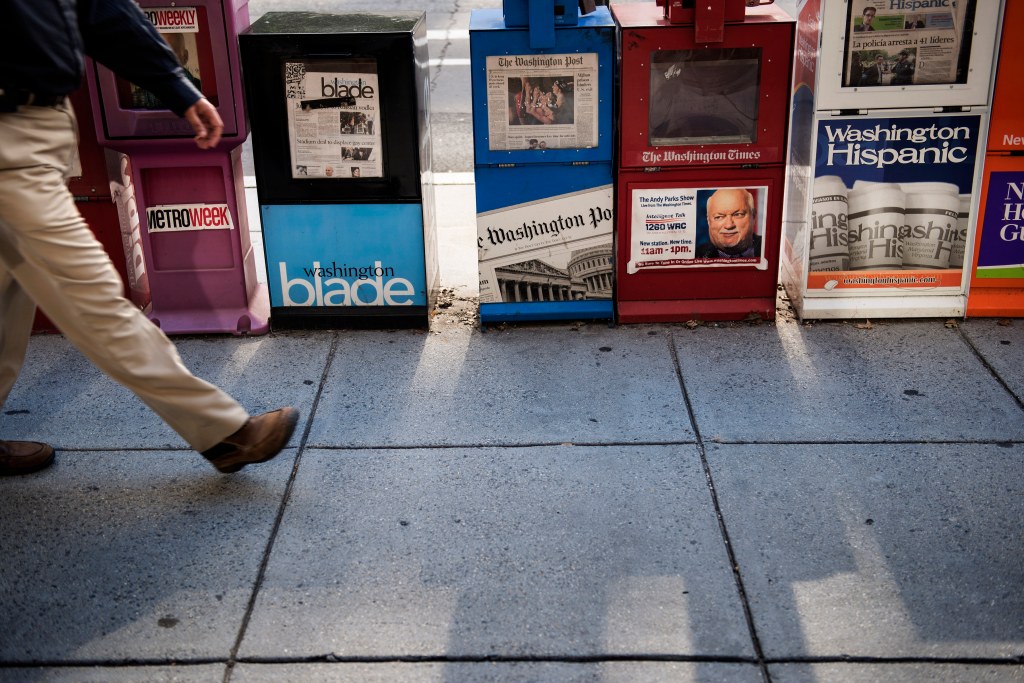
Pentagon visitors will have to find something else to shield their heads from the rain — the military has removed external newspaper dispensers from the property.
Citing security concerns, the Pentagon recently removed all newsstands that used to hold copies of popular papers such as the Washington Post’s Express and the Washington Examiner from walkways around the building, officials told Military Times.
Pentagon spokesman Air Force Lt. Col. Tom Crosson said officials are “continuously looking for ways to improve security at the Pentagon.”
“No specific threat has been identified, but the Pentagon Force Protection Agency is being proactive in removing newspaper dispensers that could potentially contain unsafe items,” Crosson said in an email.
He said several major newspapers are available at concessions inside the building. But the thousands of people who transit daily through the Pentagon property’s bustling light rail and bus hubs will have to get their news elsewhere.
Unlike other military installations, the Pentagon property is not walled or fenced off to the public, since it is a major transit hub within the Washington, D.C., metro area.
But military installations both stateside and abroad have beefed up security within the last year. For example, each of the services is expanding its automated visitor vetting system for on-the-spot background checks, officials told Military Times last month.
Troops overseas also last month began “additional force-protection measures and random security enhancements at facilities across the EUCOM area of responsibility,” according to U.S. European Command spokesman Navy Capt. Greg Hicks.