Republican senators said Thursday The Obama administration has failed to combat worrisome nuclear proliferation, especially in Russia, North Korea, Iran and Pakistan, Republican senators said Thursday, countering but two State Department officials who contended said the bigger and more immediate threat is nuclear weapons in the hands of terrorists.
In a Senate Foreign Relations Committee hearing on the administration’s nuclear policies, Rose E. Gottemoeller, undersecretary for arms control and international security at the State Department, and Thomas M. Countryman, assistant secretary for the Bureau of International Security and Nonproliferation, focused on the threat of nuclear terrorism rather than the state of arms control.
Committee Chairman Bob Corker, R-Tenn., said he was “disappointed that there’s not an acknowledgement of the dangers that we face around the world.” state of arms control dangers said the two State Department officials they weren’t focusing on reality.
“I’m disappointed that there’s not an acknowledgement of the dangers that we face around the world,” he said.
In a hearing on the administration’s nuclear policies, Rose E. Gottemoeller, undersecretary for arms control and international security at the State Department, and Thomas M. Countryman, assistant secretary for the Bureau of International Security and Nonproliferation, focused on the dangers of nuclear terrorism rather than the state of arms control.
But senators w
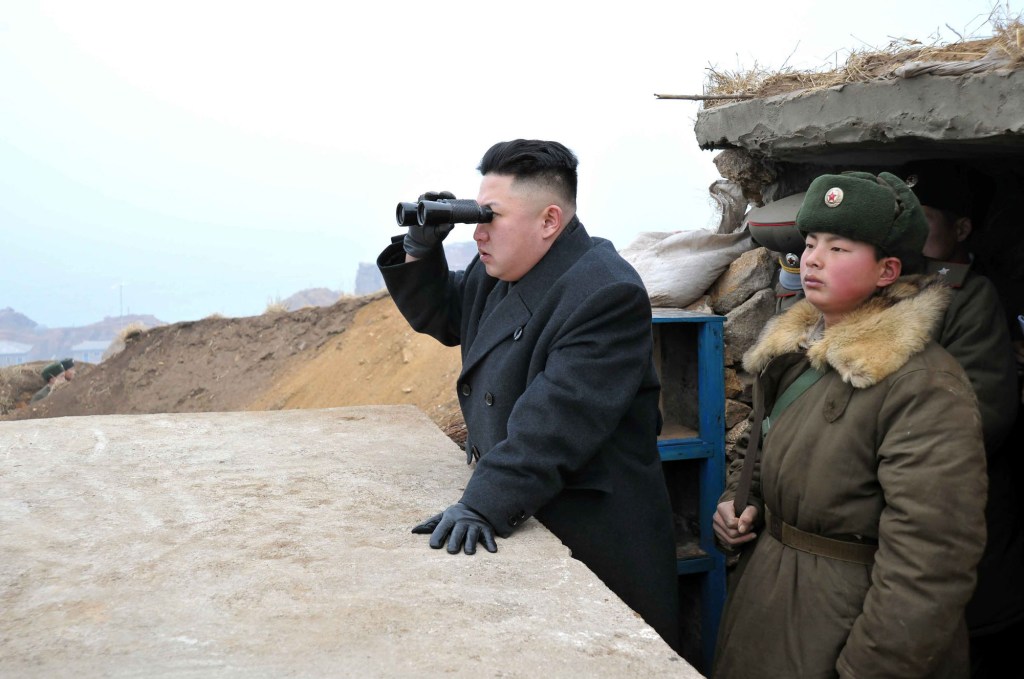
Republican senators were interested in the specific nuclear behaviors of Russia, which has violated the Intermediate-range Nuclear Forces Treaty, and Iran and North Korea, which have tested ballistic missiles.
Corker said the United States’ efforts to combat nuclear proliferation are in bad shape, its partners no longer respect treaties and he’s worried about the state of U.S. national security.
“I don’t think there’s any doubt that today there’s more potential for nuclear conflict than there was in 2009,” Corker said. “The potential for a military miscalculation with regard to nuclear proliferation is higher by far — by far — by orders of magnitude than it was in 2009.”
Gottemoeller and Countryman cited the diplomatic successes of the Nuclear Security Summit held every two years since 2010, with a fourth scheduled in two weeks, and treaties like the New Strategic Arms Reduction Treaty as successes in reducing nuclear threats from other countries.
Corker didn’t buy that there has been progress toward President Barack Obama’s commitment in 2009 to “take concrete steps towards a world without nuclear weapons.”
He criticized the administration’s approach to Russia as too nonconfrontational, noting Russia will not attend the upcoming summit.
Gottemoeller acknowledged the difficulty of negotiating with the Russians over their violations of the Intermediate-range Nuclear Forces Treaty. They argue the U.S. is in violation of the treaty and not them, she said.
“In my diplomatic career,” she said, “it has been one of the most difficult issues that I have ever had to deal with … It’s quite typical Soviet-style negotiation tactics — that is, the best defense is a good offense.”
Also raising questions about Russia was Sen. Marco Rubio, R-Fla., who returned to the Foreign Relations Committee for the first time since dropping out of the U.S. presidential race.
“Now we’ll move to someone that’s been involved in proliferation on his own, the articulate Senator Rubio who we welcome back,” Corker said to laughter as Rubio began.
Sen. Ben Cardin, the committee’s top Democrat, said the nuclear reductions over the past several decades under both Democratic and Republican administrations have been admirable. He blamed nations like North Korea and Iran for the increasing danger rather than America’s actions.