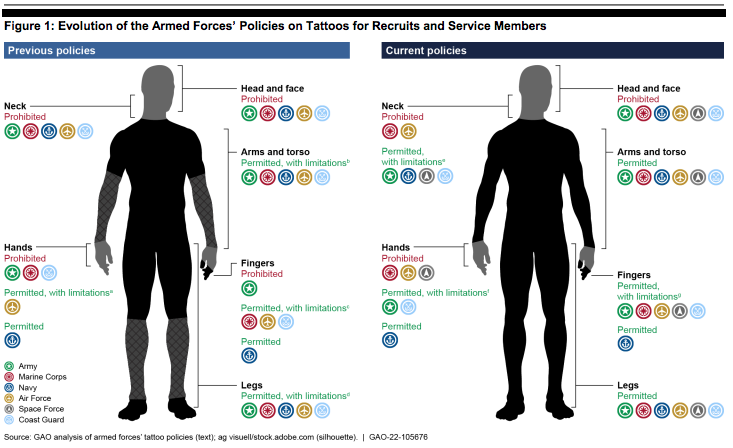
The military services now have some of the most liberal tattoo policies they’ve ever enacted, to include allowing neck, hand and ear tattoos in the Army, Navy and Space Force. But tattoo size and placement can still be a bar to enlisting or commissioning unless recruits can obtain a waiver.
With the military recruiting environment tougher than ever, the services would benefit by more clearly laying out the waiver process, according to a Government Accountability Office report released Wednesday, .
“Although each of the armed forces allows waivers for certain tattoo restrictions for recruits, the policies do not always mention or provide clear guidance on the requirements for these waivers,” the report found.
Essentially, though recruiters might tell their prospects to seek a waiver, tattoo policies don’t always lay out the process or provide any indication of the likelihood that one will be approved.
“… [M]ost of the armed forces’ tattoo policies do not include clear information on the tattoos or individuals eligible for waivers, requirements for waiver requests and conditions for approval, or specifics on who has authority to approve tattoo waivers,” according to the report.
The report, mandated by Congress this year, stemmed from lawmakers’ interest in whether tattoo policies are having an effect on recruiting and retention.
The Army, citing its recruiting challenges, updated its policy to allow ear, neck and hand tattoos in June. This reflects the Navy’s policy, which dates back to 2016.
And in May, the Space Force announced it would have a more liberal policy than its sister service, the Air Force, by allowing neck tattoos.
The GAO recommended that all of the service secretaries update their written tattoo policies to include information about the waiver process, so it’s all in one place. All of the services agreed to clarify their policies.