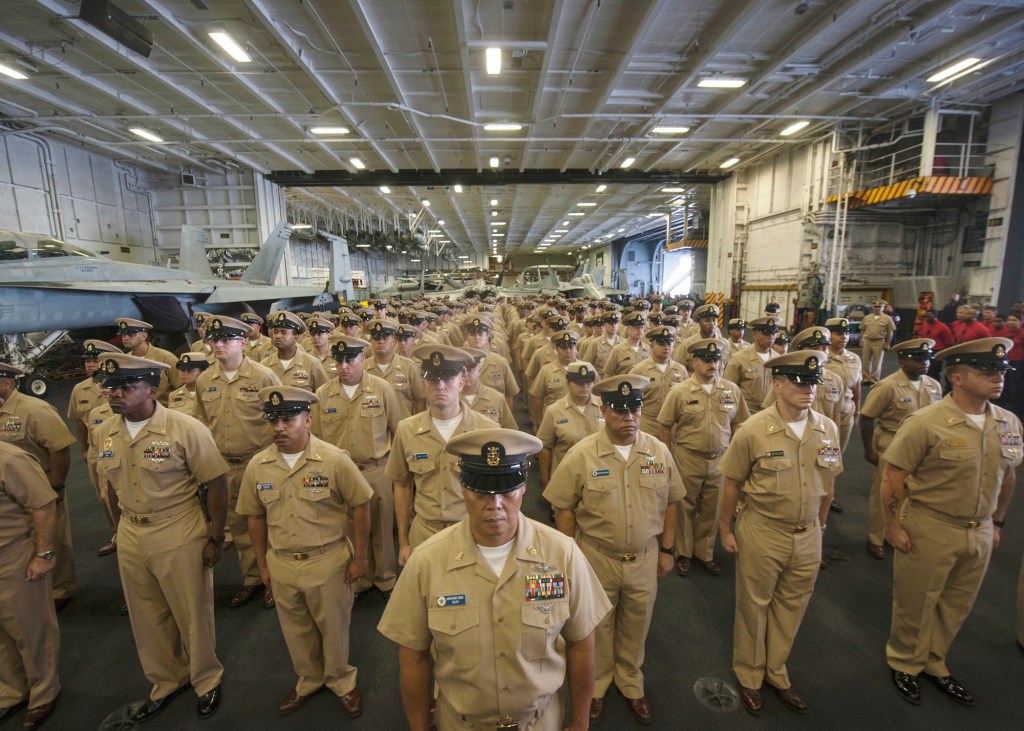
One hundred and sixty-one chiefs, senior chiefs and master chiefs will be forced to retire by Aug. 31 as part of the first forced-retirement board for chiefs in two years.
The Senior Enlisted Continuation Board screened 7,017 eligible E-7s, E-8s and E-9s, of whom the 161 were selected, for a forced-retire rate of 2.3 percent, the chief of naval personnel announced Tuesday.
The results will be available to command leaders starting Tuesday; those screened will be able to check their status on BUPERS Online Feb. 3. On that site, “S” signifies “selected for continued service”; “N” means “not selected for continued service”; and “H” means “not selected for continuation – in a hold status.”
“SECB is a performance-driven review of active duty, full-time support, and Reserve master chiefs, senior chiefs and chiefs with more than 19 years of service and three years’ time-in-grade,” CNP said in a Tuesday news release. “The board helps to ensure the highest standards are maintained in the senior enlisted ranks.”
Those selected for retirement must file their retirement papers or request to transfer to Fleet Reserve by March 15. Reserve sailors must transfer to the retired reserve by Sept. 1, CNP said. Sailors can request operational waivers to remain on active-duty until Nov. 30.