

This story is provided and presented by our sponsor Navy Federal Credit Union, a U.S. credit union headquartered in Vienna, VA, serving the U.S. Armed Forces and their families, chartered and regulated under the authority of the National Credit Union Administration.
For more information, visit navyfederal.org.
Recently, the Federal Reserve raised short-term interest rates for the first time in almost ten years. This could potentially impact consumers, but by how much? At first thought you may be thinking, “I need to go out and purchase items with loans now before they raise it again!” Thankfully, a rate rise this small won’t hurt your pocketbook nearly as much as you may think. In fact, the hike is a positive signal that our economy is continuing to recover from the recession. Here are some things to keep in mind with this new change.
Keep Calm and Carry On
In the military, you’re taught to keep composure in all situations. Keeping a straight head allows you to focus on making the right decisions, and when it comes to finances, the same thought process applies.
The first and most important part of the Fed raising rates is for consumers to keep calm, according to Navy Federal Credit Union Corporate Economist Alan MacEachin.
“There is no need to rush out to buy a new car or take out a mortgage because of the rate hike,” said MacEachin. “Continue to be smart about your finances because the recent rate change was so minimal.”
In the short term, a small rate rise won’t make or break your budget, and there are considerations other than interest rates to be mindful of. For example, when purchasing a vehicle, consider the total amount paid and the term, versus just the interest rate, said MacEachin.
Check your Credit Card
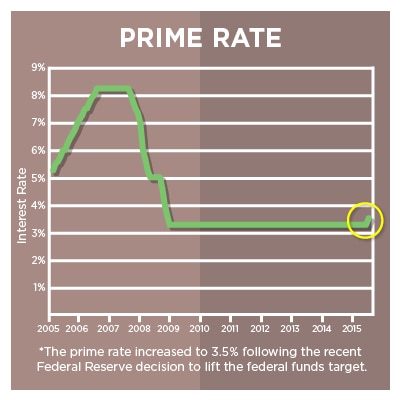
One thing to take note of is your credit card rate, said MacEachin. Most cards are tied to the prime rate, which is the benchmark used by the banking system to determine interest rates for short- and medium-term loans. The prime rate usually changes whenever the Fed raises or lowers short-term interest rates. So with the Federal Reserve recently raising rates, it’s likely most credit card rates will also move up slightly.
Again, no need to panic over such a small increase, but this is a good time to review your cards and make sure you’re getting the lowest rate possible. You can find your credit card rate on your card statement.
Be Smart about Auto Loans
The recent, small increase in rates shouldn’t immediately affect car-loan rates so it shouldn’t be a factor in your decision whether to purchase a new or used car. There are other considerations that have a bigger impact on your monthly car payment, such as the length of the loan and how much you’re paying for the car, said MacEachin.
“No need to rush to the dealer lot to buy a shiny new car out of fear of higher interest rates,” stresses MacEachin. “While the interest rate is a factor in buying a vehicle, it’s only one of several things to take into account. Do your due diligence in finding the right car that meets your budget needs and don’t pay more than the car is worth.”
Know what you can actually afford and compare loan options at trusted financial institutions. Since rates have been at all-time lows and won’t significantly change in the near future, pick a car that fits your lifestyle and bank account!
Here’s the bottom line – don’t panic over a small rise in rates; any impact on payments will likely be minimal. However, you should check your credit card statements over the next month or two and look for any changes in your interest rate.
You May Also Like:
This story is provided and presented by our sponsor Navy Federal Credit Union. For more information, visit navyfederal.org.
©2015 Navy Federal Credit Union. All Images used for representational purposes only; does not imply government endorsement.