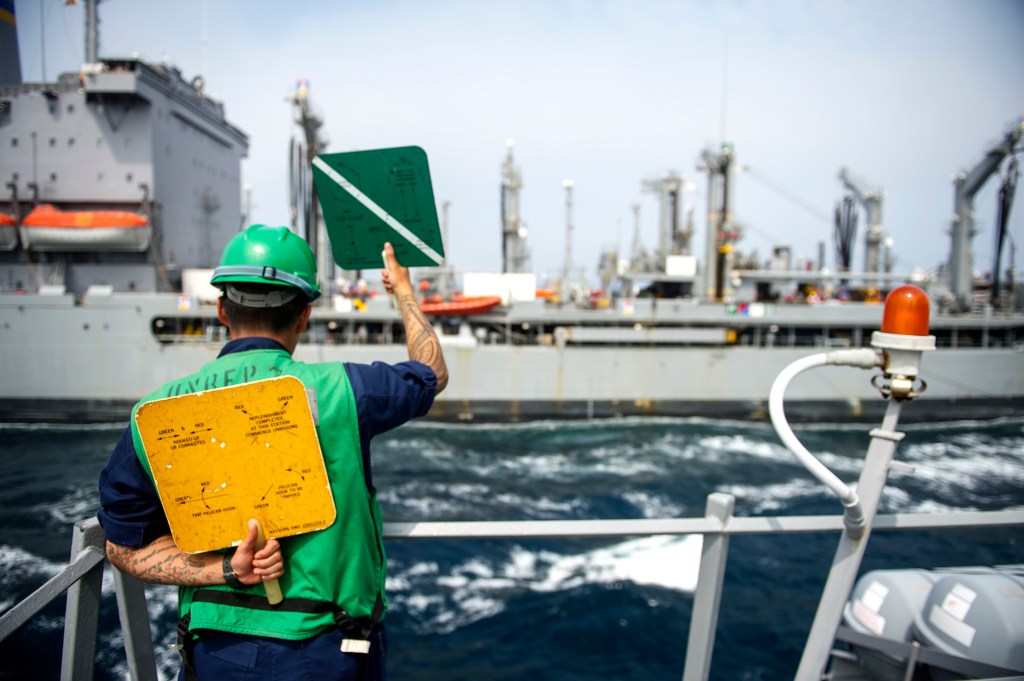
Readers weighed in on the Navy’s plan to shutter most of the Navy College Offices that provide in-person education help and the newly approved tattoo rules. They eased the rules to allow sailors to have a neck tattoo and sleeves on their arms.
Want to share your take on these and other issues? Send them to navylet@navytimes.com. Include your name, address, phone number, city, state and rank. Submissions may be published in print and online, and edited for content, clarity and space.
NAVY COLLEGE CLOSURES
I don’t think it is a good idea to close all the NCOs or college campuses on bases, especially shore bases. While I was on shore duty at NSA Mid-South Millington TN, I was able to complete much of my degree plan reqs on base at the NCO campus with the instructor led courses. I understand budget cutbacks and all, but there should be a concerted effort to keep shore based campuses open as many Sailors utilize this resource after working hours and the opportunity to take classes on base maximizes a shore duty tour. The value of having NCO available for Sailors is unmeasurable.
PSC Oshiel Butler
San Diego
——————————
INK RULES EXPAND
Ultimately part of the standard remains arbitrary and up to CO’s discretion. Which is fine, many things are like that in the Navy. Commanding Officers have been given wide latitude to make decisions affecting their command for centuries. However, as leaders we should also not underestimate the challenge involved with this and should give plenty of forethought on how to handle the situation. Is that hula girl on his forearm sexist? Or just a nod to tradition and service in Hawaii, which my uncle, a deceased World War II Pacific veteran, had? Is that shamrock tattoo because she is Irish? Or is she a white supremacist, since that tattoo has been used to signify both? Meanings and connotations are far from universal, and this can make it very challenging to deal with as body art becomes more and more prevalent in our ranks.
Cmdr. Daniel J. Kenda
Suffolk, Va.
——————————
This new policy just goes to show that the previous policy was used as a force shaping tool. All of us that were affected by the force reduction were told all sailors are embassadors of the Navy. Visible tattoos did not reflect Navy core values to the public. The government can change the rules on Sailors careers anytime they want. These types of policy changes with ulterior motives will ultimately hurt recruitment.
Former HM2 Michael Reid
Harvest, Ala.
——————————
Sad to hear the MCPON state the Navy needs to lower standards to reflect today’s society. I thought our purpose was to set a higher standard and challenge our Sailors. About 1 in 3 millennials smoke marijuana, should we allow that as well? History had taught us lowering standards to make accommodations never raises the level of performance of any organization.
CUCM William Hammond (ret.)
Satellite Beach, Fla.
——————————
Looks like my Navy now feels it will better protect our country by mirroring our society’s problems instead reflecting our our country’s best values.
I agree with MCPON [Mike] Stevens that we need to “recruit and retain the best and the brightest,” but somehow, I doubt that the best and the brightest have neck tattoos.
Lt. Cmdr. David Coghlan (ret.)
Alexandria, Va.