This is a letter to the editor. Send your letters to the editor to navylet@navytimes.com or marinelet@marinecorpstimes.com.
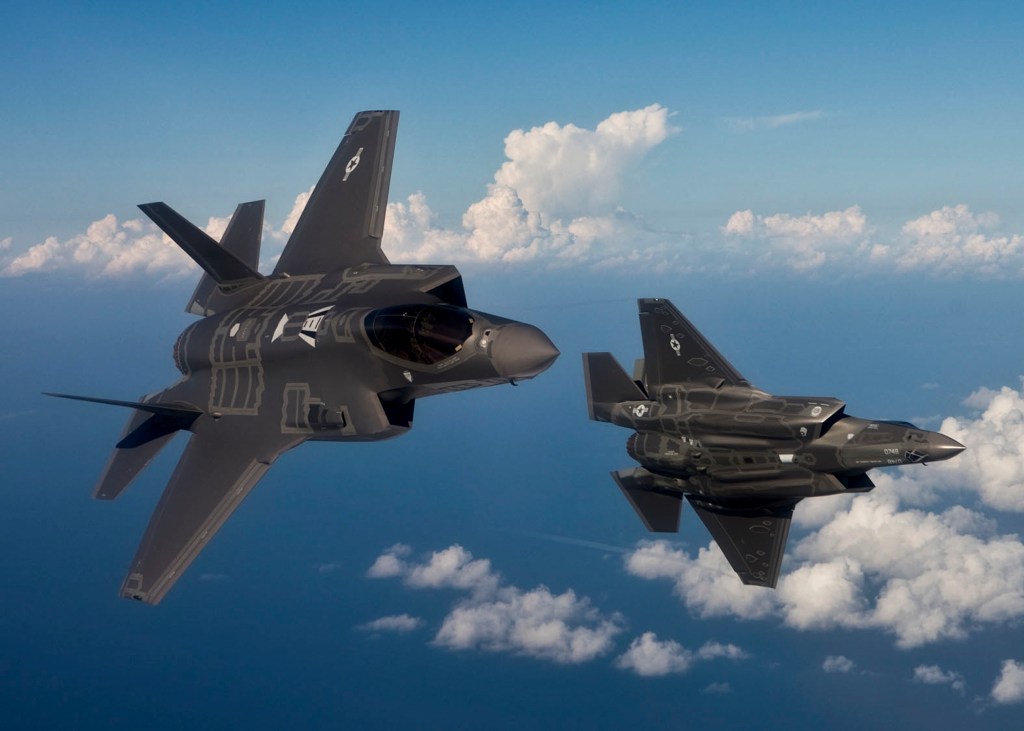
For over 10 years, the Marine Corps has been on a path to replace its legacy tactical aircraft with an all-VSTOL F-35B force with the exception of F-35Cs to meet Navy aircraft carrier commitments. The lengthy delays in the F-35 program and projected procurement and sustainment costs coupled with legacy aircraft readiness issues dictates need for a major review by the incoming OSD leadership.
Thanks to the Navy and a supportive Congress, there is a viable option that needs to be seriously considered, and that is a mix of Lockheed F-35Bs and Boeing Super Hornets. There is an unquestioned need for F-35Bs to replace the AV-8Bs for employment from amphibious ships and to some extent austere forward operating areas.
Far less clear is the case for transitioning virtually the entire legacy force to a very expensive VSTOL variant of a fifth generation aircraft.
This goes directly to Service roles and missions and while the Marine Corps is recognized as our nation’s first to fight in many scenarios to include those with sophisticated integrated air defenses. That does not translate into a need for an exclusive inventory of state-of-the art aircraft.
That would make the Marine Corps, the smallest of the Service air elements, standout as having the most expensive aircraft complement both in procurement costs and in sustainability.
The Marine Corps decision to depart from a common aircraft procurement strategy with the Navy for the first time now appears to be costly not only in fiscal resources but in operational capability.
The Navy chose to replace its legacy F-14, F/A-18 and EA-6B aircraft with variants of the Super Hornet early on then adding F-35Cs as they become available. That decision has resulted in a smooth transition that has not let the delays in the F-35 program create a capability gap. Perhaps most significantly, the range, endurance and payload advantages of the Super Hornets over the Marine F-35Bs give the Navy a decided baseline edge that will be further advanced by the unique features of the F-35C.
Another major advantage of the Navy’s force mix is that the EA-18G Growler will provide the ever increasing important electronic attack function to support the F-35Cs as well as Super Hornets in challenging air defense environments.
The Marine Corps on the other hand plans on phasing out their EA-6Bs which support both air and ground combat elements without replacement.
This raises operational effectiveness questions with respect to ground and air combat element requirements. Questions being raised about the F-35B from a ground commanders perspective are like those that first arose in Vietnam as to why the multipurpose F-4 Phantoms were chosen to be the predominate close air support aircraft. The emergence of counter-stealth air defense radars raises questions as to the vulnerability of the F-35B.
Capabilities aside, it now appears the cost of an F-35B will be more than 50 percent greater than a Super Hornet and the difference in sustaining costs are likely to be even more pronounced.
It should be readily evident to all in the know that a formal cost and operational effectiveness analysis is needed to shape the procurement process for Marine Aviation going forward. I have no doubt the answer will be a mix of Super Hornets and F-35Bs.
H. Wayne Whitten
Colonel USMC (ret.)
Send your letters to the editor to navylet@navytimes.com or marinelet@marinecorpstimes.com.