
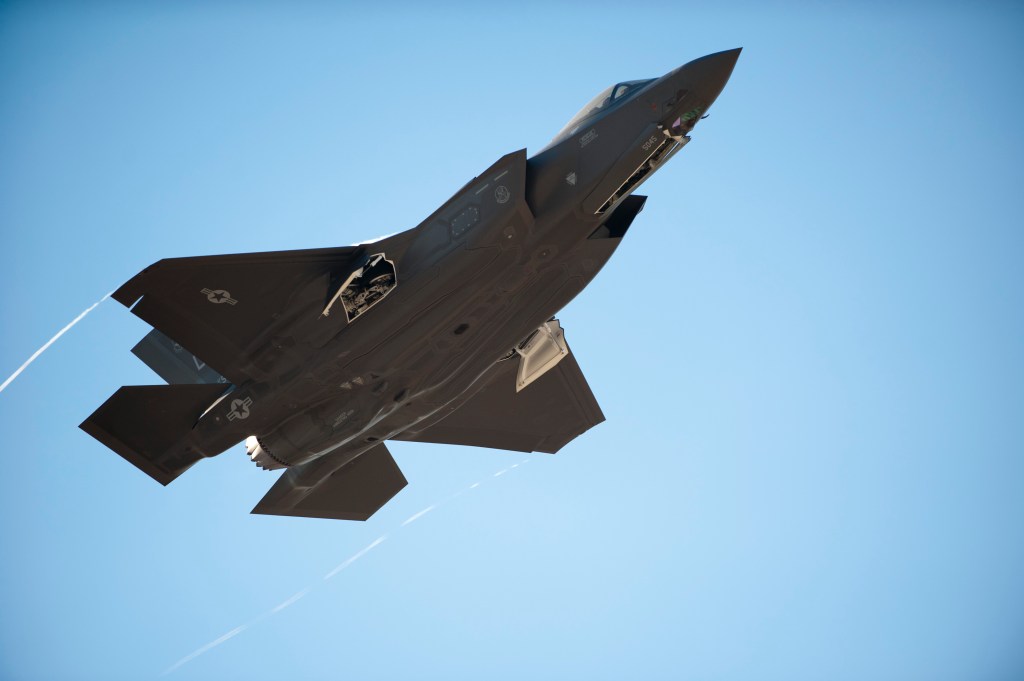
NATIONAL HARBOR, MD – Engine manufacturer Pratt & Whitney believes it could begin retrofit fixes by November for the engine issue that caused an F-35A to catch fire this summer.
“Probably in the November timeframe, with some anticipated success, we would begin the retrofit with emphasis on the SDD [system development and demonstration] jets,” Bennett Croswell, Pratt’s head of military engines, told reporters at the Air Force Association’s annual Air & Space conference.
The fire was caused when part of the engine of the F-35A known as AF-27 overheated following a test flight, with two sections rubbing together at a much higher temperature than the engine was designed for. That led to a series of “microcracks,” that spread through the engine and eventually led to part of the engine piercing the plane’s fuel tank.
Croswell said there were three other engines in the fleet that showed signs of damage from a similar problem, but indicated that a repair solution could be found for those models.
“These types of seal systems are on legacy platforms,” Croswell explained. “We’ve never had an issue with them, so this was not an area we thought we needed to do recurring inspections on until we had this event.”
While declining to say which other legacy systems have similar designs, Croswell did say Pratt had no plans to inspect or redesign any of those older engines.
While the details are still being decided on by program officials, the fix will likely involve designing a small “trench” inside a part of the engine that previously rubbed together.
While a fix is being designed, the company continues to validate its findings on the cause of the engine issue. Specifically, it has a “rub-rig” set up in a Florida facility to recreate the conditions that caused the stress in the engine.
Pratt has already said it will accept all the cost of retrofits, but Croswell said it would likely be not be a “hugely expensive” process.
Overall, Croswell said the engine issue was a design challenge, but not one that will cripple the program – a welcome change from this summer’s Farnborough air show, where some openly questioned whether the F135 design was fatally flawed.
“We don’t like to have issues like this, but by and large, the engine has performed well in the F-35 program,” Croswell said. “I’m not minoring that we impacted the F-35 program here. I am proud of the team and their effort and the fact we are on a path to find a solution in less than six months.”
Like Lt. Gen. Christopher Bogdan, the F-35 program manager, Croswell expects to reach an agreement on the next lot of F-35 procurements shortly.
“We essentially have an agreement in principal in [low-rate initial production lot] 7 and 8,” Croswell said, noting that the costs on LRIP 8 will be between 7.5 and 8 percent cheaper than LRIP 6.
Complete coverage
Read all of our stories from the Air Force Association conference


