
Theodore Gardner remembers one of the few times he saw his father cry. It was 1944 and the father had just received a telegram saying another son, Sgt. Charles Gardner, was missing in action in World War II’s South Pacific theater. Charles was 32 years old, but Theodore, his half-brother, was just a teenager.
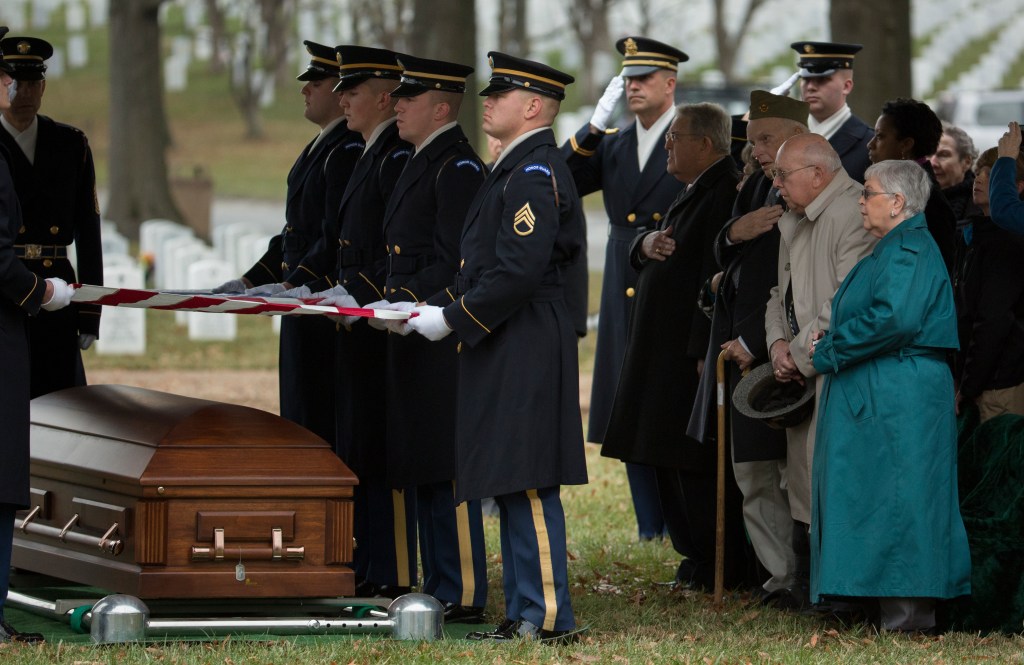
Seventy years later, Charles has finally come home to his final resting place. He was buried with full military honors Dec. 4 at Arlington National Cemetery after his remains were identified this year by joint prisoner of war/MIA accounting command teams in the South Pacific.
Theodore, now 86, said that the brothers’ age gap meant that the two were never particularly close, but he felt honored he could pay his final respects to his fallen sibling. He traveled from Manning, South Carolina, for the burial.
“We just had to accept the news and pray that he would be found,” Theodore told Air Force Times on Dec. 3. “I feel a lot of respect for his time in service and I feel like it’s putting an end to his situation.”
Charles was a “radio man,” Theodore said. He was part of a 12-member crew onboard a B-24D Liberator that took off April 10, 1944, from Texter Strip, Nadzab Air Field, New Guinea. Their mission: Attack a Japanese anti-aircraft site about 300 miles northwest at Hansa Bay. But the aircraft was shot down over New Guinea’s Madang Province, according to a Defense Department POW/Missing Personnel Office news release.
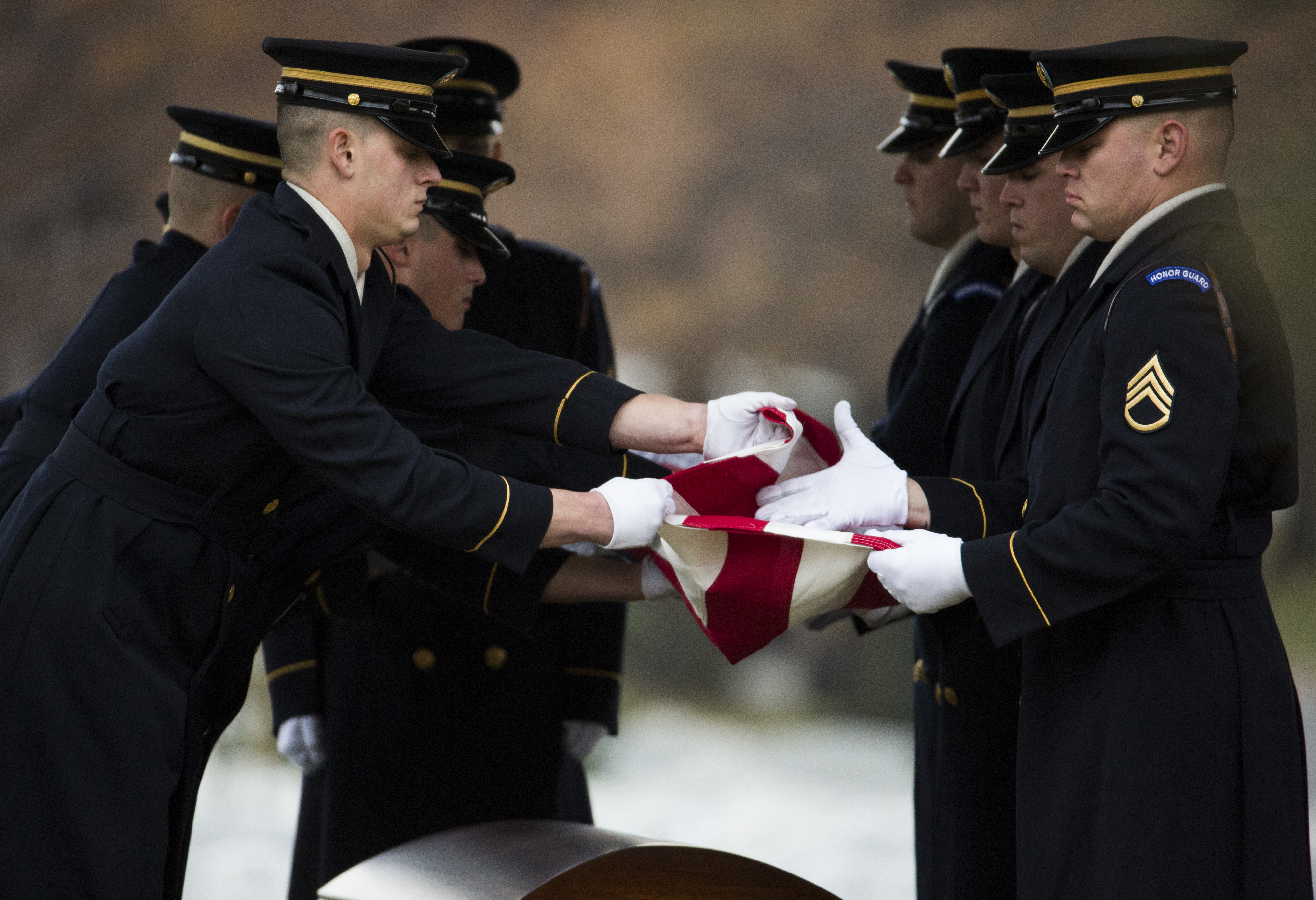
Soldiers from the 3rd Infantry Regiment conduct a burial service for Sgt. Charles A. Gardner at Arlington National Cemetery in Arlington, Va., on Dec. 4.
Photo Credit: Mike Morones/Staff
Four of the crewmen were able to parachute from the aircraft, but were reported to have died in captivity, officials said. The others were reported missing.
After the war ended, the Army Graves Registration Service recovered the remains of three of the airmen. It concluded in May 1949 the remaining crew members were unrecoverable, the release said.
A U.S.-led team surveyed the area again in 2001 and located wreckage of a B-24D that matched the tail number of the aircraft shot down almost 60 years prior. Teams excavated the site and recovered remains of the eight airmen.
Along with Charles Gardner, of San Francisco, they were: Army Air Forces 1st Lts. William D. Bernier of Augusta, Montana; Bryant E. Poulsen of Salt Lake City and Herbert V. Young Jr. of Clarkdale, Arizona; Tech. Sgts. Charles L. Johnston of Pittsburgh and Hugh F. Moore of Elkton, Maryland; Staff Sgts. John E. Copeland of Dearing, Kansas, and Charles J. Jones of Athens, Georgia.
Gardner was identified through circumstantial evidence along with DNA from his maternal niece and nephew, the release said.
Theodore said he’s felt closer to Charles and his story the last few years. He visited Charles’ siblings before they passed away and that brought the whole family closer together.
“I had more opportunity to ask them about him, and what he was like … and was given the opportunity to read some letters he sent over … before he was sent out [to the South Pacific],” said Theodore, who was an Army first lieutenant during the Korean War.
Gardner is the fourth of the eight airmen to be buried, but the first to be buried at Arlington, said Air Force Lt. Col. Melinda Morgan, a spokeswoman for the Defense POW/Missing Personnel Office. Bernier and Moore were buried on Sept. 19 near their hometowns; Young was buried Oct. 15 near his hometown. Two burials are scheduled for 2015, and a group memorial is being planned for next year at Arlington, Morgan said.


