LANGLEY AIR FORCE BASE, Va. — The Air Force is facing more sophisticated and lethal air defense systems all over the world, Chief of Staff Gen. Mark Welsh said here Tuesday.
“Today, there are roughly 10 integrated air defense systems in the world that you would have a difficult time operating in or around in aircraft,” he said Welsh said at a Tuesday at Langley Air Force Base, Va. “By 10 years from now, there will probably be 25 or so. Those things are in places that we have to plan to operate in and around.”
Welsh spoke at a news conference about a tri-lateral exercise being held here Dec. 2-18 with U.S., British and French pilots. The pilots practiced practicing their air-to-air fighting skills against U.S. F-15s and T-38s that played the role of enemy aircraft. Welsh and other general officers talked about the need for the Air Force to find ways to combat anti-access area denial defense systems.
“You have to have the ability to dismantle those things, to create lanes through them, to suppress them so you can operate fully across the spectrum of air-power operations,” Welsh said. “Until you can do that, you can’t do land and maritime operations. In today’s warfare, without air power, you lose.”
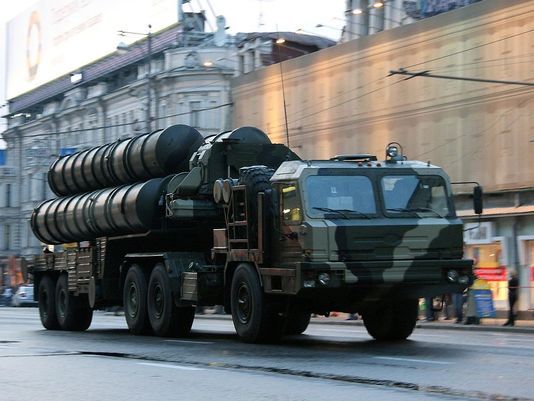
The generals at Tuesday’s news conference deliberately did not say which countries have anti-access area denial defenses, but in an earlier interview with Air Force Times, the commander of U.S. Air Forces in Europe said the Russians have such air defenses in the Kaliningrad enclave and Crimea, which Russia annexed from Ukraine in 2014.
“They make a commitment to certain airspace and then they do whatever they need to do to give it as much anti-access area denial kind of approach to airspace,” Gen. Frank Gorenc said in a Dec. 9 interview. “I think it’s safe to say that it’s proliferating.”
The Russians surface-to-air missiles in Kaliningrad could be able to reach Polish airspace, Gorenc said.
“These are arrays of surface-to-air missile systems that are made up of modern long-range systems placed in a layered way that create robust defense,” he said. “It would be a significant achievement to be able to — in a classic sense — take that down.”
In general terms, anti-access area denial systems involve more than sophisticated missiles, Gen. Hawk Carlisle, head of Air Combat Command, said at Tuesday‘s news conference.
“Enemy aircraft and their weapons — air-to-air missiles — are a huge threat,” Carlisle said. “If you look at where potential adversaries have continued to improve … they haven’t stopped. They know what we can do when we own air superiority, so they’re doing everything they can to deny it.”
Potential enemies have also spent a lot of time and money incorporating electronic warfare into their air defense systems, Carlisle said. Finding ways to penetrate denied airspace will involve utilizing the full spectrum of air power, including space and cyberspace, he said.
It is an open question how much it would cost the Air Force in terms of lost pilots and aircraft to go toe-to-toe with the latest air defense systems, such as those in Kaliningrad.
When asked if these air-defense systems are so formidable the Air Force must anticipate combat losses, Welsh replied: “I don’t think we ‘must’ do anything. There are lots of options you can use over time to penetrate an area that is denied. As we look to the future, you have to look at all kinds of options. I don’t think it’s just aircraft.”
Welsh stressed that the Air Force needs to modernize its fleet of aircraft in order to meet the challenges posed by anti-access area-denial systems.
“I think if we don’t modernize our force, the risk certainly goes up — and that risk will be measured in terms of lives lost of friendly forces. I think as the threat increases, if your capability against it does not become more and more technologically advanced, then you will lose more lives if you are faced with that threat. I think that’s just a fact of warfare.”