
Editor’s note: This story was originally published at 4:27 p.m. EDT August 15, 2016.
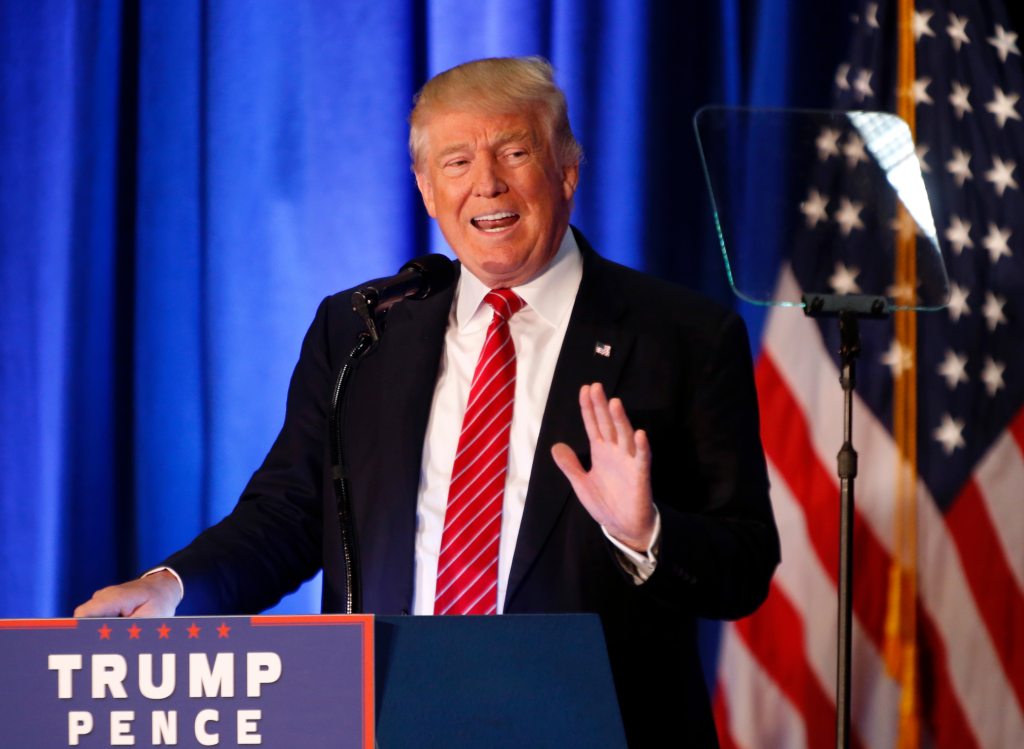
Republican presidential hopeful Donald Trump pledged to make destroying “radical Islamic terrorism” his top priority as the next commander in chief, saying the effort will take “military, financial and cyber warfare” to end the threat.
“All actions should be oriented around this goal, and any country which shares this goal will be our ally,” he told supporters at a rally in Ohio on Monday. “We cannot always choose our friends, but we can never fail to recognize our enemies.
“We will work side-by-side with our friends in the Middle East … and all others who recognize this ideology of death that must be extinguished.”
The tough talk came amid days of turmoil for the Trump campaign, which has steadily lost ground to Democratic rival Hillary Clinton in the polls since the party conventions in July. In a speech in Pennsylvania earlier in the day, Clinton dismissed Trump’s anti-terrorism plans as disjointed and ill-informed.
“I have laid out my strategy for defeating [the Islamic State group] over many months,” she said. “We will strike their sanctuaries from the air, and we will support local forces taking them out on the ground.
“Once again, Donald Trump has been all over the place on ISIS. … He is talking about sending American ground troops, and that is off the table as far as I am concerned.”
Trump did not specify exactly what his attack plans would be in the Middle East and other terrorist strongholds — “my administration will not telegraph exactly military plans and what they are” — but did blast Democrats for intervening too much in the affairs of other countries.
“Our current strategy of nation building and regime change is a proven absolute failure,” he said. “We have created a vacuum that allow terrorism to grow and thrive.”
That included the war in Iraq, which Trump insisted he always opposed despite numerous media reports disputing that claim.
The business mogul also never named former President George W. Bush and his role in the start of that war, but did attack both Clinton and President Barack Obama for moving troops out of the region too quickly starting in 2009, calling that a bigger mistake than starting the war in the first place.
“After we had made those hard-fought sacrifices and gains, we should have never made such a sudden withdrawal on a timetable advertised to our enemies,” Trump said, drawing applause from the partisan crowd.
“I have long said that we should have kept the oil in Iraq. I said it over and over and over again. … If we had controlled the oil, we could have prevented the rise of ISIS in Iraq.”
Trump has been roundly attacked by critics on the left and within his own party in recent days for comments like that, with opponents saying they show a lack of understanding of international diplomacy and national security strategy.
On Monday, Trump also proposed a radical overhaul of U.S immigration policy, saying he wants to halt all resident and temporary worker applications from a host of countries. He called for creation of an international commission to defeat ISIS and a unspecified plan to cut off internet access to terrorist groups worldwide in an effort to silence their propaganda.
Last week, 50 prominent national security officials penned a public letter calling Trump unqualified to serve as commander in chief, citing what they see as his irresponsible public comments and an uneven temperament.


