WASHINGTON – As the Army assembles a 6,000-person-strong cyber mission force in the next two years, officials are trying to determine the best way to attract, organize and maintain the cyber talent required to secure Defense Department networks.
The creation of a new Army branch dedicated to cyber — the first new branch established in the service since Special Operations in 1987 — means that leaders are learning how to recruit, train, retain and equip cyber forces. It’s been an ongoing effort over the past two years, one that the Army Cyber Command’s chief says is nearly halfway finished.
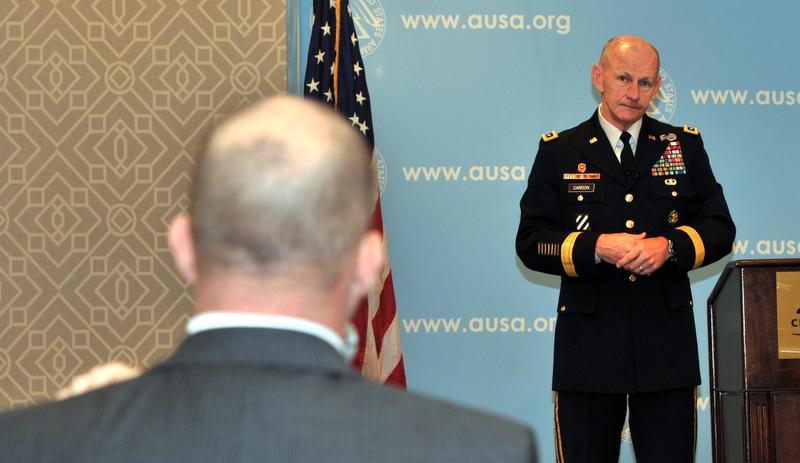
The Army has made significant strides in areas such as assessing aptitude and establishing training and doctrine, but the buildup is not without its challenges, Lt. Gen. Edward Cardon, commander of Army Cyber Command, told reporters at the AUSA conference.
Full Coverage From our AUSA Digital Show Daily
“Once you get these highly trained professionals, how do you lead them; how do you develop their talent?” Cardon said. “It has a lot to do with retention, and one of the challenges we have is we’re constantly being pulled at by industry. So we have to have a way to manage [the workforce] the best we can for the defense of the country.”
A major part of that is forging better partnerships with the private sector, government’s primary competitor for cyber talent, Cardon said. To do that, the Army is looking at new ways of recruiting and hiring, which could mean changes to current policies.
“As I’ve traveled around to the different tech companies, a lot of them would like to work with us, but they don’t want a permanent job with us. So right now the personnel polices don’t really allow us to do that, they don’t allow us to bring somebody in for a year,” he said.
“I’ve talked to Amazon, Microsoft [and] Google about how they manage their workforce … you have to find people who can operate in this environment, which means as technology comes along, they study it all the time. They’re self-learning. You have to invest significant time to stay current in this profession.”
To find those people, it may mean looking beyond the traditional academic and military programs, and making changes to how the Army handles hiring and personnel, Cardon said. For example, Army officials are looking at ways to loosen restrictions on how soldiers and civilian employees can move between specialties and assignments, similar to what’s done in other disciplines.
But leaders are looking internally as well. Roughly 2,000 of the projected 6,000 cyber-focused personnel have been hired so far, and the Army also is hammering out its use of the National Guard and Reserves for cyber requirements, Cardon said.
“For the National Guard, the immediate need is the cyber mission force itself, and we’ve developed National Guard teams — 11 in the National Guard, 10 in the Army Reserve — and they’ll be trained to the same standard for the cyber mission force,” Cardon said.