
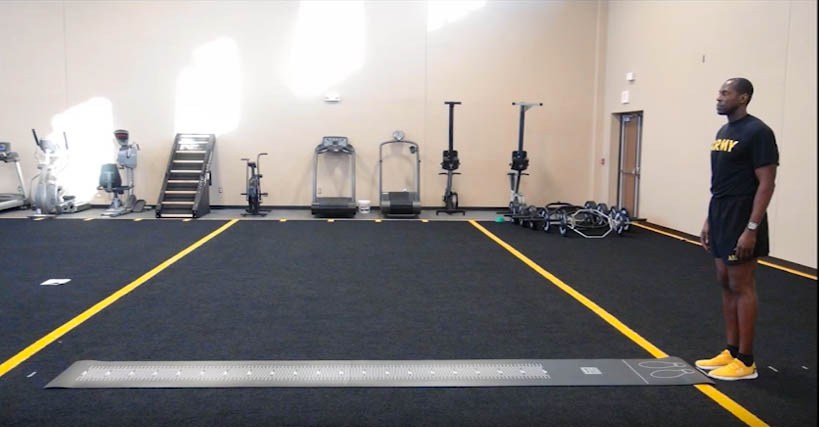
The Occupational Physical Assessment Test, a new way to measure physical aptitude of recruits, is tentatively scheduled for a June roll-out. If you have 30 minutes to burn, you can watch the Army’s official OPAT instructional video here. In the meantime, here’s what we know about the four physical events:
 Standing long jump
Why: Measures lower-body power – muscles used in repetitive lifting and carrying tasks such as offloading supplies or ammunition.
How: “At least two submaximal practice jumps,” according to the Army’s instructional video, followed by “three successful jumps,” with the results of each recorded to the nearest centimeter.
Do: Make up to four arm “counter-movements” – swing your arms back and forth as part of the jump motion.
Don’t: Hop before the jump or take off with one foot. And don’t forget to stick the landing – you may be asked to repeat the jump if you stumble forward or to the side, and you will be asked to re-do it if you fall or stumble backward.
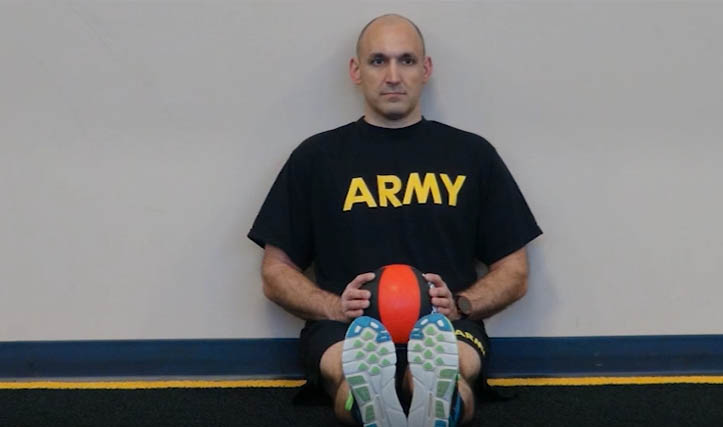
A soldier demonstrates the seated power throw.
Photo Credit: Army
Seated power throw
Why: Measures upper-body power – muscles used in repetitive, but generally stationary tasks such as loading ammunition.
How: Recruits sit on the floor with their lower back against a 9-inch-long, 6-inch-wide, 3-inch-deep yoga block and their upper back against the wall, legs out straight. On “go” from the test-giver, they hold a 4.4-pound medicine ball to their chest, pause, then “push/throw … upwards and outwards at a 45 degree angle,” per the Army instructional video. Two practice throws followed by three that count, with all scores recorded to the nearest quarter-meter.
Do: Keep your back on the pad/wall. Flex your wrists at the end of the throw for extra distance.
Don’t: Pretend you’re Stephen Curry – a basketball-style release will cost you distance and could force a re-do.
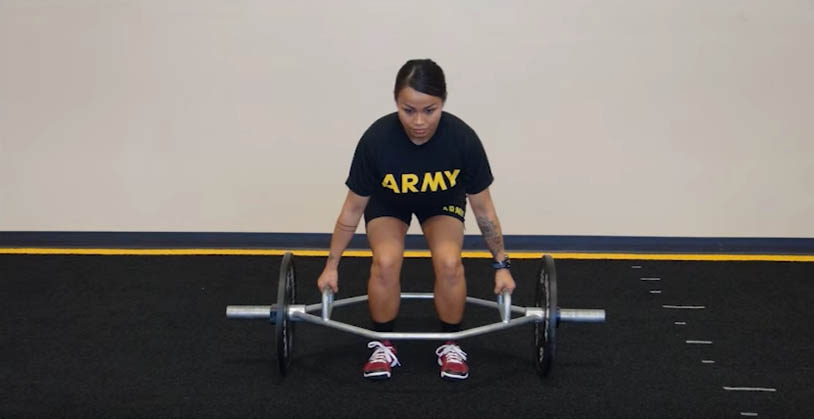
The strength deadlift can measure a soldier’s ability to pull a wounded soldier to safety.
Photo Credit: Army
Strength deadlift
Why: Measures lower-body strength – critical for casualty evacuation, for example.
How: After a practice lift to check for proper form, recruits will use a hexagon barbell to deadlift 100 pounds, then 140, then 180 and finally 220. One lift per weight, no skipping lifts – all successful lifts will be recorded. One minute’s rest allowed between lifts. Fail a lift? You get a re-try after a one-minute break.
Do: Maintain proper deadlift form, with knees under shoulders and aligned with toes. Keep your head up and your heels on the ground. Test-givers will watch for poor form and disallow lifts.
Don’t: Be a hero. Test-givers also will watch for recruits who may injure themselves. Part of the event instruction, according to the Army video: “If you feel any pain or discomfort, put the bar down.”
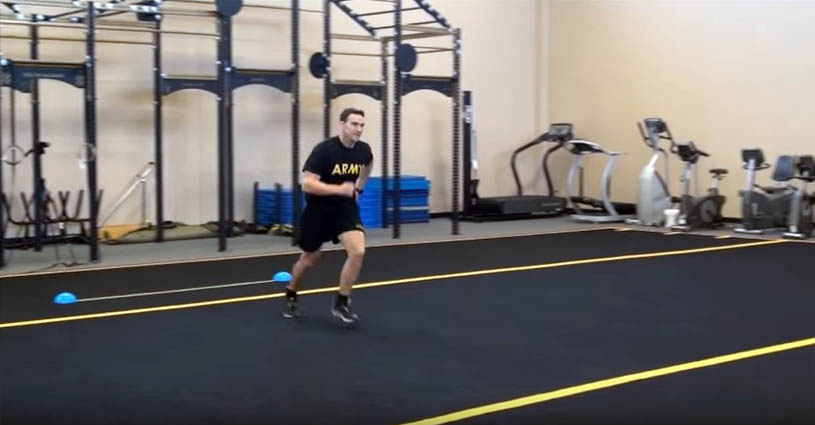
The interval run is set up at 20 meters.
Photo Credit: Army
Interval aerobic run
Why: Measures aerobic fitness – necessary to move under fire or for other short-burst activities common to combat situations.
How: A recruit jogs down a 20-meter course, then jogs back after hearing a beep. After a minute or so of warm-up, the beeps begin getting closer together. Test-takers must reach the line before the beep – get beat by the beep three times in a row, you’re done. Test-givers will record the recruit’s last successful interval.
Do: Keep plugging, even after you start falling behind. The three-strikes-and-you’re-out counter resets if you beat the beep, so one or two well-timed, full-out sprints could extend your time on the course.
Don’t: Show off by sprinting through the early intervals. Use the time to limber up, and save your energy for when time gets tight.


