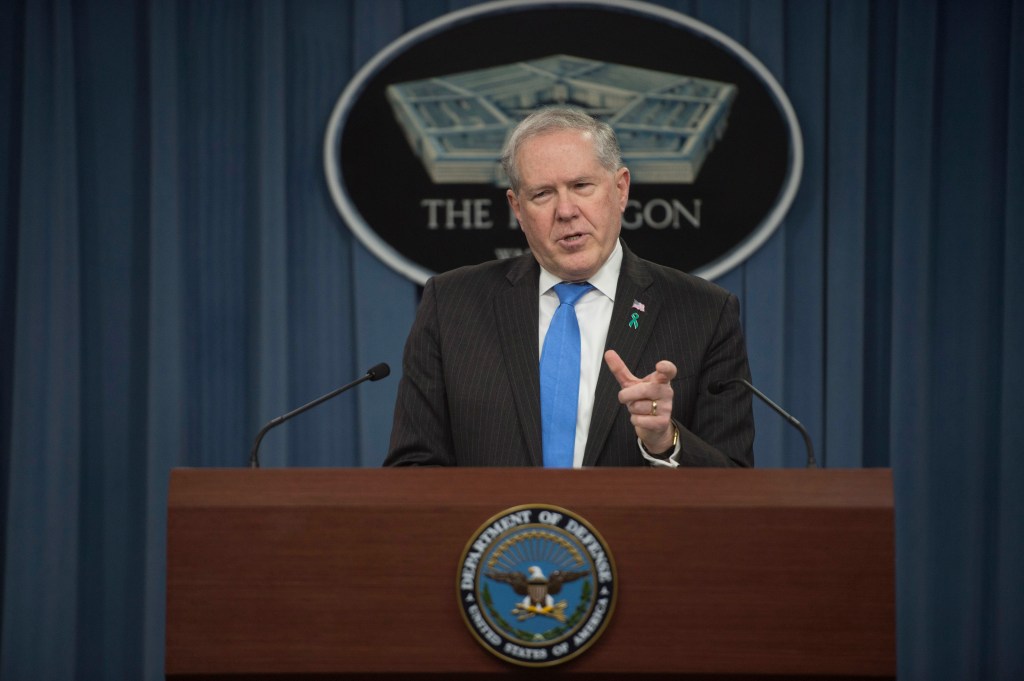
The pressure that sequestration has put on agencies is not new anymore, but its challenges are as daunting as ever. Frank Kendall, undersecretary of defense for acquisition, technology and logistics at the Defense Department, said that the difficulties DoD is having are unprecedented.
“I cannot recall any time in my memory when we had such a disconnect between our national security needs and how to meet those needs,” he said, speaking at the Professional Services Council’s Dialogue Series Lunch Sept. 2 in Crystal City.
The imposed austerity has pushed a greater level of acquisition innovation, he said.
“We are looking for creative ways to deal with issues from how we manage the force, how we compensate people, how we train people, the people we attract in government and, of course, what we do in acquisition and what we do in response to some of the threats we are seeing,” he said.
Some the highlights of his speech:
Better Buying Power 3.0
The theme of the third iteration of this program is “Achieving Dominant Capabilities through Technical Excellence and Innovation.” The five-year-old program is intended to increase the productivity and efficiency of DoD’s procurement operations. Kendall initiated the current iteration in April.
“What we added in [BBP] 3.0 is the focus on innovation and technical license,” he said. “We are looking for, in particular, return on investments for our R&D investments, whether it’s corporate [independent research and development], whether it’s laboratory expenditures or the [subcontracts and procurement] parts of our portfolio or other things that we are doing where we spend R&D money. The idea is not to find cuts in that money, but to get more out of it.”
The Aerospace Innovation Program
An effort to develop next-generation fighters, a key goal of the program is to be able to move fast if the funding situation improves.
“The idea is that we do the demonstrators, we keep the industrial-based design teams together, we make progress on the technology and we position ourselves to respond much more quickly if funds become available and we can respond to the changes of the threat,” he said.
Cyber guidance
The recent Office of Personnel Management hacks really brought home the urgency of cyber protection, Kendall said. DoD is providing new guidance for industry partners to classify and strengthen the guards on technical data.
“The acquisition community, including industry, is under attack all the time,” he said. “We want to know when you are attacked. We want you to give us that information so we can help build tools that will deal with those kinds of attacks.”
Workforce cuts
Kendall said that after steep cuts in the 1990s to the defense budget, the DoD faced an experience gap in the workforce, which improved in 2008, but plateaued again with sequestration.
“Part of the problem is experience,” he said. “The whole workforce is about 150,000 people right now, and we have this bathtub, where we have newer people and a lot of people at the other end who are looking to retire.”
To battle the gap in experience, Kendall said management initiatives, including Force of the Future, would help provide mentorship, talent management and other projects to boost newer employees moving forward.
Bracing for the next budget
In an effort to anticipate the bite of sequestration cuts scheduled for Oct. 1, Kendall said acquisition and development spending would be kept below the cap while the DoD rebounds from the 2013 budget slash.
“The services all are looking at three or four more years, assuming current budget levels, of recovery to the damage that we did in 2013, in particular,” he said.
Unless Congress repeals the sequestration cuts, or passes a budget with more spending built in, the DoD could see a cap on defense spending of w $523 billion in fiscal 2016, which begins Oct. 1.