-

Q&A: The State of Hypersonics
The potential of hypersonic weapons has military leaders rethinking everything they knew about missiles. A combination of speed — hypersonics can exceed Mach 5, or five times the speed of sound — maneuverability and flexibility means that hypersonics break the old rules of both missile defense and offense. Detecting, identifying and killing a missile that…
-
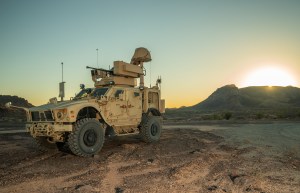
Q&A: The Role of CUAS on the Modern Battlefield
Unmanned aircraft systems (UAS) open up an entirely new world for those looking to perform quick-strike, low-risk attacks on infrastructure, opposing forces or even civilian targets. Due to their size and maneuverability, they are hard to detect and track. They are low cost and the fact that they can be built or modified using commercial…
-

Q&A: How LTAMDS Defends Against Aerial Threats
As the nature of aerial threats changes, radar systems have to adapt to provide effective defense. Modern cruise missiles don’t fly a static trajectory. Unmanned aerial vehicles can be piloted by a human thousands of miles away. Hypersonics reach speeds that can put them within striking distance before a radar system can report them as…
-
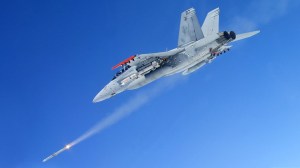
AMRAAM Missile: A long legacy with new capability
The AMRAAM missile is the air-to-air weapon of choice for U.S. and allied militaries. And it keeps getting better. Its roots go back three decades, but today’s AMRAAM missile is vastly different from its predecessors, thanks to multiple updates of its hardware and software. “The AMRAAM missile is arguably the most sophisticated air-to-air weapon in…
-
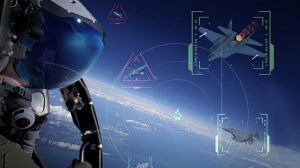
JUST LIKE “TOP GUN”
Slider: Ice, we’ve got a problem. I have four aircraft on radar. Four bogeys. Iceman: Wood, we’ve got four bogeys. Wolfman: Wrong, make that five! More than 30 years after the 1986 blockbuster Top Gun, a new upgrade to the Identification Friend or Foe (IFF) system helps pilots avoid dangerous situations like the one featured…

Raytheon Missiles & Defense


Trending Now
-
Lockheed Martin launches modular missile tech with dedicated ‘storefront’
-
Chinese military researchers tap US AI models to train defense systems
-
US Marine Corps turns to AI-powered Bullfrog as drone threats expand
-
Doodle Labs eyes US, European production sites as demand soars for jam-resistant drones
-
Lockheed Martin’s Morfius X-Rotor built to fry 50 enemy drones in one flight