The Air Force began issuing prioritized satellite link monitoring in Air Tasking Orders in September 2016.
While details regarding the prioritization structure are scant the Air Force’s top uniformed official shed light on the impact this has on operations.
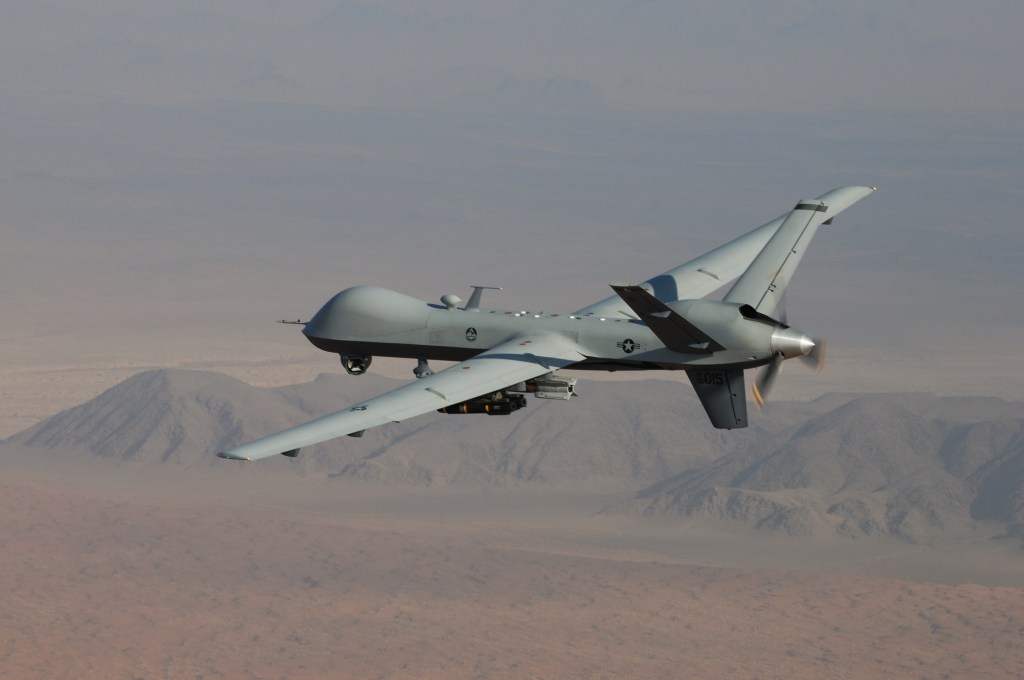
In describing a “war story,” Gen. David Goldfein, the Air Force Chief of Staff, described how an MQ-9 Reaper was flying an armed reconnaissance mission over Iraq in early Jan when personnel received reports of satellite communications interference hindering the aircraft to carry out the mission. Previously, Goldfein explained during a Mitchell Institute for Aerospace Studies hosted breakfast Feb. 3, personnel might have tried to troubleshoot and worked their way through this issue.
This time a report warning that SATCOM is being interfered with went straight to the floor of the combined air operations center in which a space team is fully integrated with the combat teams, said Goldfein.
Since the Air Force has begun to prioritize SATCOM link monitoring as a combatant commander priority, Goldfein said this report can be feed directly to space operators on the floor to solve. In this case, the space team was able to identify the problem in minutes, he added, noting that just six months ago, this task could have taken days or weeks to sense, identify, track and resolve.
The prioritization of SATCOM links has enable dramatically quicker response to issues on the most import SATCOM links, an Air Force spokesperson told C4ISRNET following Goldfein’s appearance. They added that as they practiced the processes, they found they were getting much better at responding to issues with any priority link.
The Air Force declined to provide further details on the prioritization structure they conceded that remotely piloted aircraft – the term the Air Force uses to describe its larger drones such as MQ-9s – are high on the list. SATCOM is what allows these systems to be remotely piloted beyond line of sight around the globe.
NEED CONTEXT FOR THIS