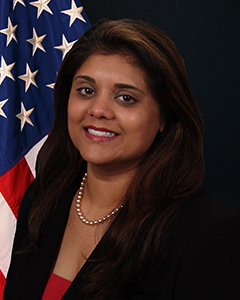
The Army is pushing forward with a new program effort and accompanying documents that take the concept of cyber situational awareness to a new level — a level that improves maneuverability in cyberspace.
Cyber situational understanding is supplanting situational awareness not only as the latest cyber buzzword, but as standard operating procedure for conducting offensive cyber operations (OCO) and defensive cyber operations (DCO) across the Defense Department Information Network (DoDIN).
“The reason for the shift is two-fold,” said Portia Crowe, director of cyber operations and CIO at Army Program Executive Office for Command, Control and Communications-Tactical. “Awareness and understanding mean two different things. Awareness is ‘I have knowledge of that.’ Understanding is more than that — it’s ‘I have an awareness of what’s going on, the mission and the impact, but I’m also understanding how to make better decisions.’ So it’s more, ‘what do I know and what am I going to do about it?’ “
To support the broader operational shift, the service is preparing to stand up a new PEO-C3T initiative also backing situational understanding.
Tactical Network Operations Management is an emerging program effort to evaluate and implement holistic tactical network assessment and understanding. Initial requests for information from industry already have been issued this year, and both the findings and the program will support emerging requirements in cyber situational understanding, according to PEO-C3T spokesman Paul Mehney.
Army officials also are working on new documents to help get the necessary tools, Crowe said.
“There is a joint cyber situational requirements document already, so we’re using that as the foundation to improve situational understanding and the OCO, DCO and DoDIN environment better,” she said.
The new document is part of higher-level Army efforts between Training and Doctrine Command and the Cyber Center of Excellence to better align ongoing warfighter challenges, where cyber situational understanding is a top priority, Crowe added.
With the cyber-focused warfighter challenges and the new doctrine, leaders including TRADOC Commander Gen. David Perkins and Army Cyber Center of Excellence Commander Maj. Gen. Stephen Fogarty wanted to get on the same page in terms of issues like lexicon. They also wanted to push forward the requirements faster, Crowe said.
“I think part of that challenge is we want to see everything and we want to know everything, from the DoDIN across OCO and DCO. Understanding pushes it a little bit further,” Crowe said. “When we go to get funding we have to tie the requests to requirements, and this gives us a stronger case to say, ‘this is number one, this is what they’re asking for the in the field, this is what we have to do.’ Everybody’s putting a lot of emphasis on cyber, but we have to put it in the right place — they’re positioning us to do that.”