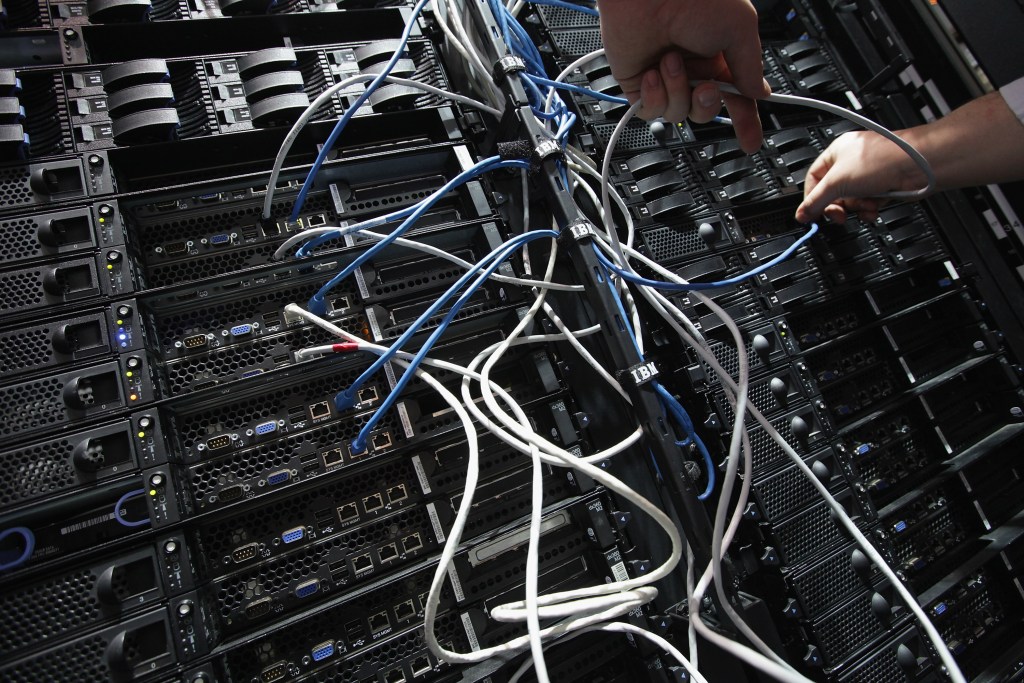
Data is increasingly becoming an important commodity, from both an intelligence and a counterintelligence perspective. Regarding the former, being able to analyze large sets of data will better positon commanders to not only achieve mission success but protect personnel. This is especially true in the Middle East where U.S. forces have been deployed for nearly two decades, facing an advanced improvised threat from insurgent groups. Rapid analysis and exploitation of data collected is of the utmost importance to stay in front of these asymmetric challenges.
“With over 750 data feeds coming into our cloud architecture…we must be able to sift through and exploit data quickly,” Lt Gen Michael Shields, director of the Joint Improvised-Threat Defeat Agency, said Sept.1 at an AFCEA NOVA event. “This includes exploitation of video, imagery, structured and unstructured, semistructured data, classified, unclassified and open source. The goal is to make more efficient use of time and allow analysts to spend more time thinking about the problem versus querying and parsing the data.”
Shields said that with reduced budgets, the number of people looking at and analyzing data sets reduces despite the increase of threat vectors. “So how do we leverage science and technology, the power of the machine to enable those analysts – that’s what I’m after. I guess you could call that the Holy Grail,” he said.
“Video intelligence pushes the envelope on exploitation of open source video providing an automated video exploitation framework for near real time mining, processing and analysis of video for geotemporal associations, behaviors and attribution,” he added. “Rapid and automated exploitation of open source video can provide immediate value added input in support of the warfighter’s operations, but it’s what I would refer to as a wicked challenge.”
Shields shed light on a project his organization is working on called Aurora, which seeks to reduce manual burdens on analysts to shrink research time dedicated to sifting and sorting through large data sets as well as discovering fresh relationships in big data. “Project Aurora demonstrates innovations in applying the third offset autonomy concepts fostering human-computer interaction. Embracing a new technology like Aurora recommendation engine has the potential to foster the continues modernization of JIDA’s methodologies and in return informs DoD as well,” he said.
His organization, which has evolved since it was first stood up in 2006 to combat the challenge of improvised explosive devices employed by the Taliban in Afghanistan and al-Qaeda in Iraq that devastated U.S. forces, is focused “number one first and foremost, [at] countering the improvised threat,” he told C4ISRNET. It also works to provide solutions to a raft of additional problem sets facing combat personnel.
Another critical project his office is working on is combating the threat of cheap and commercial unmanned aerial systems from terrorist groups such as ISIS. In fact, his organization asked for more money from Congress recently to put toward this effort. “The request was put in to Congress for funds to support coming up with a capability to counter ISIL’s current use of drones in Iraq and Syria. We’re investing in a couple of capabilities that will be deployed this late fall, which will enable that effort,” he said during his presentation, using another acronym for ISIS. Shields, however, declined to offer additional details on these forthcoming projects telling C4ISRNET after his speech that it is operational information.
JIDA looking to reduce burden on big data analysts