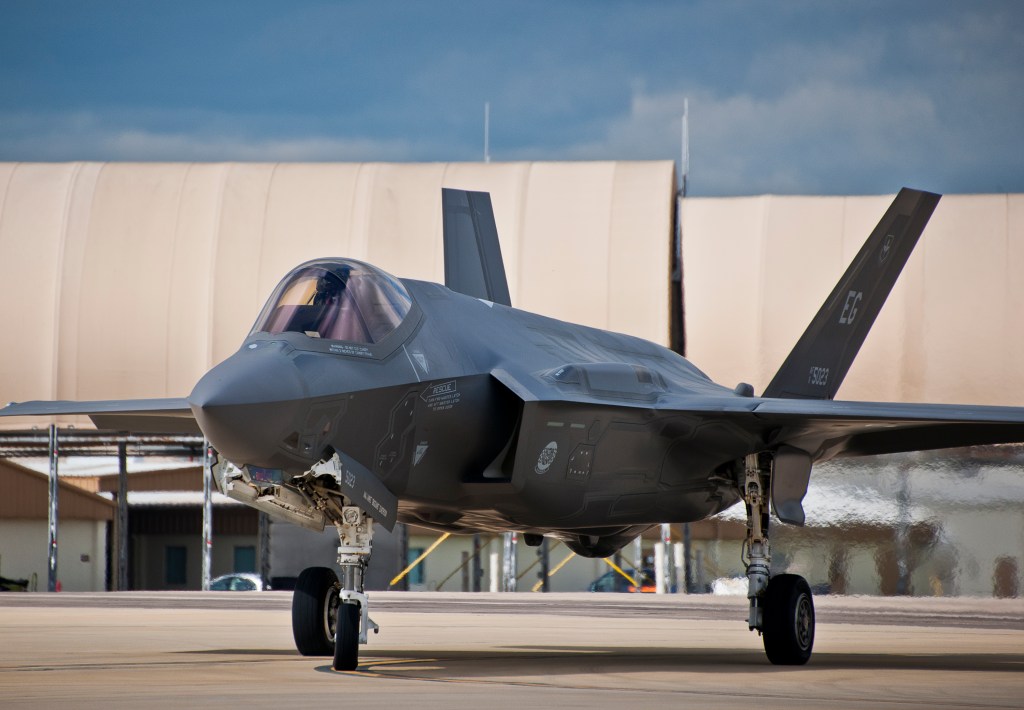
ORLANDO, Fla. — Lockheed Martin can still support a bulk F-35 buy among international partners in fiscal year 2017, but time is running out for the jJoint pProgram oOffice to make a final decision.
If the F-35 international partners want to participate in a “block buy” beginning in FY17, Lockheed needs to know within the next six months in order to prepare the supply chain, company F-35 program manager Jeff Babione told reporters Feb. 25.
“It takes about two years to order the parts for any given lot — you really need about two, two and a half years to make sure the supply chain is ready for that,” Babione said during the Air Force Association’s air warfare symposium in Orlando, Florida. “For a 2018 buy we probably have time, for 2017 we probably need to do that in the next six months.”
If the international partners move forward with a block buy in FY17, the US will not participate, JPO chief Lt. Gen. Chris Bogdan told reporters Feb. 10. However, the US could choose to opt in to such a deal in later years, he said.
The Pentagon’s latest budget request reflects a decision to include advanced funding in FY18 for a block buy to start in FY19, Bogdan said. The deal would cover FY19 through FY21 and is expected to save over $2 billion in total, he stressed.
Babione also touted the advantages of participating in a block buy, but said Lockheed would prefer a longer time frame.
“We should be able to save multi-billion dollars — if you are going to buy those airplanes anyway, we can save you a couple billion dollars,” he said. “Is there a scenario where we could start the partner multiyear ahead of the US? That’s possible, but it probably wouldn’t be our preference.”
Email: lseligman@defensenews.com
Twitter: @laraseligman