SOFIA — Bulgaria will send over 400 troops and other security personnel to guard its border with Greece, amid fears the migrant flow along the Balkan route will pick up with the onset of warmer weather, the prime minister said Saturday.
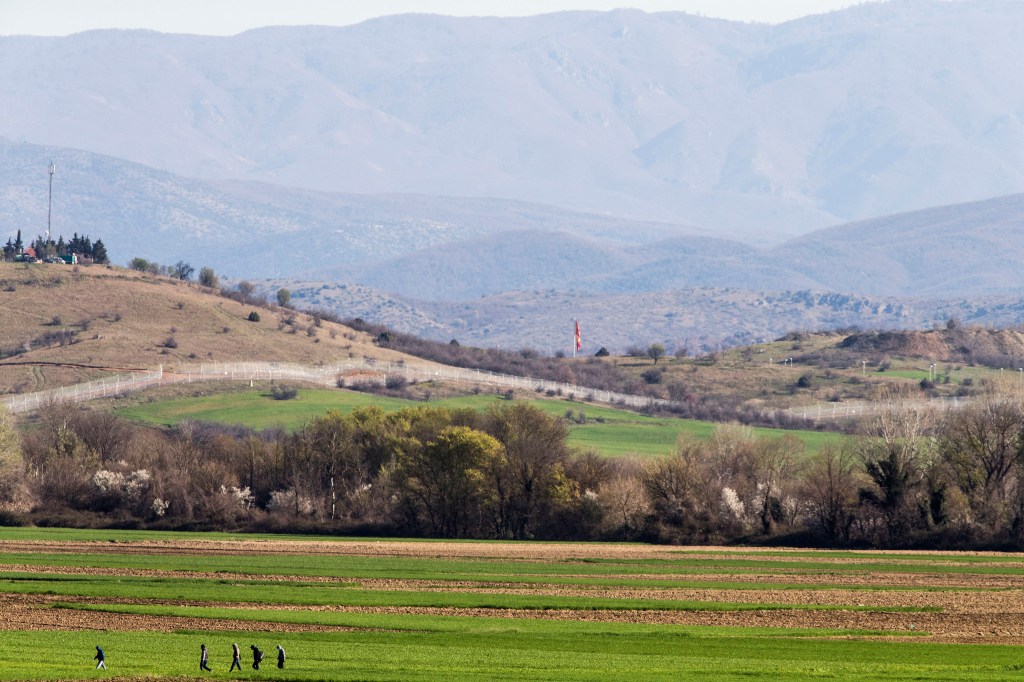
“Hundreds of people, more than 400, from the army, paramilitary police and police, will stay here permanently,” said Prime Minister Boiko Borissov following security force exercises involving helicopters and armored cars at the Greek border near Macedonia.
Another 500 security personnel could be mobilized within hours if necessary, he added.
Last month Bulgaria’s parliament granted the army greater powers to help guard the country’s borders. Previously troops were only able to provide technical and logistic support.
EU member Bulgaria already has close to 2,000 police guarding its porous 260-kilometer (160-mile) frontier with Turkey and is currently extending a 30-kilometer razor-wire fence.
The measures have helped the country remain, so far, on the sidelines of the major migrant route from Turkey and Greece to northern Europe.
However with migrant quotas introduced by Austria and Balkan nations, those fleeing war and poverty in Syria, Iraq, Afghanistan and elsewhere in the Middle East and North Africa are seeking new routes into Western Europe.
Bulgaria’s 470-kilometer border with Greece is straddled by mountains, with only a third of it deemed passable for poorly equipped migrants.
Last year some 30,000 migrants were registered in Bulgaria, while thousands more passed through clandestinely.
NGOs have complained of poor treatment of migrants at the hands of the Bulgarian police.
Some 500 asylum candidates are currently housed in reception centers in the country which is one of the poorest EU member states.