
Both the House and Senate will be on recess this week after the Presidents’ Day holiday. When lawmakers return to Washington next week, they will begin a period during which they’ll be in session 17 of the next 23 weeks. And the agenda that members will begin tackling will be stacked. First up is what to do about funding the Department of Homeland Security. But it won’t stop there.
Issue: DHS Funding
What’s happening: The House already has passed a nearly $40 billion spending bill that would keep the agency running through this fiscal year. It contains billions for hardware that would be supplied by the US defense sector. Almost no members oppose the funding, nor the Coast Guard helicopters, ships and aircraft it would pay for. Should be easy for the Senate to pass before funding runs out on Feb. 27, right?
Wrong. The upper chamber cannot get to the required 60 votes to end debate because of several controversial immigration provisions the House tacked on.
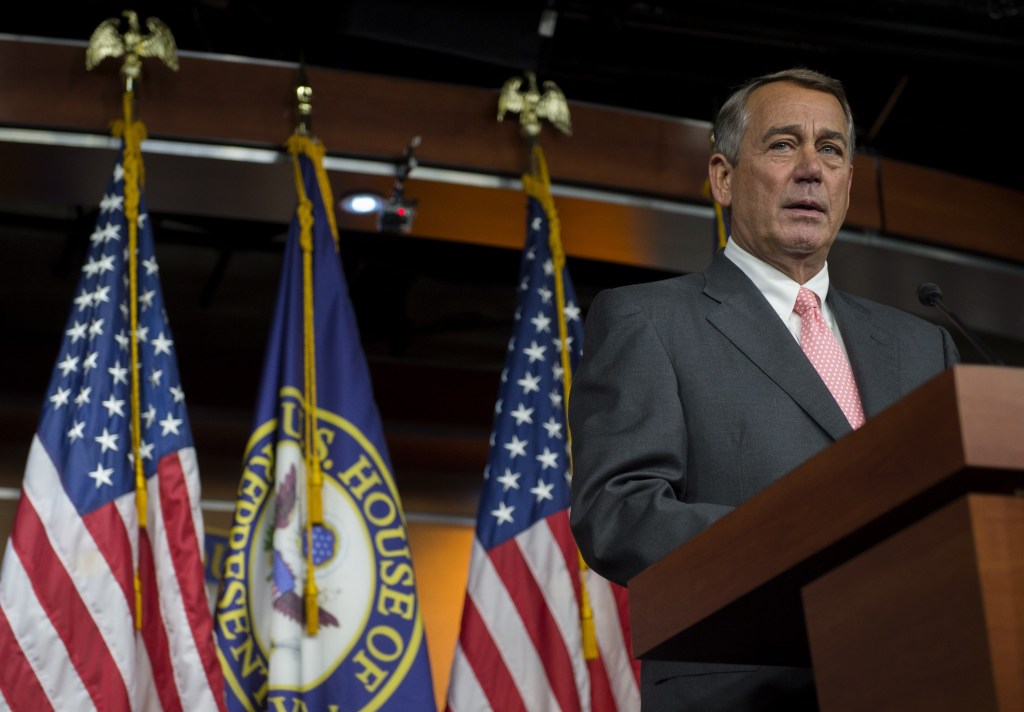
What’s next: While unthinkable to many as the Islamic State group threatens the US and its interests, Senate Majority Leader Mitch McConnell, R-Ky., proclaimed last week his chamber is “stuck.” House Speaker John Boehner, R-Ohio, caused a stir among reporters when he told them Senate Democrats need to “get off their ass” and pass the lower chamber’s bill.
Unless both chambers get off their derrières, the agency will shut down. The safe bet is — even if DHS shuts down for a few days — lawmakers eventually will pass the kind of “clean” homeland appropriations bill the president will sign.
Issue: AUMF
What’s happening: The White House last week sent lawmakers an authorization for use of military force (AUMF) for the Islamic State fight. The Obama administration’s measure would place limits on US ground forces and limit US operations to three years. In keeping with past practices, the Obama White House made a major move that involves Congress just before the start of a recess period. The draft AUMF was met with a tepid response on the Hill. Democrats said it gives President Barack Obama and future presidents too much legal wiggle room. Republicans said it did not go far enough.
What’s next: Hearings. And more hearings. Plenty of political posturing in between. Some negotiating through the media. That will be followed by mark-ups, probably in the House and Senate. If the proper committees can reach agreement on several thorny issues, the chambers will hold floor debates and votes on their measures. The Senate’s recent weeks-long process to approve a Keystone XL Pipeline bill shows it could be quite a while before a new AUMF is on the books.
Issue: Regular Order
What’s happening: Senate Republicans vowed to return to the “regular order” of passing annual authorization and appropriations bills. When Congress returns, the 2016 Pentagon spending request will have been on the Hill for several weeks. That means the congressional defense committees will begin working full steam on their defense policy and spending bills. First up, however, will be a budget resolution that, as of now, likely will leave in place defense spending caps.
What’s next: The Senate got its Keystone bill done, but it could not find a way to get to a final vote on the DHS-funding measure. That led some on the Hill to wonder privately whether “regular order” really will kick in with such a thin Republican majority. Democrats can still gum up the works on amendments and ending debate. And because defense bills typically contain several controversial policy provisions, the same partisan posturing that jammed up the Democratic-led Senate could again cause problems. ■
Email: jbennett@defensenews.com


