-
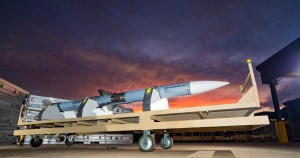
Defense commitments now will ensure a safer tomorrow
When it comes to ensuring the safety and security of the United States and its allies, Raytheon, an RTX business, already knows what the best, ready-now solutions are and how to scale them efficiently. Air superiority and missile defense are critical to stay ahead of adversary threats and defend the nation. Over the last two…
-
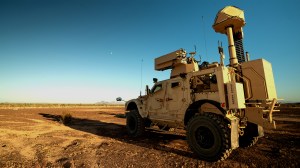
Navigating the Landscape of CUAS in Modern Defense
In today’s defense environment, the surge in small, affordable Unmanned Aircraft Systems (UASs) has presented a notable challenge. These agile, cost-effective drones have maneuverability and size advantages, making their detection and interception a complex task. Efforts to counter these UASs have led to the development of sophisticated systems designed for detection, identification, and response. Continuous…
-

Webcast: SMD Debrief
This event happened on August 17, 2023 Space and missile defense is rife with new challenges, as both near-peer adversaries and rogue states push forward on new technologies such as hypersonics and offensive capabilities in space. To defend against these challenges, U.S. forces must have both the technology and the people needed to build effective…
-

Q&A: The State of Hypersonics
The potential of hypersonic weapons has military leaders rethinking everything they knew about missiles. A combination of speed — hypersonics can exceed Mach 5, or five times the speed of sound — maneuverability and flexibility means that hypersonics break the old rules of both missile defense and offense. Detecting, identifying and killing a missile that…
-
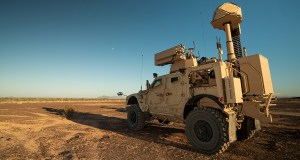
Birds, Planes, Drones – KuRFS Radar Can Spot Them All
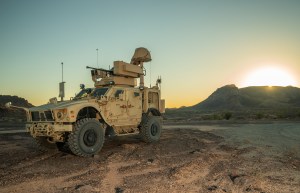
KuRFS: It stands for Ku-band Radio Frequency System. And it stands up against enemy drones, along with artillery and other small, fast threats. The advanced, adaptable, multi-mission radar made by Raytheon Missiles & Defense, a Raytheon Technologies business, is the U.S. Army’s ‘go-to’ sensor to find all classes of unmanned aircraft systems, or UAS, commonly…
-
Q&A: The Role of CUAS on the Modern Battlefield
Unmanned aircraft systems (UAS) open up an entirely new world for those looking to perform quick-strike, low-risk attacks on infrastructure, opposing forces or even civilian targets. Due to their size and maneuverability, they are hard to detect and track. They are low cost and the fact that they can be built or modified using commercial…
-

Q&A: How LTAMDS Defends Against Aerial Threats
As the nature of aerial threats changes, radar systems have to adapt to provide effective defense. Modern cruise missiles don’t fly a static trajectory. Unmanned aerial vehicles can be piloted by a human thousands of miles away. Hypersonics reach speeds that can put them within striking distance before a radar system can report them as…
-
AMRAAM Missile: A long legacy with new capability
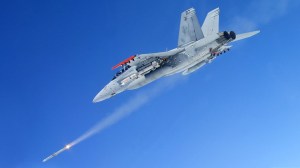
The AMRAAM missile is the air-to-air weapon of choice for U.S. and allied militaries. And it keeps getting better. Its roots go back three decades, but today’s AMRAAM missile is vastly different from its predecessors, thanks to multiple updates of its hardware and software. “The AMRAAM missile is arguably the most sophisticated air-to-air weapon in…
-

Webcast: SMD Debrief 2022
This event took place on August 12, 2022 The U.S. space and missile defense community’s challenge is simple: stay ahead of the threat from nations such as China, North Korea and Russia. Across the Department of Defense, leaders are adapting existing systems to better counter the current threat, moving forward on major programs of record…
-
Defeating drones: Demonstration in the desert
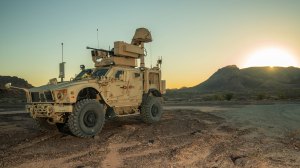
Testing of Raytheon Missiles & Defense’s counter-UAS capabilities shows continued success in anticipating and responding to evolving drone threats In the Arizona desert, drones flew across the summer skies, alone and in swarms. They represented what the U.S. Army has identified as a critical problem: the proliferation of unmanned aircraft systems, or UAS, and the…