“I am very confident that the Armed Services Committee, under the leadership of John McCain next year, that we’re going to make some corrections [to] sequestration.” — Retiring SASC member Saxby Chambliss, R-Ga.
Is that really true?
Pro-military Republican senators are feeling their oats after their party painted the electoral map red on Nov. 4, securing control of the upper chamber.
Among their many vows in the weeks since returning to Capitol Hill after a campaign-trail recess is a promise to get rid of or dramatically lessen the Pentagon’s share of the remaining sequestration budget cuts.
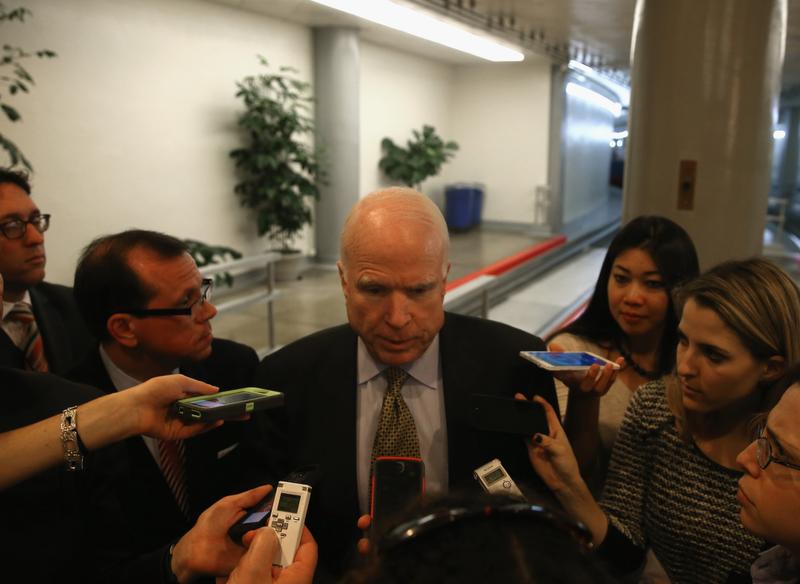
McCain told reporters one of his major priorities as SASC chairman will be “the repeal of sequestration, as far as the military is concerned.” McCain and other hawks believe the remaining seven years of the automatic cuts would bring a “blow [that] is too big — and with the world changing as it is, it’s really too biting.”
One Republican source chuckled when told of the Senate hawks’ vows to take the Armed Services gavel and use it to beat back the remaining sequester cuts.
“It’s just happy talk,” the GOP source said. “The simple truth is they would have to change the law, and is the [authorization bill] the legislative vehicle to do that with? No, it’s not.”
The source said lessening the DoD portion of sequestration would require slashing the federal budget elsewhere or raising taxes.
“Both are out of your jurisdiction if you’re on SASC,” the Republican source said. “And any tax measure, by law, has to start in the House.”
House Armed Services Committee Chairman-elect Mac Thornberry, R-Texas, put it this way last week: “Armed Services Committee cannot solve that issue.” Instead, the two panels must work with others.
Still, defense insiders are right to feel good that McCain lists addressing sequestration as his top priority as chairman. Despite the criticism he often gets, he has plenty of sway with Republican leaders.
And, to be clear, he’ll need them to strike any sequester-addressing deal.
But that’s still — three years later — the problem.
Back-benchers have come and gone in the Obama era. But the leaders remain the same; they just swap the House and Senate gavels among themselves. And while McCain and the hawks are talking about a deal, the leaders are busy reminding each other why they can’t agree on, well, anything.
There was some talk after the midterms from President Barack Obama and Senate Majority Leader-elect Mitch McConnell, R-Ky., about working together to get some things done. Since then , however, the two sides have been waging war on immigration, an oil pipeline project and other issues.
The Washington Post’s Lori Montgomery put it this way in a recent article: “acrimony over immigration is dampening hopes for cooperation on more ambitious initiatives, with President Obama and GOP lawmakers bracing not for compromise but for combat.”
Republicans say Obama has “provoked them,” she reported, and Obama says they’re taking things too personally.
Behold the new Congress. Same as the old Congress. ■