
The House has approved its 2016 National Defense Authorization Act (NDAA), and the Senate Armed Services Committee (SASC) has set off the long wait for floor time on its version. As temperatures rise in the former swamp that is now Washington, D.C., there will be ample intrigue about how several top-shelf issues play out this year. Break out the sunscreen. The dogs days for defense wonks who watch Congress have arrived a little early this year.
Issue: Loco OCO?
Background: Both the House-passed and SASC-approved Pentagon policy bills would clear the Defense Department to spend $89 billion in war funding next year. But nearly $40 billion of that essentially would be base-budget money. The White House dislikes that idea. House Democrats like it even less. Both gladly would inflate the base defense budget by that amount. But they want an equal rise in domestic spending before voting for any Pentagon budget hike, something GOP members are dead set against.
What To Watch: House Democrats like HASC Ranking Member Adam Smith of Washington lacked the votes to block the lower chamber’s NDAA over the war-funding issue. But that’s not true in the Senate, where it takes 60 votes to end debate on legislation, meaning a handful of Democrats are needed to move to votes on final passage. Enter pro-defense Democrats, who reportedly are talking about an overseas contingency operations (OCO) compromise. They need to appease fewer than 10 Democrats — but maybe a few more if conservative GOP senators vote against any legislation with the extra “off-budget” war funding. Are we in for another crazy NDAA showdown?
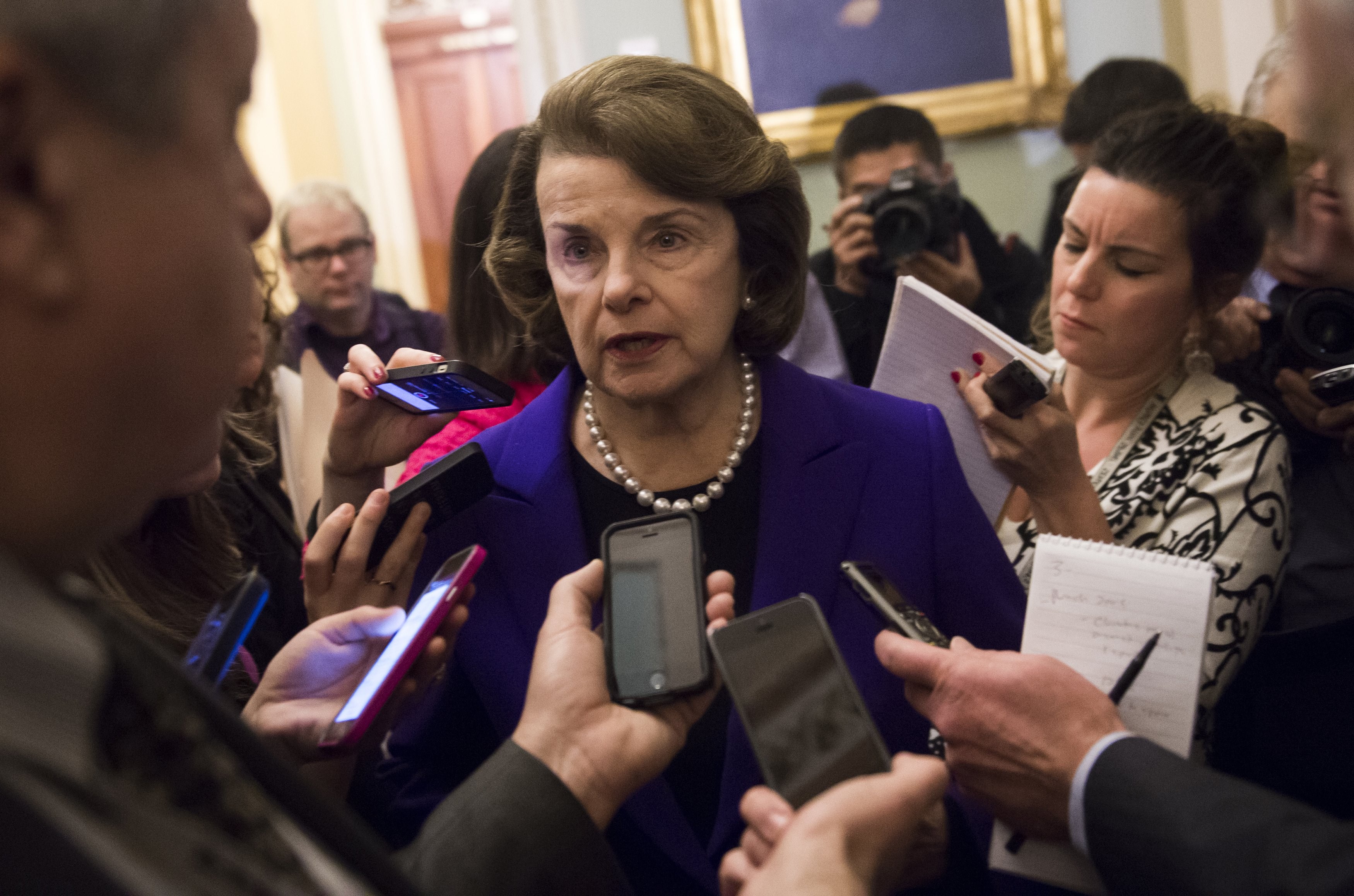
Senate Intelligence Chairwoman Dianne Feinstein, a Democrat from California, speaks to reporters about the committee’s report on CIA interrogations at the US Capitol in Washington on Dec. 9, 2014. The CIA’s interrogation of al-Qaida suspects was far more brutal than acknowledged and did not produce useful intelligence, a damning and long-delayed US Senate report said Tuesday.
Photo Credit: Saul Loed/AFP via Getty Images
Issue: Is That Your Drone?
Background: Senate Armed Services Chairman Sen. John McCain is pushing the idea of shifting America’s armed drone program to the Pentagon, rather than leave the matter to the full chamber. McCain and other pro-military members believe the Defense Department is better suited to operate the backbone of the Obama administration’s targeted-killing program, and they think a shift would allow for greater public scrutiny. But they will be up against pro-CIA lawmakers such as Sens. Richard Burr, R-N.C., and Dianne Feinstein, D-Calif., the chairman and ranking member of the Senate Intelligence Committee.
What To Watch: In short, which camp’s arguments persuade the most members in both chambers. The Feinstein-led side’s rebuttal is that the drone program is a covert one and is best run by a clandestine organization. They also say the CIA has developed the kind of careful and methodical approach to the program that the military has yet to show. Another question: What are the domestic and legal ramifications if a drone operated by the US military mistakenly kills Western hostages or civilians in a country like, say, Pakistan? A floor fight is looking probable this year. And both McCain and Feinstein know how to scrap.