-

The Future of Defending the Homeland
From hypersonics to UAS swarms, adversaries are fielding weapons that test the limits of traditional missile defense and homeland security strategies. At the same time, electronic warfare, cyber intrusions, and space-based threats add layers of complexity to protecting the homeland. Meeting these challenges requires systems that are not only resilient but also integrated with left-of-launch…
-

Advancing Army Autonomous Systems with AWS
The Department of Defense is rapidly embracing Unmanned Autonomous Systems (UAS) across all service branches, including the Army, with AI and cloud computing driving this transformation. Senior leaders from the Army and industry will discuss how cloud-enabled AI is revolutionizing autonomous operations. The panel will explore breakthroughs in autonomous flight, swarming technologies, and real-time mission…
-

Innovation in Armored Systems
Armored vehicles remain the backbone of ground combat, but new threats — from loitering munitions to precision anti-armor weapons — demand innovation at every level. Survivability, mobility, and lethality must evolve in tandem, backed by testing cycles that are faster and supply chains that are resilient. Industry and the Army alike are racing to ensure…
-

Rebuilding Munitions Stockpiles
The wars in Ukraine and Gaza have exposed the vulnerability of munitions stockpiles strained by high demand and slow industrial capacity. At the same time, new weapons such as maneuverable missiles, precision-guided artillery, and smart loitering systems are redefining what “stockpile” even means in the 21st century. Replenishing and reimagining munitions has become central to…
-

Accelerating the Army’s Tech Advantage
As threats evolve at unprecedented speed, the Army must rapidly adopt and integrate emerging technologies to maintain the edge. From artificial intelligence and advanced analytics to resilient networks and cloud-enabled operations, defense leaders are seeking new ways to transform data into decision advantage and ensure forces are ready to fight and win. This discussion brought…
-

The State of Future Vertical Lift
Future Vertical Lift represents one of the Army’s most ambitious modernization priorities, promising greater speed, range, and adaptability in the skies. But progress is measured not only in engineering milestones, but also in how lessons from Ukraine and the Indo-Pacific reshape requirements. The conversation now is whether the program is aligned with evolving threats and…
-
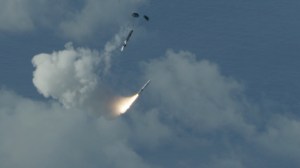
L3Harris Delivers Operational Realism for Missile Defense
HUNTSVILLE, Ala. — The Army encourages soldiers to “train as you fight,” a sentiment that reflects the importance of simulating real-world scenarios to battle-harden our defenses. We must ensure that whatever fight might ultimately come isn’t a fair one for our adversaries. America’s missile warning and defense systems demand this kind of readiness to ensure…
-

Webcast: Building the All-Domain Force
This webcast aired on September 25, 2025 In this webcast, Defense News examined the challenges of an all-domain defense strategy, including streamlined communications between forces, data infrastructure needs and true interoperability between all forces across all domains. Webcast Recording: Guest Speakers: James Lewis, Senior Adviser (Non-resident), Economic Security and Technology Department, CSIS Tom Konicki, Director,…
-

Winning the Next Mission:
As national security threats grow more dynamic and less bound by national borders, the missions of defense, homeland security, and national intelligence become increasingly interconnected. A border incursion, natural disaster, or cyber intrusion requires simultaneous coordination across combatant commands, with state and federal agencies interlocking. To succeed in these complex scenarios, agencies must share information,…
-

Mesh vs. MANET: Communications architecture for battlefield dominance
Today’s battlefields must connect the edge to the enterprise – tying together communications, data, sight pictures, and sensor information on a common network. Mesh radio technologies are often thought of as the answer, but architecturally, they do not perform the way our warfighters need. Mobile Ad Hoc Networks (MANET) are commonly confused with Mesh, but…