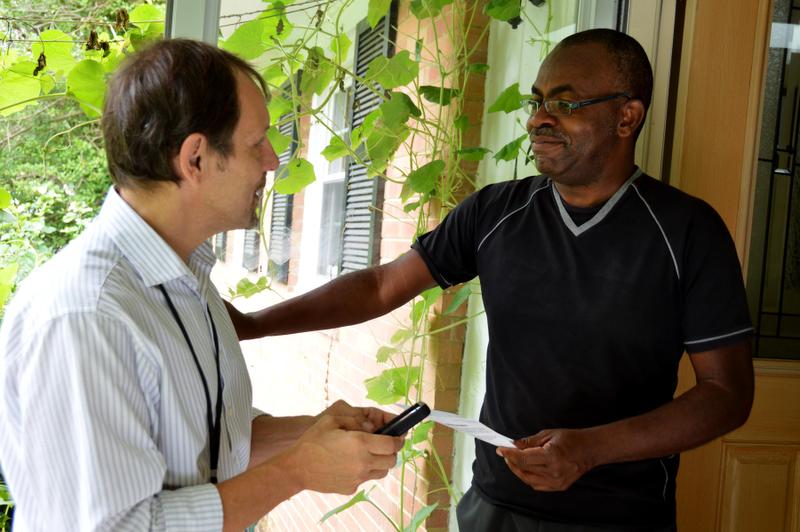
With the decennial census five years away, now is the perfect time to think about how technology will transform the way the U.S. government counts its citizens, according to Census Bureau CIO Brian McGrath.
Technology will evolve between now and the 2020 Census — likely in ways few will be able to predict — but the bureau wants to be ahead of the tide.
“We’re in the waning months of 2014, so we have a little bit of time,” McGrath said. “We want to do the research and be ready but we also want to harness emerging technology — it’s a balance.”
RELATED
2010 Census costs $13.1 billion, $1.6 billion less than expected
Emerging tech offers advanced security for BYOD programs
Agency mobile plans aim for efficiency and security
To reach this balance, Census’ technology arm had adopted the mantra: innovate, don’t invent.
“We should be using the great technology that’s in the marketplace already and leverage that engagement with industry,” McGrath said. “It’s a nice position to be in — we don’t have to be in R&D.”
With more than half a million part-time census takers in the field in 2010 (and as many expected in 2020), the use of mobile technology is in the forefront.
This summer, Census piloted a program on 1,100 iPhones leased specifically for testing a new app, focusing on the user experience and security of the data collected.
“It really went pretty well,” McGrath said. “We got good feedback from the enumerators and staff.”
The Bureau is expecting to put out a request for information in the next few months for another test, this time on Android phones and tablets to make sure the app works across platforms. The agency will be looking to pilot another 1,100 devices for this second test, as well.
Having an app that works on multiple operating systems will be integral if Census goes through with plans for a bring-your-own-device (BYOD) policy for enumerators.
Buying devices for some 500,000 employees for a two-month stint could be cost-prohibitive, McGrath said, which is why Census is looking at the possibilities of BYOD.
Not only is disseminating an app significantly cheaper than buying or leasing devices, “Training is easier on personally-owned devices,” he said. “You just have to teach people the app,” since they’re already familiar with their device.
Along with the Android tests in the coming year, Census is also planning a BYOD test on about 100 devices with a mix of operating systems. The agency will be looking for employees willing to participate in the mixed-BYOD test.
“We’ll learn a lot of good things about how they use the app in the test,” McGrath said.
When it comes to using technology — and in particular with mobile devices — security is a paramount concern.
“Obviously there are security concerns,” McGrath said. “We’re well aware of them and won’t sacrifice the integrity of the data.”
The preliminary app has security features built in, including base encryption for data input and storage, as well as secondary encryption for when that information is transmitted. Once the counting is done or if the device is lost or stolen, the app and its related data can be wiped remotely.
The app also requires two-factor authentication for users to access data within.
The developers at Census are working with the Defense Department and the National Institute of Standards and Technology (NIST) to make sure their app meets all security and policy standards, McGrath said.
“BYOD holds lots of promise,” he said. “But we have to take into account all the privacy and policy and security.”