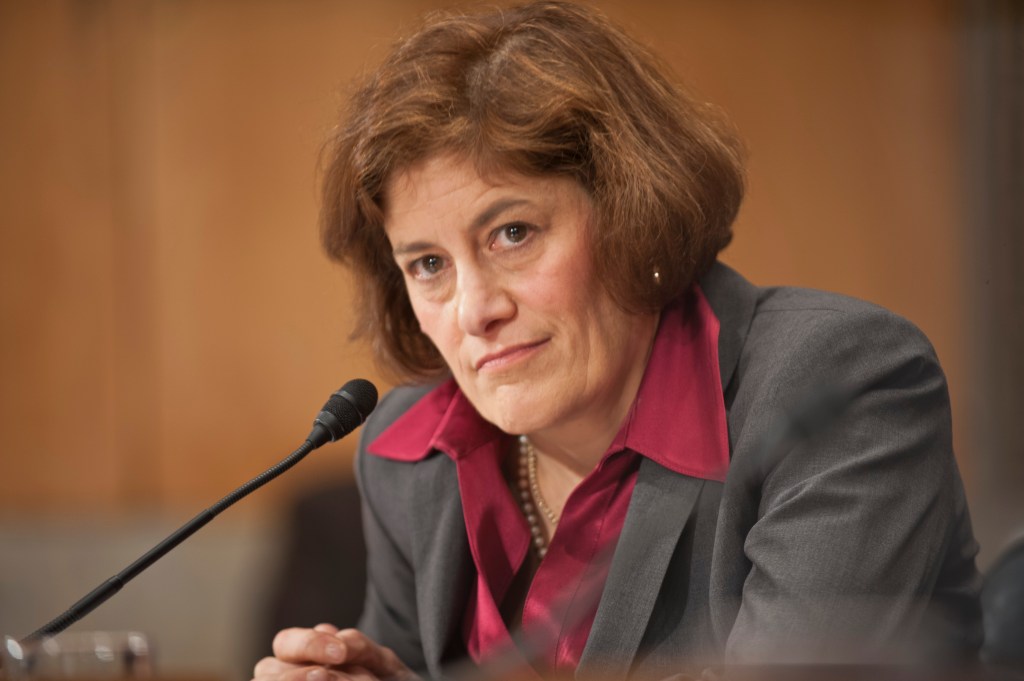
Data and innovation have played a large role in Beth Cobert’s vision for the future of the federal workforce.
Speaking at the agency’s Collaboration and Innovation Summit on April 12, the acting OPM director talked about how they are helping ensure that workforce is including a diversity of voices.
“We need to use data to drive our decisions,” she said. “For example, we need to use applicant flow data and other data to understand the barriers and progress we are making in terms of diversity and hiring.”
The two-day conference brings together stakeholders to develop new strategies for inclusion while examining OPM’s plans for bringing new talent that represents a plentitude of perspective.
To accomplish that, the director outlined a number of initiatives OPM is undertaking, including its New Inclusion Quotient, or New IQ, initiative.
New IQ launched in 2014 and provides federal managers and employees with an index to track the diversity and inclusion progress federal agencies are making. The director reported that some 15,000 employees had taken part in New IQ training, learning strategies to promote inclusive behaviors.
Cobert said that just as OPM is trying to draw in new talent to the federal sphere through data and metrics, it’s important that the data targets a wide-range of talent to develop more innovative solutions.
“This is a big initiative,” she said. “We need to do this to get the talent we need in the federal government. We need those perspectives, and, frankly, we need a lot of great people and we are not going to get them if we are not reaching out to diverse communities.”
By using the metrics to tackle traditional issues of diversity, Cobert said agencies can overcome inclusion barriers with new strategies, like blind interviews to weed out unconscious bias in hiring or analyzing applicant flow to make certain the talent pool provides a variety of voices.
“Data can be really valuable, especially when it comes to these issues of unconscious bias,” she said. “When you look at things like applicant flow, it can help you understand what actions are going to have the most impact.
“Because we are often doing this in small numbers, you can’t see the pattern, and you realize that you started out with a diverse pool, but you end up without diverse hires. You would do very different things to add diversity to the pool versus changing the interview process, and the data can help you understand which actions are going to be making the most difference.”
But data alone won’t build the workforce, so OPM has reached out to Historically Black Colleges and Universities to promote graduate internships in science, technology, engineering and math fields at the Department of Energy and other agencies.
To encourage more inclusion for current workers, Cobert highlighted NASA’s Goddard Opportunities Bulletin Board System, or GOBBS, an electronic system that notifies all employees of upcoming job opportunities.
Cobert said the recruitment initiatives are part a larger strategy to not only identify new talent, but also draw more interest in the public sector.
“This is part of our collective effort to say as people that are starting their careers, how can we connect what we know is the passion they have for public service with actually working in the federal government.
“We’re doing that both by reaching out to schools, as well as the work we are doing with the Hiring Excellence campaign and helping hiring managers understand how they can do this within the context of things like the Pathways program. So it’s a real effort to bring all of these things together, because if you generate demand, you’ve got to be able to make it work at the other end.”