
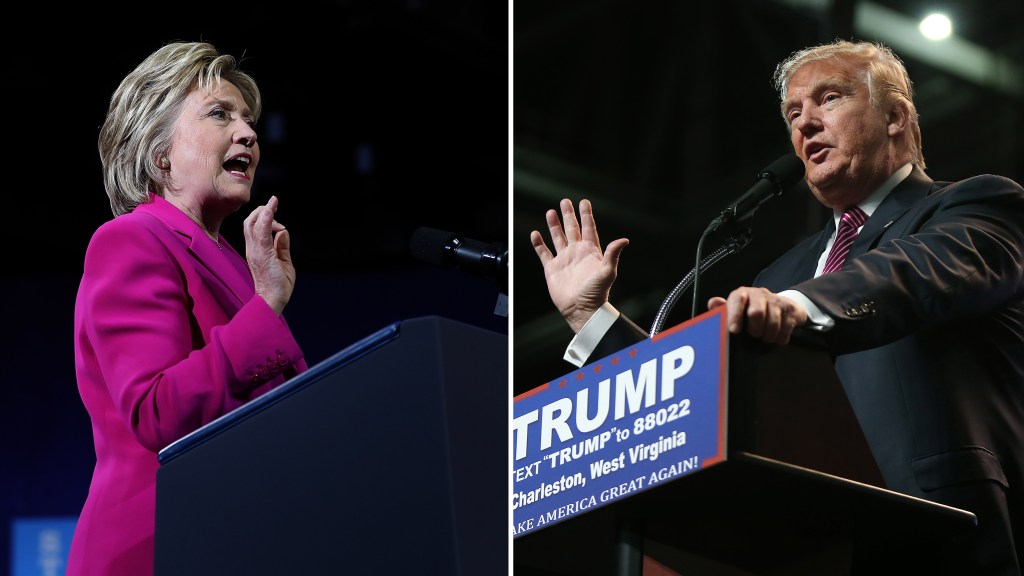
A new report examining both presidential candidates’ position on how their administration would handle technological innovation didn’t find much of a horse race.
The Information Technology and Innovation Foundation study looked at statements from Democratic nominee Hillary Clinton and Republican nominee Donald Trump to see how each candidate would approach the issue of technological innovation in the federal government.
Related: Read the report
The report, which was released on Sept. 6, found that Clinton had more policy-specific statements on how she would encourage innovation as president, while Trump had either not elaborated his positions or not shared a view on certain topics.
IFIT, an innovation and digital economy think tank, plumbed the candidates’ websites, policy documents and media coverage to glean their insights into their policy philosophies on how technology would play a role in their administration, most notably in the following topics:
– Innovation and R&D
– Broadband and Telecommunications
– Education and Skills
– Internet and Digital Economy
– Taxes and Budget
– Advanced Manufacturing Trade
– Life Sciences and Biotechnology Regulation
The report found that Trump was stronger on the issues of taxes and budget as a way to increase competitiveness in the market, proposing to cut the federal corporate tax rate from 39.2 percent to 15 percent. Clinton, by contrast, would keep the corporate tax at 35 percent, but also tax companies who move operations overseas.
“Trump has focused more on reducing government barriers in the economy, including taxes and regulations, which would, among other things, affect innovation,” the report said. “But Trump has been largely silent on innovation as an issue overall. In contrast, Clinton has explicitly talked about innovation, but she has focused more on establishing and expanding public-private partnerships to drive innovation and ensure that its benefits are widely shared.”
The candidates hold similar positions on trade, with both opposing the Trans-Pacific Trade Pact and supporting a renegotiation of NAFTA.
Each of those positions could have effects on innovation policy, but the report found that Clinton had a more robust history of comments on issues directly addressing innovation, like stronger regulations to promote research and development and science, technology, engineering and mathematics (STEM) education.
Most notably, Clinton has gone on record to support digital transparency laws like the DATA Act, as well as continuing a number of E-government initiatives started by the Obama administration.
Trump, the report found, had a limited record of commenting on this issues, focusing mostly on digital reforms at the Department of Veterans Affairs and working with Silicon Valley to disrupt terrorist recruitment through social media.
The report stops short of endorsing either candidate, but instead calls for a bipartisan approach to technological innovation, bemoaning that neither candidate had addressed how they would increase productivity growth.
“The economy and quality of life will steadily decline unless the rate of productivity growth is restored to past levels of at least 2 percent per year. That is the basis of sustainable growth in wages and government revenue,” the report said.
“Restoring that growth will require accelerating the rate of technological innovation, particularly in areas such as machine learning and robotics, and an increase in the rate of private sector capital investment in the United States. Yet neither candidate has spoken to the issue, nor laid out a productivity agenda.”
Read the full report
here.


