
LONG BEACH, Calif. – The Marine Corps has restored its Unit Deployment Program to levels not seen since before the wars in Iraq and Afghanistan, and training with international partners in the Pacific is going to expand over the next year.
About 1,150 Marines will go to Australia in the spring of 2015 to replace those there now, and plans are on track to move about 5,000 Marines to Guam. A rotation to the Philippines is still being considered.
Lt. Gen. John Toolan, commander of Marine Corps Forces Pacific, said there will be more than 400 operations ranging from major exercises to subject-matter expert exchanges between the U.S. and it’s foreign partners.
“As we rebalance in the Pacific, our Marines and sailors should expect the number of training exercises and expertise exchanges to increase as our partners further develop their amphibious, expeditionary and (humanitarian assistance and disaster response) capabilities,” Toolan said.
The U.S. allies want to develop skills that U.S. sea services have already mastered, said Col. Dan Masur, assistant chief of operations at MARFORPAC.
“The Navy-Marine Corps team has the skill sets and the resources our partners and allies in the region want, mainly amphibious, maritime security, and humanitarian assistance and disaster relief capabilities,” he said.
There are ongoing projects underway in order to position Marines closer to the country’s allies in the region, and to allow the U.S. and its partners to work closer together.
Japan defense increasing
The Corps is providing oversight as Japan trains its defense forces. Masur said that there are five significant exercises as well as educational exchanges with its biggest partner in Asia.
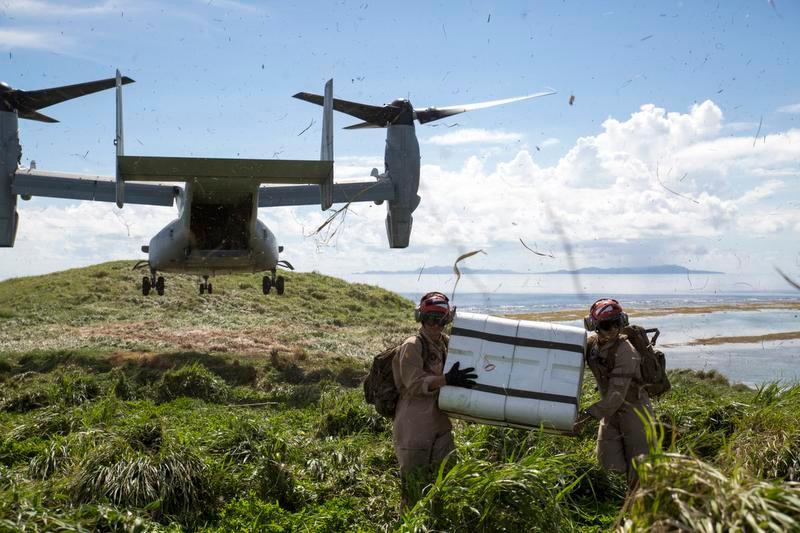
The Corps fully supports Japan’s efforts to develop its amphibious capabilities, and is “prepared to assist with the planning, training, testing and maintenance required to create a comprehensive Japanese amphibious program,” Masur said. The Japanese government is considering buying MV-22B Ospreys, the tilt-rotor aircraft that the Marines have flown from Okinawa for nearly two years. Brig. Gen. Stephen Rudder, commander of the 1st Marine Aircraft Wing, told Marine Corps Times this summer that the aircraft’s speed and long range revolutionized air ops in the region.
Additionally, the Corps is changing the way it bases personnel in Japan, and in order to spread manpower out of Okinawa and to other parts of the nation, it’s engrossed in a major construction project at Marine Corps Air Station Iwakuni on the Japanese mainland. There are more than 150 ongoing projects there in addition to the construction of 1,304 buildings.
In July, Marine Aerial Refueler Transport Squadron 152 moved 15 KC-130J Super Hercules airplanes and 250 personnel from Marine Corps Air Station Futenma on Okinawa to Iwakuni. The shift was part of an 18-year-old plan to spread military resources around Japan and reduce the number of assets in Okinawa.
Guam is being developed
In August, the Corps gave Congress its plan for basing about 5,000 Marines and 1,300 dependents on the tiny island through 2026.
Bob Pedigo, head of the Defense Policy Review Initiative Branch at MARFORPAC, said those Marines will come from across the Corps, including the Reserve, but about a third of the 5,000 will be permanently stationed there, accompanied by their families. All four combat elements and their equipment, including aircraft, will be on the island, he said.
Toolan said the Corps is increasing the scope and scale of training exercises on the island to prepare for the eventual arrival of a Marine air-ground task force.
To accommodate the Marines and their families, the Corps will undertake a huge construction boom, building housing for Marines and their families, administrative facilities, new schools, roads and other infrastrucutre.
The Corps also wants to build a live-fire training range, complete with space for hand-grenade drills.
There will be more than a decade of “moderate construction” and a temporary uptick of 10,000 residents, but 7,400 new permanent residents, the planning document shows. Pedigo said that work in Guam is on track to be completed in 2026, dependent on consistent funding from Congress.
Rotations in the Philippines
U.S. and Philippine government officials are discussing how Marines can have a bigger presence in the island nation and help the country develop its military, Toolan said.
“We will continue to coordinate closely and train regularly with the Philippine Armed Forces to improve the interoperability of our forces and enhance the territorial defense of the Philippines,” he said.
Masur said the U.S. and Philippines have been allies for 60 years and are trying to strengthen their bond. The U.S. is trying to determine how it can help its partner develop its defenses and ability to handle natural disasters.
Marines Down Under
The third and largest group of Marines is nearly complete with a six-month rotation through Australia and later this fall will head back to Camp Pendleton, California.
Exactly which unit will next head to Australia in the spring hasn’t been revealed, but officials typically identify the unit around December. The rotation will include all four combat elements and include 1,150 Marines, the same number as the current rotation, Masur said.
Past rotations involved 200 Marines, but the current rotation had 1,150 Marines, and, for the first time, aircraft. The number of Marines moving through the continent could reach as many as 2,500 by 2016.
Last year, the Australian defense department announced it would spend $11 million for living and work spaces for Marines. Officials there also announced a deal reached about where the Marines would live, work and train.


