
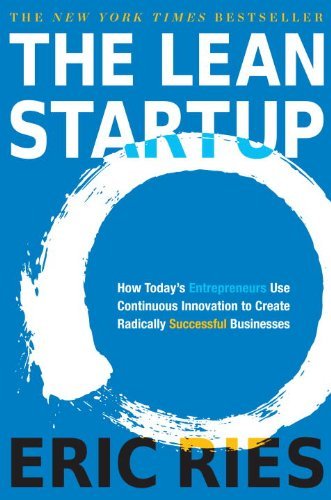
If you have an idea for a new product, service or business, don’t get caught in the trap of trying to build your innovation into some full-featured picture of perfection:
You may just end up building the perfect thing no one actually wants.
That’s the premise behind “The Lean Startup,” Eric Ries’ manifesto on the new era of entrepreneurship. Written in 2011, it has become a go-to book for business school professors as well as a must-have field manual for those battling in the trenches to build a new business right now.

A good plan is fine — but a perfect plan doesn’t exist, Ries argues. That’s because the plan will always change.
“If we’re building something that nobody wants, it doesn’t matter if we’re doing it on time and on budget,” he writes.
Instead, just as most combat leaders have learned, success depends on constant innovation. Build a basic product or service. Then get it out there and learn from your early adopters on how to make it better. Measure and experiment. When failures come, and they will come, learn from them. And then pivot. And then build and experiment some more.
Ries dubs this the Build-Measure-Learn Feedback Loop. “We write the feedback loop as Build-Measure-Learn because the activities happen in that order,” he says.
“Our planning really works in the reverse order — we figure out what we need to learn, use innovation accounting to figure out what we need to measure to know if we are gaining validated learning, and then figure out what product we need to build to run that experiment and get that measurement.”


