

Eight senators have urged Defense Secretary Ash Carter to follow the Navy’s lead in ensuring that service members aren’t wrongfully discharged for misconduct stemming from a trauma-related mental health condition.
The senators — six Democrats and two Republicans — wrote Carter on Thursday asking he consider adopting a policy that would prevent the services from discharging personnel involuntarily under less than honorable conditions without weighing whether their discipline problems were related to a physical or mental trauma like sexual assault or brain injury.
In June, Navy Secretary Ray Mabus issued a policy requiring the Navy and Marine Corps to refer any sailor or Marine processed for involuntary administrative separation who has a diagnosed mental health condition to the disability evaluation system.
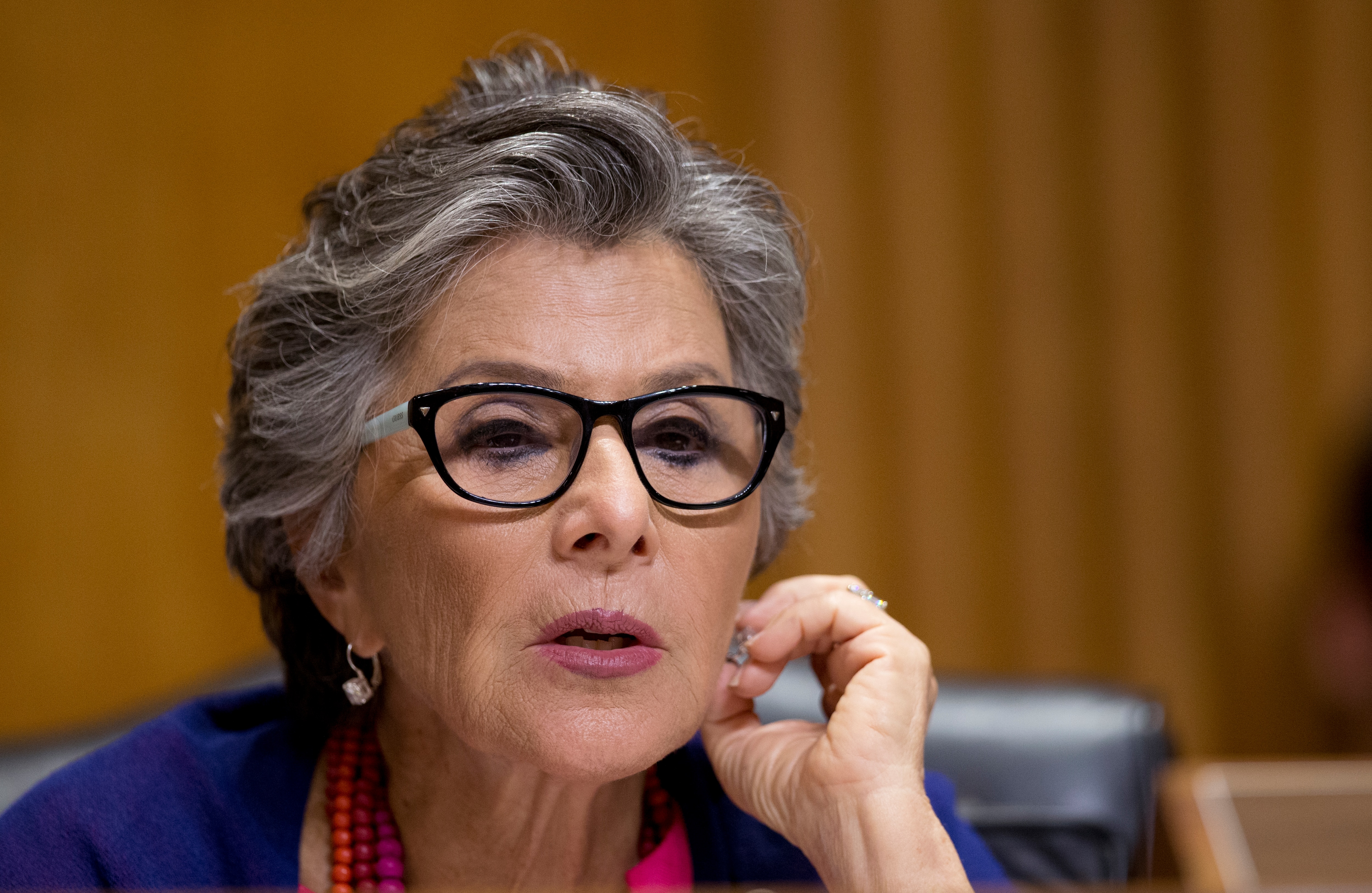
Sen. Barbara Boxer, D-Calif., questions a witness during a hearing in Washington in 2015 in this file photo. She joined seven other senators on Sept. 8, 2016, to ask the Defense Department to review its policy for discharging troops for misconduct if they have a trauma-related mental health condition.
Photo Credit: AP Photo/Manuel Balce Ceneta
Also, if the service member is being processed out under an other than honorable discharge, the case must be referred to the first general or flag officer in the chain of command for a final determination.
They voiced concern that sexual assault victims continue to be discharged from the military for misconduct at rates disproportionately high when compared with the regular military population.
“Sexual assault survivors who engage in misconduct in response to trauma … are at a higher risk of being involuntarily discharged under other than honorable conditions,” wrote Sen. Barbara Boxer, D-Calif., and the others. “The problem, however, extends to combat veterans with post-traumatic stress disorder or traumatic brain injury, who may also exhibit irregular behavior, difficulty performing at work, or battle substance abuse.”
According to a Defense Department Inspector General report, nearly a quarter of military sexual assault victims separated after reporting an assault were discharged for misconduct.
Defense Department policy prohibits the services from discharging personnel who have served in combat for a personality disorder or other mental health condition if they also have been diagnosed with service-related PTSD.
Separation for a mental disorder “is not appropriate nor should it be pursued when separation is warranted on the basis of unsatisfactory performance or misconduct,” according to the instruction, DODI 1332.14.
But the senators said the policy does not go far enough.
“[It] does not adequately weigh behavior that may have resulted from mental health conditions. As a result, many service members with mental health conditions related to their military service can face an involuntary discharge under less than fully honorable conditions, which can be emotionally and financially devastating and prevent them from receiving the benefits and medical care that they need to heal,” they wrote.
Although the Defense Department has an appeals process for protesting an other than honorable discharge, it “can be an extremely difficult process to upgrade it through the military correction board process,” they added.
A review of appeals to the Board of Corrections of Navy Records showed that from 2009 to 2012, 1 percent of the 4,189 other than honorable discharges that came before the board were upgraded.
The lawmakers joining Boxer in asking Carter for the change are Sen. Chuck Grassley, R-Iowa; Sen. Kristin Gillibrand, D-N.Y.; Sen. Susan Collins, R-Maine; Sen. Amy Klobuchar, D-Minn.; Sen. Tammy Baldwin, D-Wis.; Sen. Ed Markey, D-Mass.; Sen. Al Franken, D-Minn., and Sen. Gary Peters, D-Mich.


