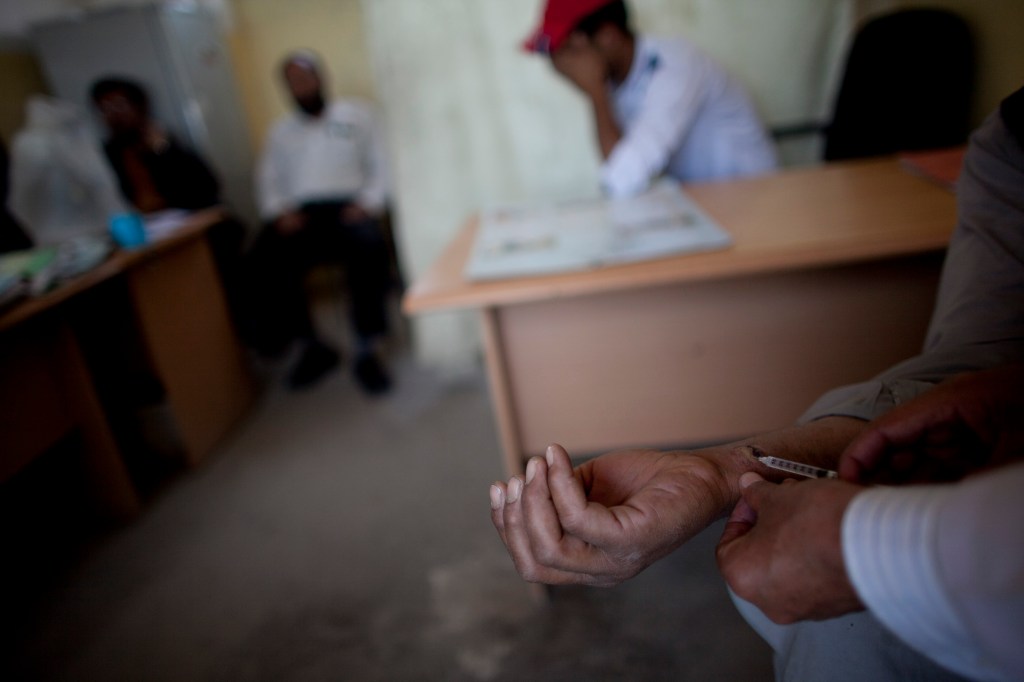
FREDERICK, Md. (AP) — Army scientists at Fort Detrick are hailing the Food and Drug Administration’s approval of a tool they helped develop for rapidly diagnosing a disfiguring skin disease caused by sand fly bites in the Middle East.
The U.S. Army Medical Research and Materiel Command said Friday that the hand-held dipstick can produce results within 30 minutes. The previous method depended on laboratory tests of skin-lesion samples that often had to be shipped to the United States.
Lt. Col. Jeanne Norwood says rapid diagnosis means quicker treatment for the disease, called cutaneous leishmaniasis (kyoo-TAY’-nee-us LEESH’-mah-nye-ah-sis), or CL.
The Army says the disease affects millions worldwide, including U.S. service members. The World Health Organization reported a major outbreak in Afghanistan in 2010.
The device is made by Seattle-based InBios International Inc.