DUGWAY PROVING GROUND, Utah — A unique chamber designed to improve the nation’s readiness against biological warfare has debuted at a U.S. Army facility in Utah.
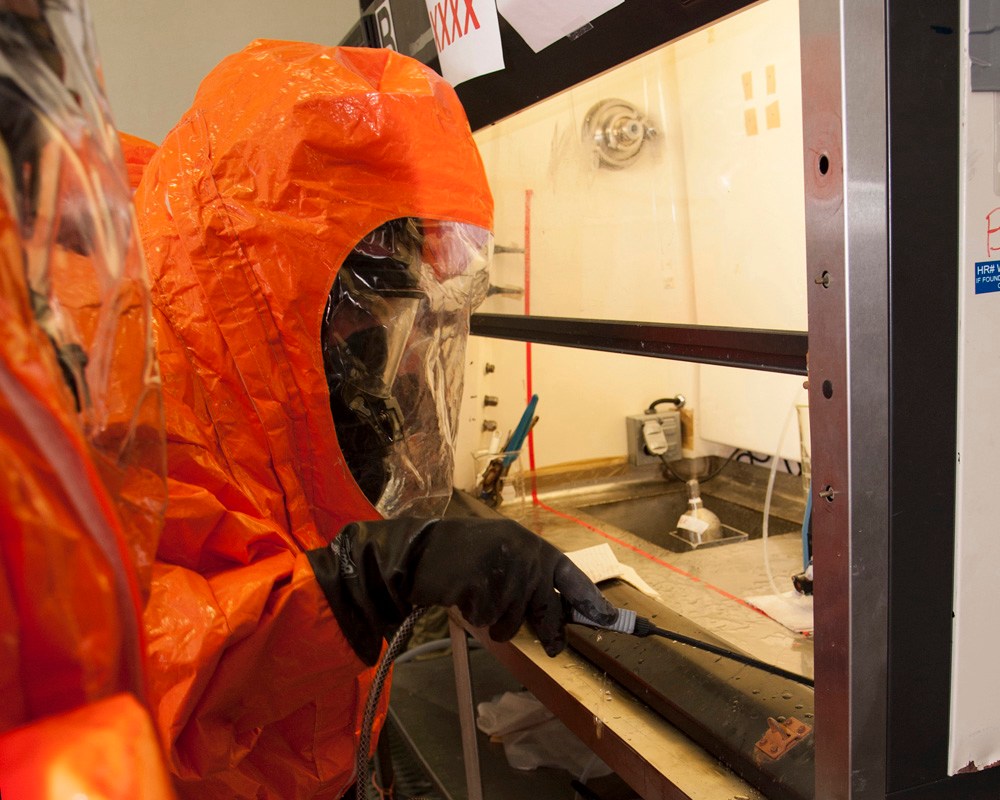
The Dugway Proving Ground, which is about 85 miles southwest of Salt Lake City, now is home to an intricate system that tests how well detection systems of deadly biological agents such as anthrax, ricin and plague do their job.
A ribbon-cutting ceremony was held Thursday for the system, which represents a $39 million investment for the Department of Defense. It’s expected to begin operation in the next several weeks.
Detection systems previously have had to be tested component by component to determine how efficiently they functioned.
Typical detection systems used by the military are about the size of a refrigerator, but the new chamber is big enough to accommodate two at the same time so they can be compared side by side and their ability to perform independently can be tested.
“It is a huge deal,” Dugway’s commander, Col. Ronald Fizer, told the Deseret News. “We have not had the ability to evaluate these systems in a live environment before. This allows us to have a high degree of confidence in our systems.”
Carmen Spencer of the federal Joint Program Executive Office for Chemical and Biological Defense said it’s paramount that biological agent detection systems operate at the highest efficiency given the evolving nature of global threats.
“The world is a far different place than it was 20 years ago,” he said. “There’s an ever-increasing awareness of the potential of a biological threat against nation states by non-nation states.”
Fizer said al-Qaida has made no secret of its desire to get its hands on biological agents, and biological labs are top targets for multiple terrorist cells.
“Before we didn’t have a chamber that could test these systems. This gives us that readiness,” he told the Deseret News.
Douglas Andersen, chief of the life sciences division at Dugway’s West Desert System, agreed. “We can do those tests and safely challenge or expose a real system to agent in the air and see if it will respond.”